

Think you know what 3 inches looks like? Hold your fingers exactly three inches apart without measuring, and you may be surprised by how far off your guess is. Three inches sounds simple, but it is surprisingly tricky to visualize. It is small enough to seem tiny, yet long enough to stand out on many everyday objects.
This guide makes three inches much easier to picture. You will see real objects that measure exactly or come close to 3 inches, discover a few common size claims that do not quite match, and learn simple ways to estimate three inches without reaching for a ruler.
How Long Is 3 Inches, Really?
Let’s start with the raw numbers, since everything else in this article builds on them.
| Unit | Equivalent |
|---|---|
| Inches | 3 in |
| Centimeters | 7.62 cm |
| Millimeters | 76.2 mm |
| Feet | 0.25 ft (a quarter of a foot) |
| Meters | 0.0762 m |
What Does 3 Inches Look Like?
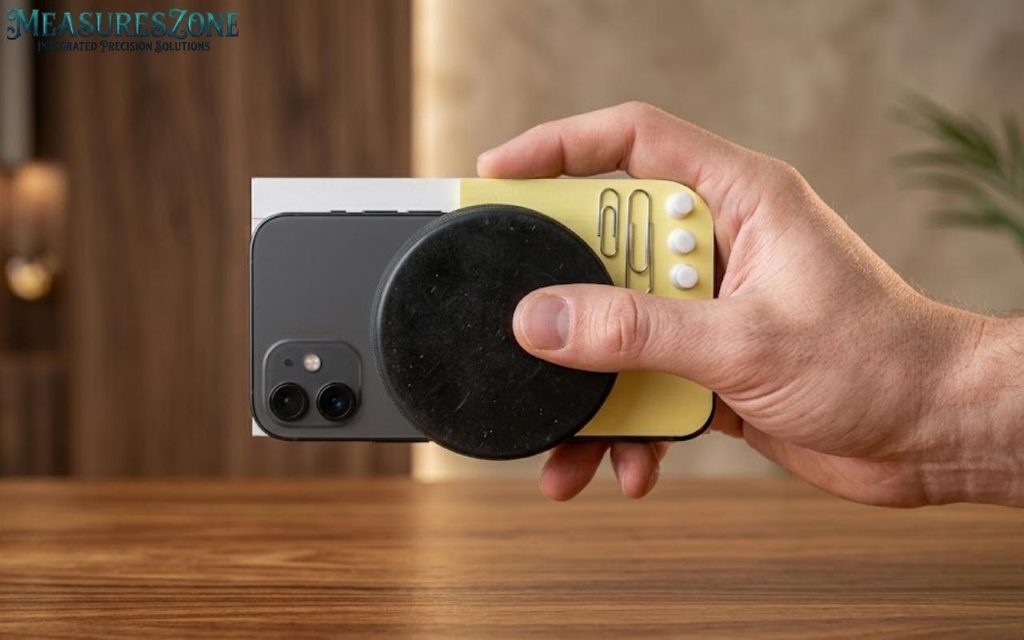
Numbers on a page are one thing. Actually picturing three inches is another. So here is a fast visual reference before we get into the object list.
Many smartphones have screens around 2.7 to 3 inches wide, making them a useful reference for visualizing 3 inches. It is compact enough to fit comfortably in your hand while still being large enough to display clear details.
Another way to picture three inches long: it is roughly the length of your thumb from the tip to the base knuckle, for most adults. Hands vary, obviously, so this is not a precise measurement reference. Still, it is a useful gut check when nothing else is around.
14 Real-World Things That Measure 3 Inches
A lot of “3 inch things” lists round aggressively or repeat bad numbers without checking a spec sheet. Every item below is checked against a real manufacturer standard, sports regulation, or ISO spec, no guesses.
1. A Hockey Puck

If you only remember one item from this list, make it this one. The hockey puck diameter is regulated at exactly 3 inches by both the NHL and the IIHF, with a thickness of 1 inch. There is zero wiggle room here, since pucks that do not meet this 3-inch diameter spec simply are not legal for play.
That precision makes the puck the single most reliable physical object for a 3-inch size reference. Keep one in a drawer, and you have got a permanent ruler substitute.
2. A Standard Sticky Note

The classic square sticky note, the one sitting on nearly every office desk in the world, measures 3 × 3 inches. That Post-it note width is not arbitrary; 3M settled on it decades ago, and the square note size has become the de facto standard that other brands match.
Next time you peel one off the pad, you are holding a perfect 3-inch measurement in each direction.
3. A 3×5 Index Card, Short Edge

It is right there in the name. The short side of a standard index card is exactly 3 inches, and the long side is 5 inches. Teachers, students, and recipe collectors have been using this note width as an unofficial ruler for generations without realizing it.
4. A Baseball

Major League Baseball’s official rulebook does not actually specify a diameter, it specifies a circumference of 9 to 9.25 inches. Do the math (circumference ÷ π), and you land on a diameter between 2.86 and 2.94 inches. That is a hair under a true 3-inch dimension, but close enough that “a baseball is about 3 inches across” is a fair, honest shorthand.
See how 4 inches compares to everyday objects.
5. A Credit Card

Most people picture the credit card’s long edge when they think “width,” and that measures 3.375 inches under the ISO/IEC 7810 standard used for every credit card, debit card, and driver’s license out there.
Technically, ISO calls that the card’s length, the short edge (2.125 inches) is the official “width,” but colloquially, people mean the long side. Either way, it is just over 3 inches, and it is sitting in your wallet right now, making it one of the handiest size references you own.
6. A Tube of Lip Balm

Grab a Chapstick or a similar balm container out of your bag, and you are holding something close to three inches long. Tube lengths vary slightly by brand, but most cluster right around this mark, which is part of why lip balm shows up so often in size-comparison guides. It is genuinely a good, portable stand-in.
7. A Standard Glue Sticks

Glue sticks come in two common sizes, and the two are not identical, so it is worth being specific here. The large 0.77 oz Elmer’s glue stick, the one most households actually own, measures about 2.7 inches long by 1.2 inches wide, based on manufacturer packaging specs.
That is a shade under a true three-inch length, similar to the tennis ball entry above. The smaller 0.21 oz “regular” size, the kind schools hand out in bulk packs of 16 or 24, runs shorter still, since less adhesive means a shorter barrel inside the tube.
8. Three US Quarters, Lined Up Edge to Edge

Each quarter measures 0.955 inches across, so three in a row get you to roughly 2.87 inches, a close, coin-based size comparison for whenever you have got pocket change handy.
It is reliable too, since quarters are minted to a strict, unchanging diameter with no brand-to-brand variation to throw off the math. That makes it a genuinely useful trick when a ruler is not within reach.
Visualize 18 inches with everyday objects.
9. A Stick of Classroom Chalk

Standard chalk sticks run a touch over three inches, usually around 3.25. It runs slightly long compared to a true three-inch length, but it is a familiar enough object that it still earns a spot as a rough visual reference.
Most brands, from Crayola to standard box chalk, cluster tightly around that same 3.25-inch mark, so it is a fairly consistent size across manufacturers. That consistency is exactly why chalk works so well as an informal measuring stick.
10. A Door Knob
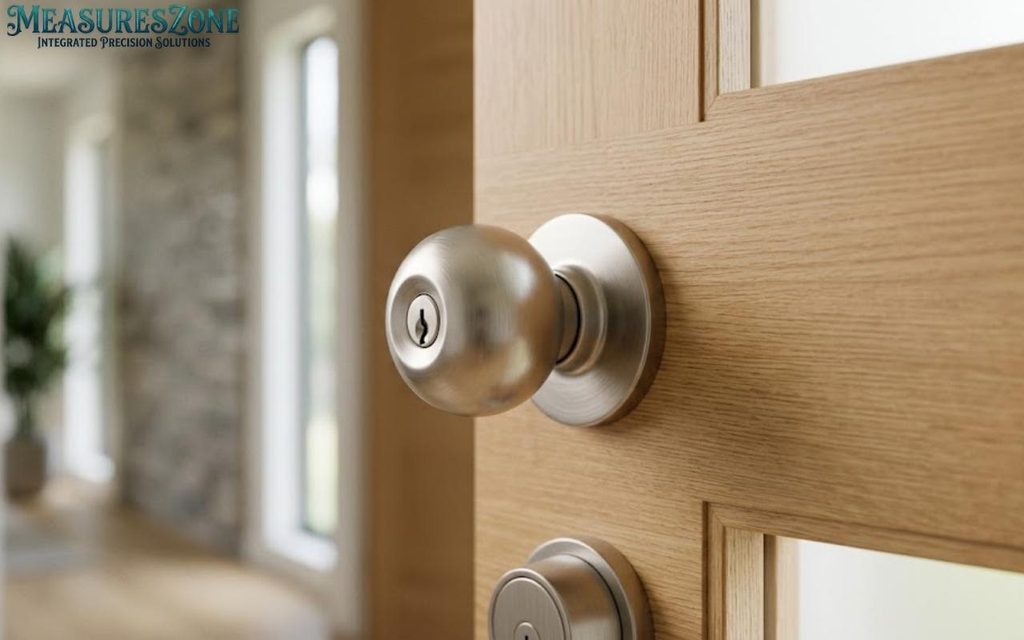
Doorknob sizes vary more than people expect, since manufacturers do not follow one universal spec the way ISO governs credit cards. Most residential knobs land somewhere between 2.5 and 2.75 inches across, close to 3 inches, but not exact, so treat this one as a ballpark reference rather than a precise 3-inch example.
11. A Tennis Ball

Regulation tennis balls run about 2.7 inches across, noticeably under the 3-inch mark, but still commonly cited in size guides because tennis balls are so universally recognizable. We are including it here with an honest label rather than rounding it up dishonestly the way some lists do.
12. A Travel-Size Toothpaste Tube
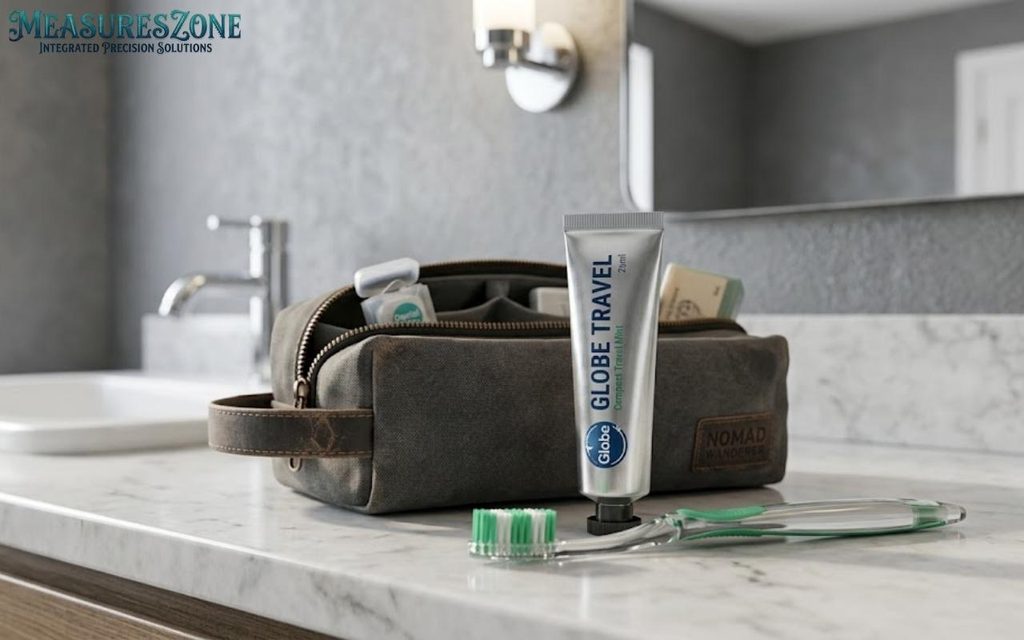
Most TSA-compliant travel toothpaste tubes measure about 3 to 3.5 inches long, though some can reach closer to 4 inches when you include the folded crimp at the bottom. Brands like Colgate and Crest commonly make their travel tubes compact, making them a useful everyday comparison for 3 inches.
They are helpful for getting a rough idea of 3 inches, but they are not a precise measuring tool. After several uses, squeezing the tube can change its shape and make its effective length shorter.
Learn about tiny house sizes and dimensions.
13. A Classic BIC Lighter

The standard BIC lighter, the one in nearly every junk drawer and kitchen counter in America, measures roughly 3 to 3.25 inches from the base to the top of the spark wheel, depending on which retailer’s spec sheet you check.
It is one of those objects people handle daily without ever clocking its size, which makes it a genuinely useful one to add to your mental 3-inch toolkit.
14. A 6-Inch Protractor’s Radius

This one’s a sleeper hit. Standard school protractors are sold as “6-inch” tools, and that number refers to the diameter of the flat edge, meaning the straight-line radius from the centre point out to the curved edge is exactly 3 inches.
If you have got an old protractor sitting in a desk drawer from school, you are holding a mathematically precise 3-inch ruler and probably never realized it.
Common Objects People Assume Are 3 Inches (But Are not)

This section matters just as much as the list above, honestly. A lot of “things that are 3 inches” articles float around the internet repeating the same handful of errors, so let’s clear a few up.
A golf tee is not 3 inches. Standard wooden golf tees measure 2.125 inches long, the same length as a credit card’s short edge, coincidentally. Some longer driver tees stretch closer to 4 inches, but the go-to standard tee undershoots three inches by a good margin. If you have seen a “3-inch golf tee” claim elsewhere, it is simply wrong.
AA batteries do not get you to 3 inches either, at least not cleanly. A single AA battery measures about 1.99 inches, close to 2 inches, not 3. Stack two end to end, and you get roughly 3.98 inches, nearly 4 inches, overshooting three by a lot. Either way, AA batteries do not belong in your 3-inch toolkit.
A standard playing card does not work either. Playing cards measure 2.5 inches wide, not 3, a full half-inch short.
Accuracy matters when using objects as size references. Something that is 15–30% off can easily mislead you, which is why this guide separates examples into exact, close, and not actually 3 inches.
See how long 7 inches is in real life.
How to Measure 3 Inches Without a Ruler

Beyond memorizing objects, a few other tricks can get you a workable 3-inch estimate when nothing on the list above is nearby.
Try your phone’s built-in AR measuring app.
Both iPhones (Measure) and most Android phones (Google Measure or a similar pre-installed tool) use the camera to estimate real-world distances. It is not lab-grade precise, but for a quick “is this about 3 inches?” gut check, it beats eyeballing it cold.
Check your palm width.
Measure across the base of your four fingers, right where they meet your palm, excluding the thumb. For most adults, that distance lands somewhere between 3 and 3.5 inches. Hands vary from person to person, so measure yours once against a real ruler to calibrate. After that, your own hand becomes a portable reference you are never without.
Grab a disposable lighter.
A standard BIC-style lighter runs about 3.125 inches tall, just a touch over the mark. It is the kind of object that turns up in a kitchen drawer or car console more often than a ruler does.
Print a reference ruler at true scale.
Plenty of printable ruler templates exist online, but the setting people miss is turning off “fit to page” in the print dialog and printing at 100% scale instead. Otherwise the printer quietly resizes the whole thing, and your “ruler” ends up lying to you. Double-check it against one of the exact 3-inch objects above before trusting it for anything that matters.
None of these replace an actual tape measure for anything that needs precision, cutting wood, sizing a bolt, fitting a picture frame. But for quick visual estimates, this toolkit covers you almost anywhere.
Why Knowing 3 Inches Actually Matters
This is not just trivia. A solid, internalized sense of what three inches looks like has genuinely practical uses:
- Legal knife-length limits. A surprising number of US states and cities set legal blade-length thresholds right around 3 inches for concealed or pocket knives. Knowing this measurement at a glance can matter more than people realize.
- Shipping and packaging rules. Postal services and shipping carriers often set minimum package dimensions, and 3 inches shows up frequently as a cutoff for small-parcel rates.
- Craft and sewing projects. Pattern instructions constantly call out seam allowances, button spacing, and hem widths in the 2–4 inch range, and being able to eyeball three inches saves constant trips back to the tape measure.
- Furniture and gap checks. Whether you are checking if a piece will clear a doorway or fit a gap behind an appliance, a reliable mental 3-inch reference speeds up rough measurements before you commit to the real ones.
- Childproofing. Safety guidelines for crib slat spacing and similar child-safety gaps are frequently discussed in this size range, making an accurate mental reference more than just a party trick.
As one general rule of thumb in the measuring world goes: “If you can picture it accurately, you rarely need to measure it twice.” That is really the goal of a guide like this one, not memorizing trivia, but building genuine, reliable visual reference points you can trust.
Frequently asked question
Still have a specific question about the 3-inch mark? Here are quick, straight answers to the ones that come up most.
How many 3-inch objects laid end to end make one foot?
Four. Since a foot is 12 inches, four 3-inch objects lined up in a row get you there exactly, handy if you are eyeballing a longer distance using something like a hockey puck as your unit.
What is the circumference of a circle with a 3-inch diameter?
About 9.42 inches. You get that from π × diameter (3.14159 × 3), so a hockey puck’s edge, for example, measures roughly 9.42 inches all the way around.
Is 3 inches of rainfall or snowfall considered a lot?
For rain, 3 inches in 24 hours is heavy and may trigger flood warnings. For snow, it is moderate, enough to affect driving and require shoveling.
Is a 3-inch heel considered high?
In shoe terms, yes. Heels under 2 inches are typically called low or kitten heels, 2 to 3 inches is mid-height, and anything at or above 3 inches gets classified as a high heel.
Is 3 inches a typical size for a compact camera or gadget screen?
Many point-and-shoot cameras and older MP3 players used 3-inch screens, balancing clear viewing with a pocket-sized design.
Key Takeaway
3 inches is 7.62 cm, or 76.2 mm. It is easy to forget, but the objects are not. A hockey puck, a sticky note, and an index card’s short edge give you dead-accurate references. A baseball, a credit card, and a lip balm tube get you close, as long as you remember which way they lean.
And a golf tee, a single AA battery, and a playing card are not three inches, whatever other lists claim. Getting the exact ones right, and being honest about the close ones, is what makes this list worth bookmarking.
Quiz: How Well Do You Know 3 Inches?
Test your knowledge of 3 inches with these quick questions. See how well you remember the measurements and everyday comparisons from this guide.
1. What is 3 inches equal to in centimeters?
A) 6.35 cm
B) 7.62 cm
C) 8.10 cm
D) 5.08 cm
2. Which of these objects is EXACTLY 3 inches in diameter, according to official regulations?
A) A tennis ball
B) A golf tee
C) A hockey puck
D) A baseball
3. How long is a standard golf tee, in inches?
A) 3 inches
B) 2.75 inches
C) 2.125 inches
D) 4 inches
4. Roughly how long is a single AA battery?
A) 1.99 inches
B) 2.5 inches
C) 3 inches
D) 1.5 inches
5. What is the long edge measurement of a standard credit card, per ISO/IEC 7810?
A) 2.125 inches
B) 3.0 inches
C) 3.375 inches
D) 3.5 inches
Answers:
- B) 7.62 cm
- C) A hockey puck
- C) 2.125 inches
- A) 1.99 inches
- C) 3.375 inches
Visualize 20 cm with everyday objects.

David John is an experienced blogger and the admin of the Measurements category at Measures Zone. He shares accurate and easy to understand measurement guides for readers.