

Four millimeters sits in an awkward spot. It is too small to picture at a glance, yet too big to ignore when a drill bit, a screw, or a pane of glass has to fit. Ask ten people how big 4 mm is and you will watch ten different finger gestures.
This guide fixes that. You will get a clear 4 mm conversion table, a ruler walkthrough, and 11 real objects with published dimensions you can check yourself. Every number comes from a standard or a manufacturer listing. No filler.
4 mm Size and Conversion Table
Start with the math. Four millimeters equals 0.4 centimeters and 0.15748 inches. The inch equivalent comes from the exact definition of the inch, which is 25.4 mm. Because the metric system runs on tens, mm to centimeters takes one step: slide the decimal point left.
| Unit | Value for 4 mm |
|---|---|
| Millimeters | 4 mm |
| Centimeters | 0.4 cm |
| Meters | 0.004 m |
| Micrometers | 4,000 µm |
| Inches (decimal) | 0.15748 in |
| Nearest fraction | 5/32 in (0.15625 in, or 3.969 mm) |
| Points | about 11.34 pt |
| Pixels at 96 dpi | about 15.12 px |
Keep three formulas handy for any length conversion:
- Millimeter to inches: divide by 25.4
- Millimeter to centimeters: divide by 10
- Inches to millimeters: multiply by 25.4
Notice that 5/32 in falls 0.031 mm short of four millimeters. That gap looks tiny. Still, it matters in machining, so treat the two as close cousins and not twins.
What Does 4 mm Look Like on a Ruler?
A metric ruler gives you the quickest picture. Each small line is one millimeter tick. Count four ticks from zero and you have landed on 4 mm. On most rulers the longer tick at 5 mm sits just past it, so four millimeters falls one tick shy of the halfway point to a full centimeter mark.
Inch rulers tell a trickier story. The 1/8 in mark sits at 3.175 millimeters and the 3/16 in mark at 4.763 millimeters. Your four millimeters lands between them, a hair closer to 3/16 on a ruler marked in sixteenths. A ruler marked in 32nds adds the 5/32 in line at 3.969 mm, which is why that fraction gets the nod as the closest match.
Want a pocket-change check? A US dime is 1.35 mm thick, so three stacked dimes measure about 4.05 mm. Two nickels (1.95 mm each) reach 3.9 mm. Both give you a fair small size comparison without a tool.
Thickness vs Diameter vs Pitch vs Bore
A “4 mm” label can describe very different features. Mixing them up causes most sizing errors. Here is the quick key:
- Thickness: how thin a flat item is, like a pick, a plywood sheet, or a glass pane
- Diameter: the width across a round part, like a drill bit or a plug pin
- Thread diameter and pitch: an M4 screw has a four millimeters nominal thread diameter but a 0.7 mm pitch, which is the distance between thread peaks
- Bore: the hole through the middle, which is always smaller than the outer diameter
- Across flats: the distance between two parallel sides of a hex socket or key
Remember this when you shop. A four millimeters drill bit makes a hole near four millimeters. That hole is far too wide for tapping an M4 thread, which needs a 3.3 mm tap drill.
11 Objects and Products That Measure 4 mm
Each item below shows the exact spec and tells you what the four millimeters measurement describes.
Acrylic Guitar Pick

Most picks feel thin and flexible. A thick guitar pick stands in a different league. Typical heavy picks run about 1.14 mm, while Gravity Picks lists acrylic guitar pick models at 4.0 mm. That is roughly three and a half times a heavy pick.
Here the four millimeters describes pick thickness. Pick dimensions in this range feel rigid and give a bright, clicky attack. Players often choose them for bass and fast lead lines.
addiUnicorn Circular Knitting Needle

Knitters see this size daily. A 4.0 mm needle equals US size 6 and UK size 8. The addiUnicorn circular knitting needle is sold in this size, and its listing gives the needle diameter in millimeters.
The four millimeters refers to the shaft diameter. Yarn makers often pair this knitting needle size with DK weight and light worsted yarn. Watch out for UK size 6, which equals 5 mm.
M4 Screw (Socket Head, ISO 4762)
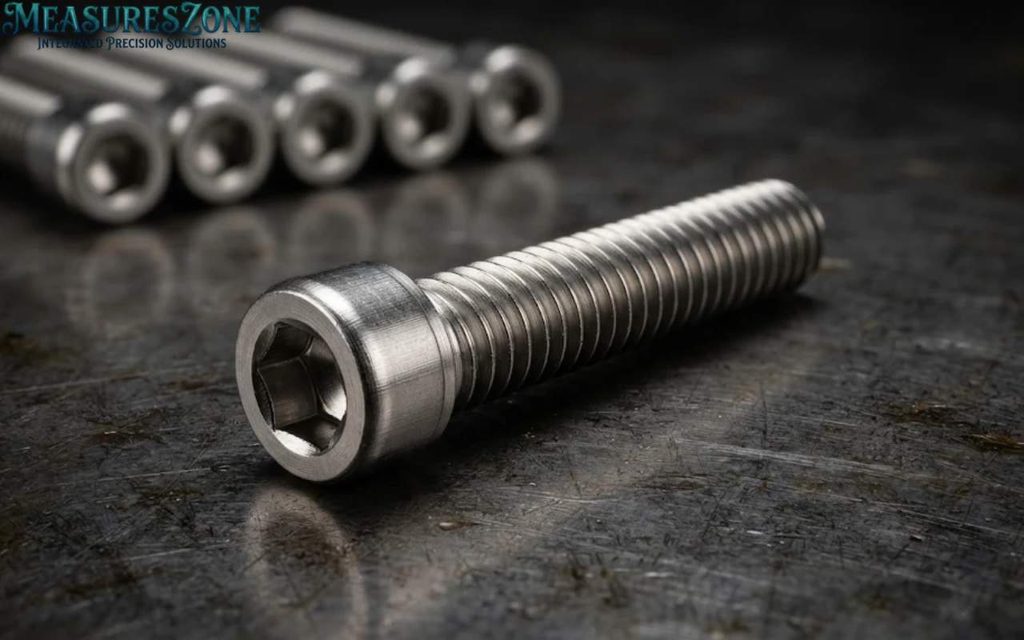
The M4 screw is the classic 4 mm fastener. The “M” marks a metric thread and the “4” gives the nominal thread diameter. Under ISO metric thread standards, the coarse pitch for M4 is 0.7 mm.
A socket head screw built to ISO 4762 has a few neat dimensions:
- Head diameter: 7 mm
- Head height: four millimeters, which equals the thread diameter
- Hex socket: 3 mm
Thread measurement runs slightly under four millimeters in practice. A standard 6g M4 thread has a major diameter between 3.838 and 3.978 mm.
HSS Twist Drill Bit
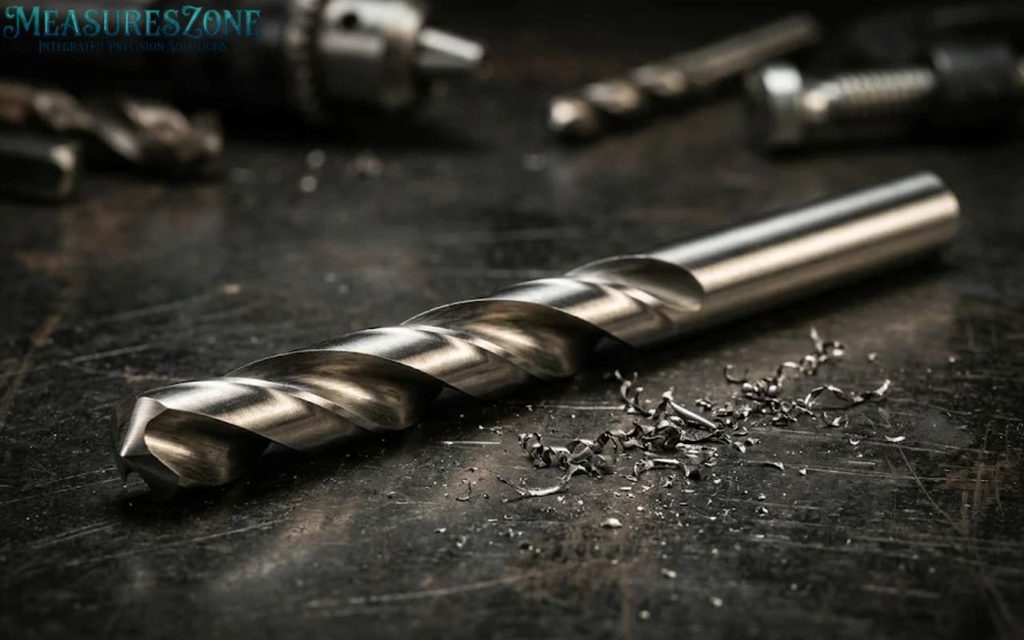
A 4 mm high speed steel twist drill has a four millimeters cutting diameter. That sets the hole size, with only a small tolerance for wobble. It suits clearance holes for M3 screws and pilot holes for wood screws.
Never use it to prepare an M4 thread. Machinists drill a 3.3 mm tap hole first, then cut the thread.
See what 1000 ml looks like in familiar containers.
Hex Key (Allen Key)
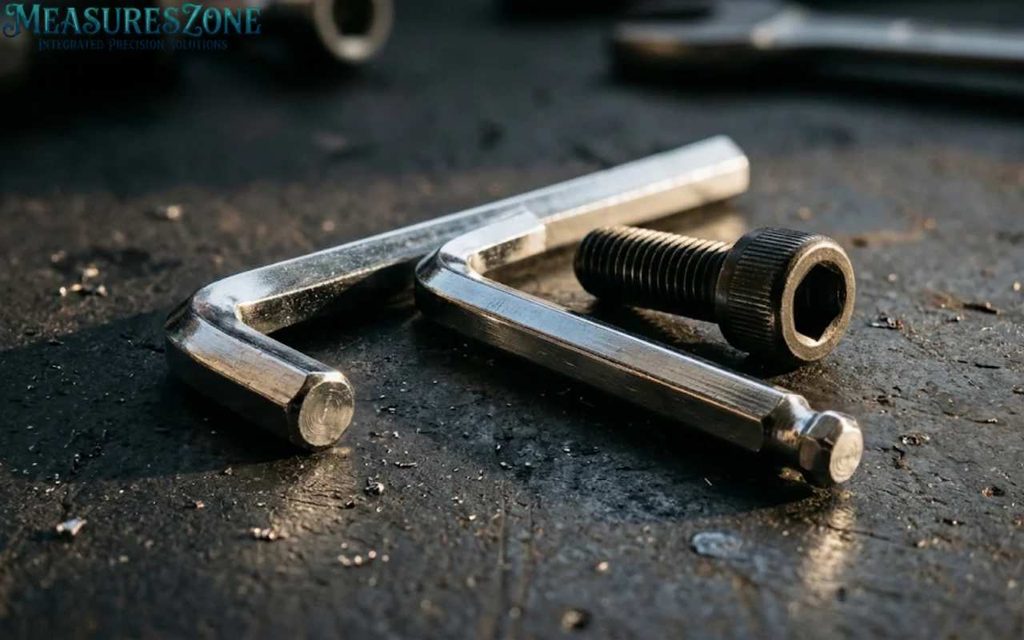
A 4 mm hex key measures four millimeters across the flats of its hexagon. That fits the socket of an M5 socket head screw. It surprises many beginners because the key size differs from the screw size.
Feeler Gauge Blade
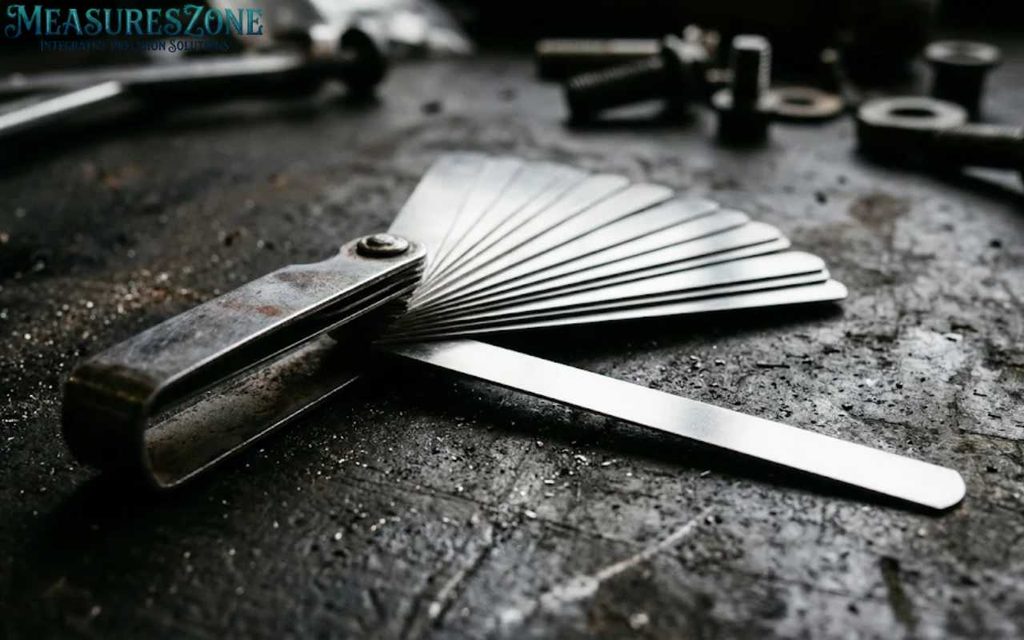
A feeler gauge blade is a thin strip of steel stamped with its blade thickness. Standard automotive sets stop near 1 mm. However, industrial suppliers sell single steel measuring blades in thicker sizes, including 4.0 mm.
Use one for gap measurement. Slide the blade between two surfaces. A snug drag means the gap matches the stamped size. This precision measurement beats eyeballing every time. Learn more about the feeler gauge.
Polyurethane Tubing

Factories run on 4 mm tubing. The SMC TU0425 polyurethane tubing, for example, has a four millimeters outer diameter and a 2.5 mm inner bore. Technicians use it for pneumatic tubing and compact industrial air lines with push-in fittings. See the maker’s catalog at SMC.
Banana Plug
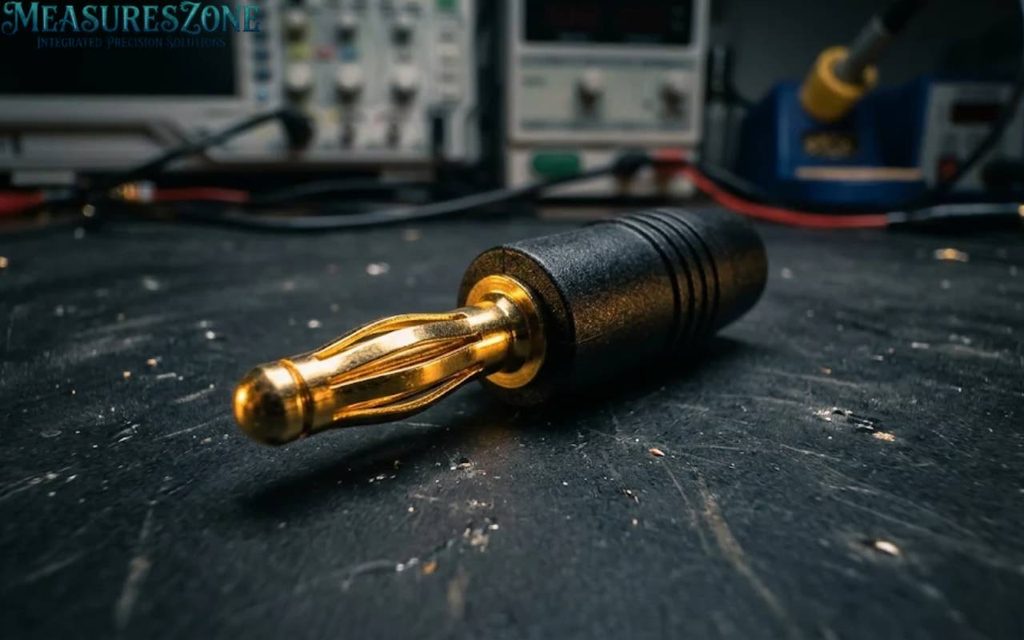
Multimeter leads and lab power supplies use a 4 mm banana plug. The four millimeters describes the pin diameter. Smaller 2 mm miniature plugs exist too, but they will not fit a standard four millimeters jack.
Explore what 6mm looks like with everyday objects.
Plywood Sheet
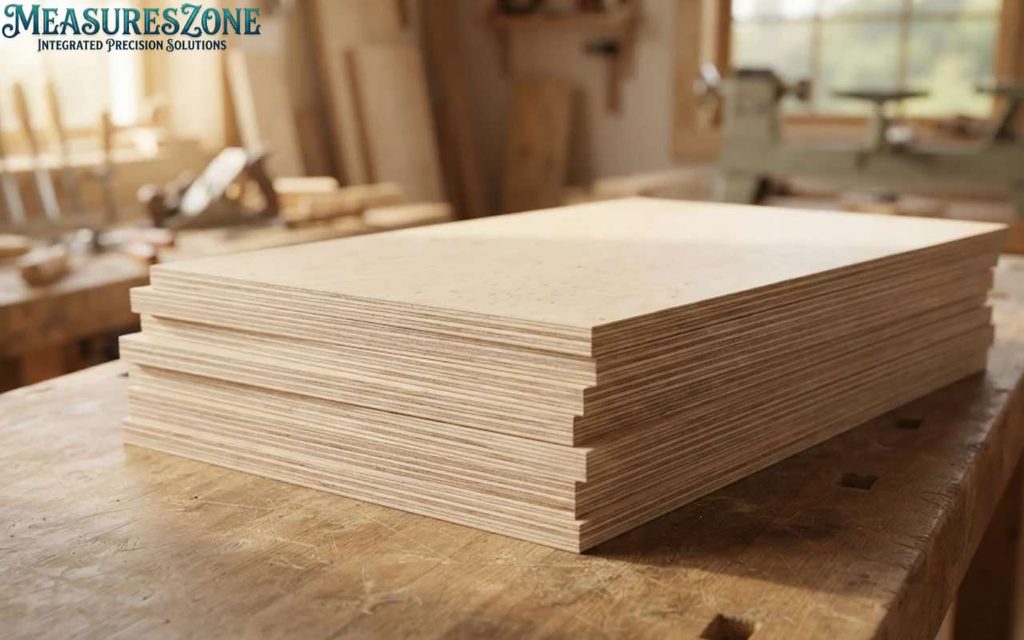
Thin plywood in metric markets often comes in four millimeters thickness. Crafters use it for model building, drawer bottoms, and cabinet backs. US sheets labeled 1/8 in measure 3.175 mm, so they run 0.825 mm thinner. Real panels can vary a little from the label.
Toughened Glass

A four millimeters pane of toughened glass suits small shelves, cabinet doors, and compact tabletops. Picture frame glass usually runs about 2 mm, so four millimeters feels twice as sturdy. Float glass at this thickness commonly carries a tolerance near plus or minus 0.2 mm.
OO Gauge Scale Model

British model railways use 4 mm to 1 foot, giving a 1:76.2 scale. A 6 ft figure becomes about 24 mm, while a 40 ft railway carriage measures around 160 mm. Here, four millimeters describes the scale, not thickness or width.
OO gauge uses a 16.5 mm track gauge, also used by HO scale at 1:87. Although models look slightly narrow, OO remains Britain’s most popular model railway scale. Hobbyists seeking greater accuracy use finer standards like EM and P4.
Explore the Dead Sea’s dimensions, extreme salinity, and fascinating features.
What the Evidence Labels Mean
Not every “four millimeters” claim carries equal weight. This key sorts them by how reliable the number is:
- Exact: the standard or listing defines 4.0 mm
- Nominal: the label says four millimeters but real parts vary within a tolerance
- Typical: common in the market but not guaranteed
| Object | Label |
|---|---|
| 4 mm guitar pick | Exact (published dimension) |
| 4 mm knitting needle | Exact (size designation) |
| M4 screw | Nominal |
| 4 mm drill bit | Nominal |
| 4 mm hex key | Nominal |
| Feeler gauge blade | Exact (stamped thickness) |
| 4 mm tubing | Nominal |
| 4 mm banana plug | Nominal |
| 4 mm plywood | Typical |
| 4 mm toughened glass | Nominal |
| OO gauge scale | Exact (defined ratio) |
A nominal size is a name, not a promise. It is a size designation that real parts approach within a manufacturing tolerance. When a product page lists a published dimension, check whether the maker also posts manufacturer specifications with the allowed range.
Case Study: Why a 4 mm Hole Cannot Hold an M4 Thread
Picture a hobbyist who wants to tap an M4 thread into an aluminum bracket. He grabs a four millimeters drill because the screw is “4 mm.” The hole comes out the same size as the screw’s outer thread diameter. Nothing is left for threads to grip.
Now run the numbers. A 3.3 millimeters tap drill leaves 0.35 millimeters of material on each side of the hole: (4.0 minus 3.3) divided by 2. The tap cuts into that material and forms real threads. The fix costs nothing. Check a tap drill chart before you drill.
“Measure twice, cut once.” Traditional woodworking saying
The saying fits here. One quick look at the nominal measurement saves a ruined part.
See what 300 ml looks like in everyday containers.
Near 4 mm Comparisons, With the Difference Calculated
Neighboring sizes cause confusion because they look alike. This table shows the exact gaps:
| Size | In mm | Difference from 4 mm |
|---|---|---|
| 3 mm | 3.000 | 1.000 mm smaller |
| 1/8 in | 3.175 | 0.825 mm smaller |
| 5/32 in | 3.969 | 0.031 mm smaller |
| 4.5 mm | 4.500 | 0.500 mm larger |
| 3/16 in | 4.763 | 0.763 mm larger |
| 5 mm | 5.000 | 1.000 mm larger |
How to Measure 4 mm Accurately
Different jobs call for different measuring instruments. Pick the tool that matches the accuracy you need.
- Metric ruler: good for rough checks with about 0.5 mm precision. Read the millimeter ticks straight on to avoid parallax.
- Digital calipers: the everyday precision tool. A typical 150 mm model shows caliper resolution of 0.01 mm and lists measurement accuracy near plus or minus 0.02 mm. Zero them before each use. Read about calipers.
- Feeler gauge or drill gauge: best for gaps and hole sizes where you want a physical fit.
Follow these habits for clean dimensional measurement:
- Close the jaws gently, since heavy pressure squeezes soft parts and skews the reading
- Measure across thread peaks for a screw’s major diameter
- Check that a ruler’s end is not worn before you start at zero
- Measure at two or three spots when the part might taper
Common Mistakes About four millimeters
Avoid these slips:
- Mixing up mm and cm. Four millimeters is 0.4 cm, not 4 cm.
- Treating 5/32 in and 4 mm as equal. They differ by 0.031 mm.
- Assuming a 4 mm screw needs a four millimeters hole. Tapping needs 3.3 mm. A clearance hole runs about 4.5 millimeters.
- Confusing UK 6 needles with US 6. UK 6 equals 5 mm and US 6 equals four millimeters.
- Reading diameter as radius. A four millimeters diameter has a 2 mm radius.
Frequently Asked Questions
Find quick answers to common questions about Four millimeters measurements, cable sizes, feet conversions, and rainfall.
How many feet is 4 mm?
Four millimeters equals approximately 0.0131 feet or 0.0044 yards. In inches, that is 0.15748 inches.
Is a 4 mm² cable the same as a Four millimeters cable?
No. mm² measures the conductor’s cross-sectional area, not its width. A solid 4 mm² conductor has a diameter of about 2.26 millimeters, excluding insulation.
How much water is 4 mm of rain?
Four millimeters of rain equals 4 liters of water per square meter. That is approximately 0.16 inches of rainfall, generally considered a light to moderate shower.
Final Thoughts on 4 mm Size
You can now picture Four millimeters without squinting at a ruler. Three anchors do the heavy lifting: the M4 screw, the 4 mm drill bit, and the 5/32 in fraction. Add the dime stack and you carry a built-in reference in your pocket.
One habit pays off every time. Measure before you buy parts. Confirm whether the Four millimeters describes thickness, diameter, bore, or thread size, and check the published dimension against the manufacturer specifications. That small step turns a guess into a fit.
Test Your Knowledge of 4 mm
Test your knowledge of Four millimeters with three quick multiple-choice questions and check your answers.
1. How many centimeters equal 4 mm?
A. 0.04 cm
B. 0.4 cm
C. 4 cm
D. 0.004 cm
2. What is the closest inch fraction to 4 mm?
A. 1/8 inch
B. 3/16 inch
C. 5/32 inch
D. 1/4 inch
3. What tap drill size is used for a standard M4 thread?
A. 2.5 mm
B. 3.3 mm
C. 4 mm
D. 4.5 mm
Answers
- B. 0.4 cm
- C. 5/32 inch
- B. 3.3 mm
Explore how tall 1000 feet looks in real life.

David John is an experienced blogger and the admin of the Measurements category at Measures Zone. He shares accurate and easy to understand measurement guides for readers.