

Look at the big bottle on your desk. Chances are it holds 1000 ml, or one thousand milliliters, and you never gave that number a second thought. The answer is simple: 1000 ml equals 1 liter. It is the anchor of metric volume and the most common liquid measurement on the planet.
Still, a number on a label means little until you can picture it. This guide converts 1000 milliliters into liters, cups, and ounces. You will also meet seven real-life comparisons, learn how to measure a liter without special gear, and run a small natural dye experiment that puts a full liter of water to work.
1000 ml to Liters, Cups, Ounces and More
The prefix “milli” means one thousandth. A liter also equals exactly one cubic decimetre. The International Bureau of Weights and Measures accepts the liter for use alongside SI units. That is why you will see it on everything from soda bottles to fuel pumps.
Here is the full liter equivalent chart:
| Unit | Equals 1000 ml |
|---|---|
| Liters | 1 L |
| Cubic centimeters (cm³) | 1,000 cm³ |
| Cubic decimeters | 1 dm³ |
| US fluid ounces | about 33.81 fl oz |
| Imperial fluid ounces (UK) | about 35.20 fl oz |
| US cups | about 4.23 cups |
| Metric cups (250 ml) | 4 cups |
| US pints | about 2.11 pints |
| US quarts | about 1.06 quarts |
| Imperial pints (UK) | about 1.76 pints |
| US gallons | about 0.264 gallons |
1000 ml in Metric Cups and US Cups
Cooks in Australia and New Zealand use a 250 ml cup. Four metric cups fill a liter exactly. That makes cup measurement easy in those kitchens.
American cup measurement works differently. One US cup holds about 236.6 ml. As a result, 1000 ml equals 4.23 cups in the US. If you scoop four US cups, you will land 54 ml short. For most kitchen measurements, that gap hardly matters. For baking, it can.
What Does 1000 ml Look Like? 7 Everyday Examples
A liter sneaks into your life more often than you think. These practical examples show how many common household items and familiar containers hold exactly 1000 ml.
A Reusable 1-Liter Water Bottle
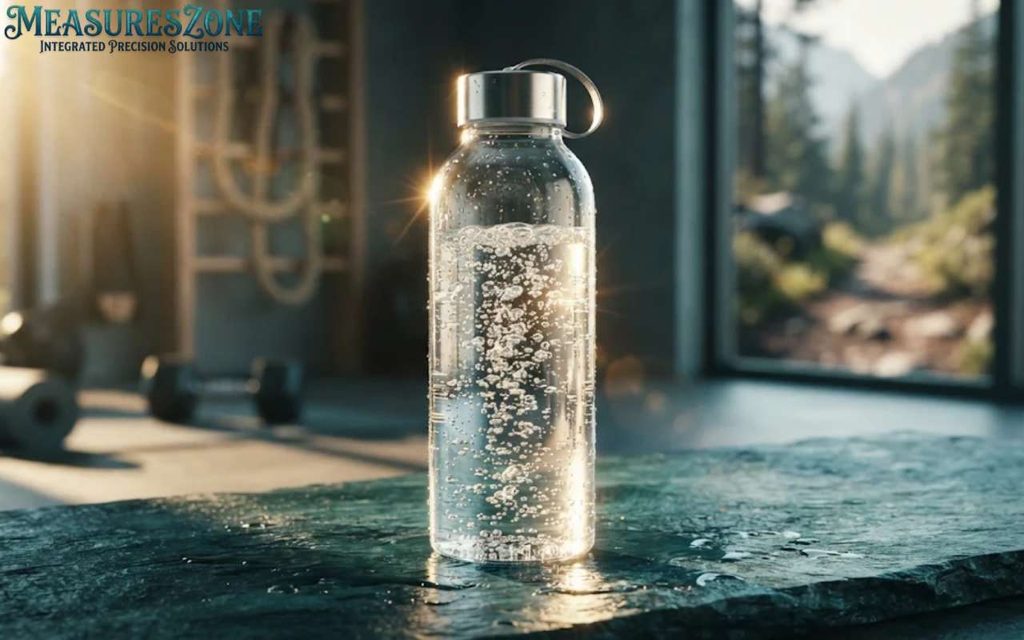
A reusable bottle marked 1 L is the easiest picture of this volume. Brands such as Nalgene sell a one-liter bottle in a wide-mouth design that gets plenty of trail and gym time. Fill it to the brim and you hold 1000 ml of drinking water.
Check the bottle capacity before you trust it. A bottle labeled 1 L often reaches that number only when filled to the top. Leave room for a lid and you will carry a little less.
For context, the US National Academies suggest total daily water intake of about 3.7 liters for men and 2.7 liters for women. That total includes water from food. So one liter covers roughly a third of the daily need.
A Carton of Milk or Juice
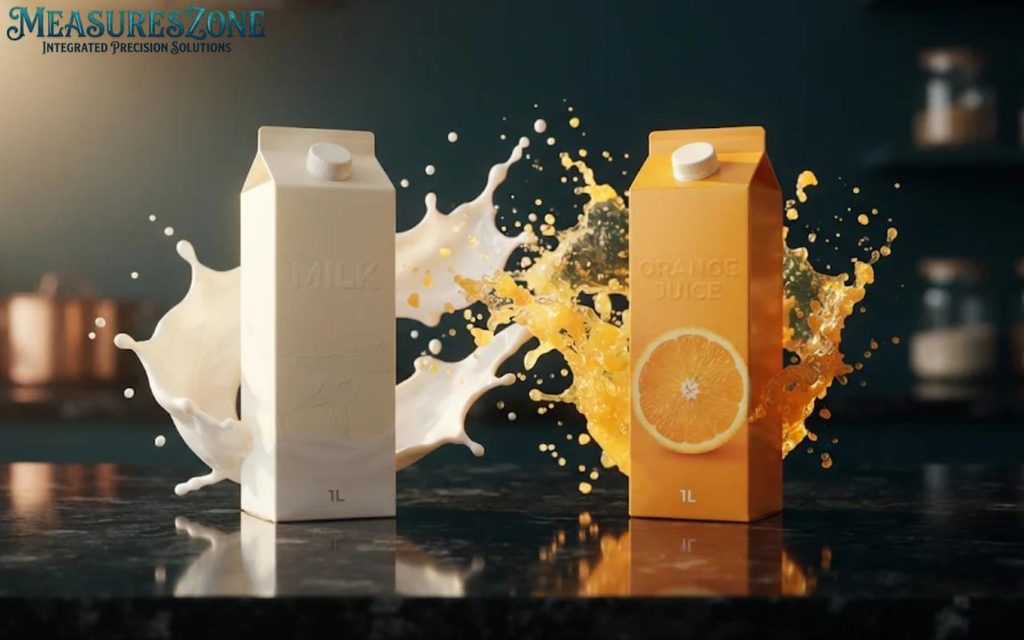
Walk into a grocery store in Europe and you will find 1-liter Tetra Pak cartons of milk and juice everywhere. These boxes are a classic liquid container because they stack well and ship efficiently.
The US plays by different rules. American milk comes in quarts at 946 ml. That is about 5% smaller than a liter. If you shop across borders, check the label before you assume.
A 1-Liter Soda Bottle
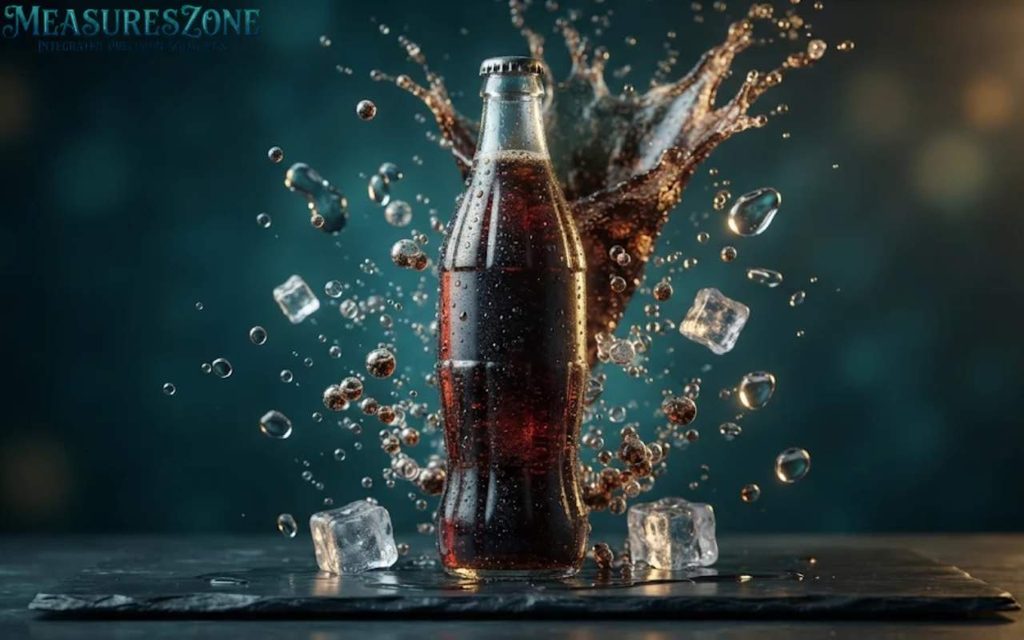
Many soft drinks sell in 1 L plastic bottles in countries around the world. Picture a standard 12-ounce can. It holds 355 ml. A liter equals about 2.8 of those cans.
That comparison helps with portion sizes. Pour one liter into glasses of 250 ml each and you will fill four.
Explore what 6mm looks like with everyday objects.
A Cube 10 cm on Each Side
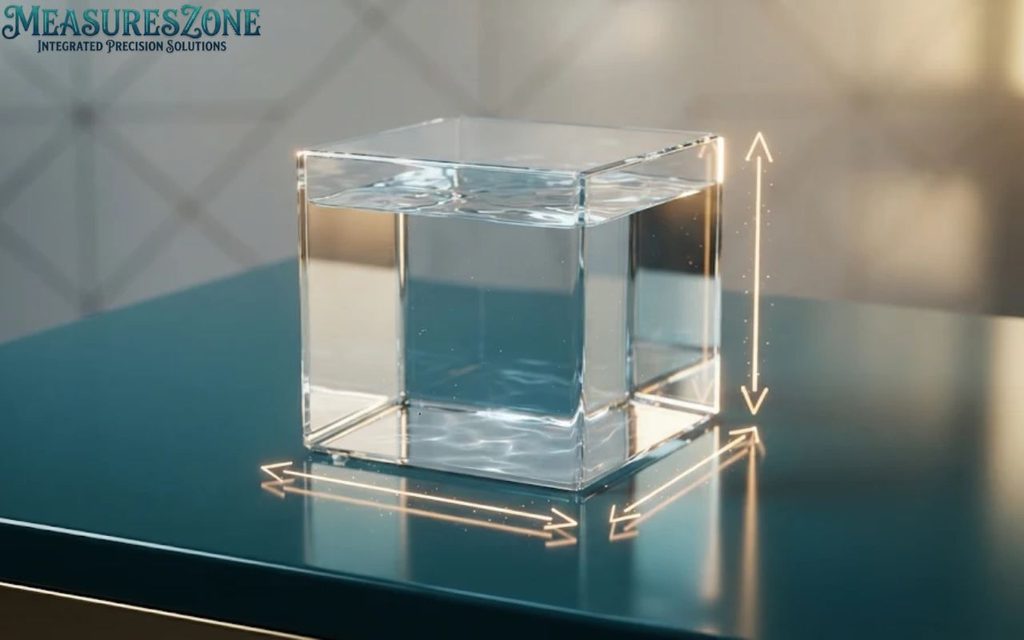
This one shows what the liter really means. Take a cube measuring 10 cm × 10 cm × 10 cm. Its volume is 1,000 cubic centimeters. Since 1 ml equals exactly 1 cm³, the cube holds 1000 ml.
Scientists like this link between volume units. A liter is simply a cubic measurement of 1 dm³. Imagine a small storage box or a large mug turned into a perfect cube. Hollow it out and fill it with water. You have got a liter.
A Kilogram of Water
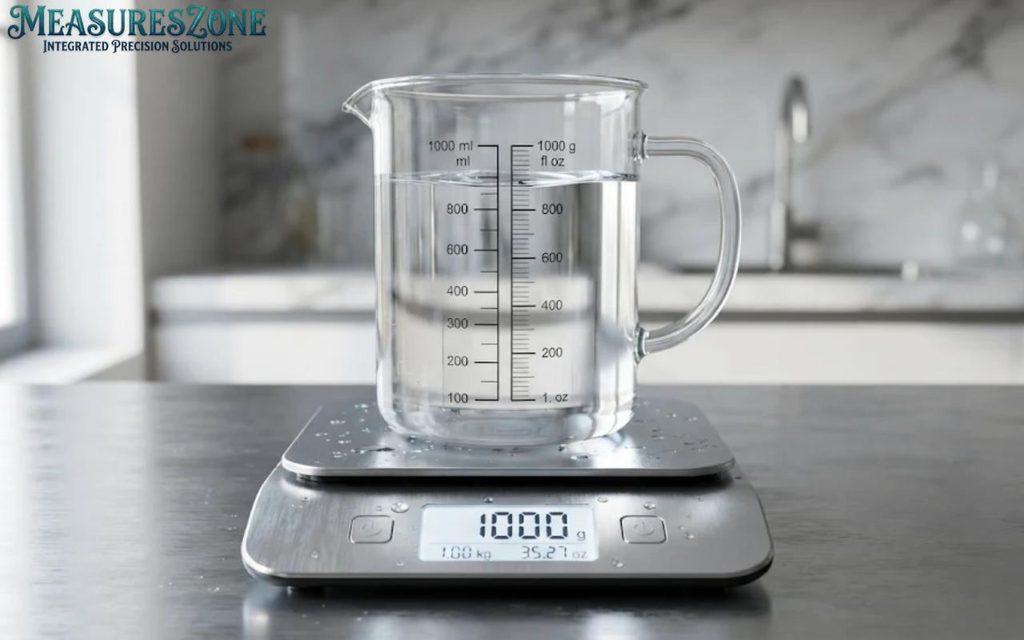
Here is where the metric system shows off. A liter of water weighs close to one kilogram. Water density peaks near 1.000 kg per liter at about 4 °C. At room temperature (20 °C) the figure drops to about 0.998 kg per liter.
So 1 kg water takes up roughly 1000 ml of space. In pounds that is about 2.2 pounds. French scientists in the 1790s tied the kilogram to the mass of a liter of water. Today the kilogram has a different definition. Even so, the link remains handy for everyday liquid mass estimates.
Americans have an old saying for the same idea:
“A pint’s a pound the world around.”
It works loosely, since 16 US fluid ounces of water weigh about 1.04 pounds. A liter, however, weighs more than two of those pints. Use the saying for small amounts only.
Explore the Dead Sea’s dimensions, extreme salinity, and fascinating features.
A 1-Liter IV Fluid Bag
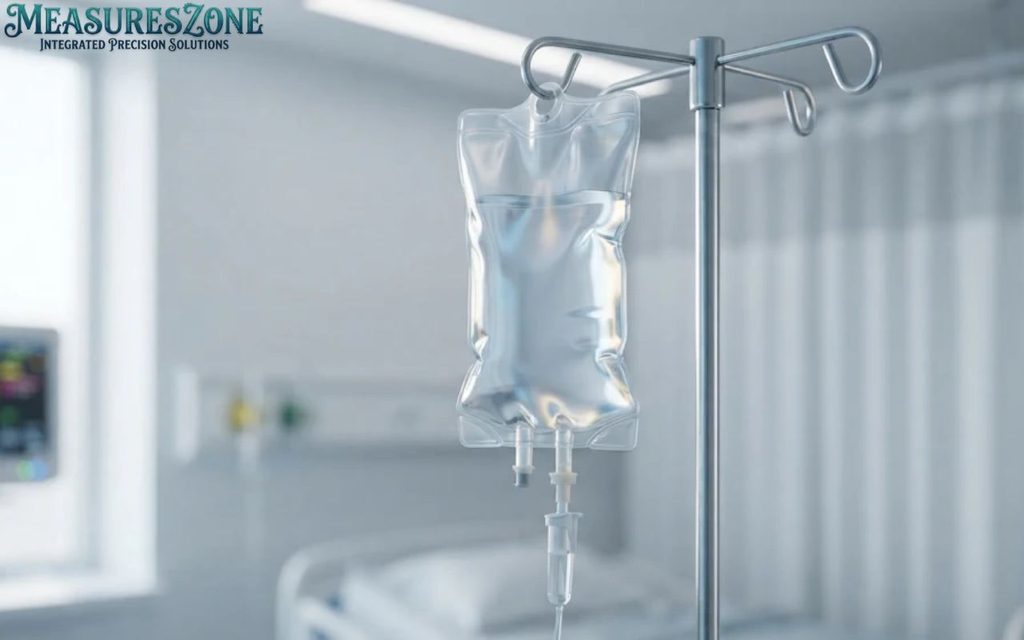
Hospitals stock IV bags in sizes such as 250 ml, 500 ml, and 1000 mL. A standard liter of normal saline contains 9 grams of salt. That is a 0.9% solution. Nurses and doctors read volume in milliliters all day long. A 1000 ml bag shows how precise this liquid measurement needs to be in medicine.
A 1-Liter Bottle of Engine Oil
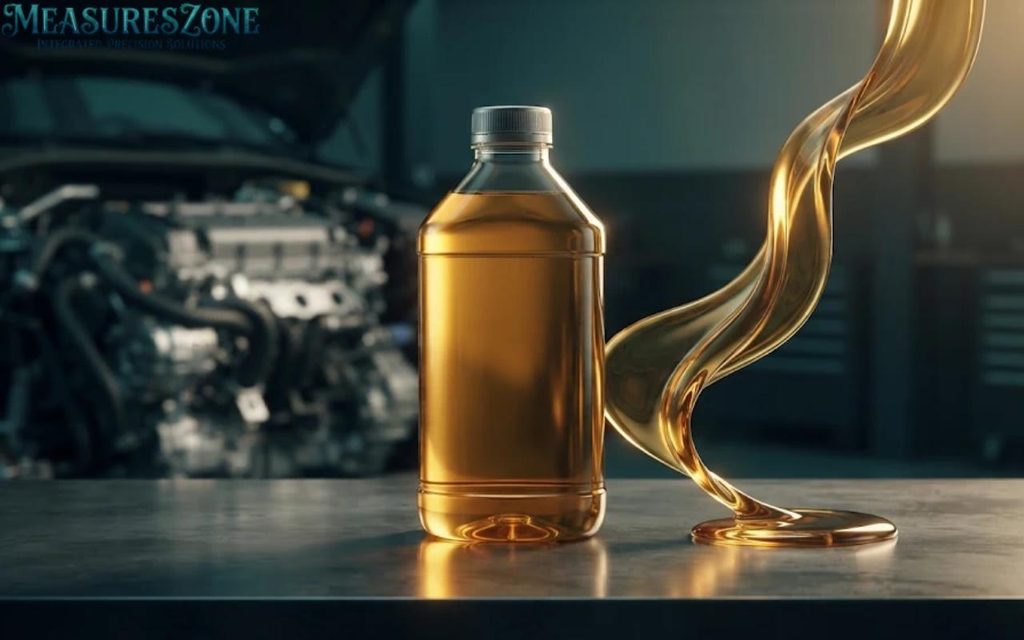
Walk down the oil aisle and you will spot 1-liter bottles lined up beside bigger jugs. Most passenger car engines need about 3.5 to 5 liters during an oil change. A mechanic often pours three or four of these bottles into one engine.
1000 ml vs a US Quart and Other Easy Mix-Ups
Small differences in units cause big headaches. This table lines up the usual suspects:
| Measure | Volume in ml | Difference from 1000 ml |
|---|---|---|
| Metric liter | 1,000 ml | none |
| US quart | 946 ml | 54 ml less |
| Imperial quart (UK) | 1,137 ml | 137 ml more |
| Four US cups | 946 ml | 54 ml less |
| Four metric cups | 1,000 ml | none |
Case Study: The Soup Recipe
Picture a UK food blog that asks for 1000 ml of stock. An American reader measures four US cups instead. That is 946 ml, so the soup ends up with about 3.5 tablespoons less broth. The pot still tastes fine. A bread dough or cake batter built on the same ratio could turn out drier than planned.
The fix takes ten seconds. Convert the recipe first, or grab a measuring jug with both US and metric markings.
See what 300 ml looks like in everyday containers.
How to Measure 1000 ml Without a Measuring Jug
No jug? No problem. Several measurement methods get you to a liter:
- Pour two 500 ml bottles. Half-liter bottles are sold nearly everywhere (about 16.9 US fluid ounces each). Two water bottles of this size equal 1000 ml.
- Weigh it. Place a container on a kitchen scale and zero it. Pour in water until you reach 1,000 g. That is about 1000 ml for everyday cooking.
- Use a graduated container. Many baby bottles, blender jars, and pitchers carry printed volume lines.
Two tips improve accuracy. First, set the measuring container on a flat surface. Second, read the bottom of the curved water surface at eye level. Pros call that curve the meniscus.
How to Convert 1000 ml
You only need a few formulas for any volume conversion:
- ml to liters: divide by 1000
- liters to ml: multiply by 1000
- ml to US fluid ounces: multiply by 0.033814
- ml to US cups: divide by 236.588
- ml to cm³: keep the same number
Try them on a few real amounts:
- 1000 ml ÷ 1000 = 1 L
- 2500 ml ÷ 1000 = 2.5 L
- 750 ml ÷ 1000 = 0.75 L (the size of a standard wine bottle)
- 1000 ml × 0.033814 = 33.8 US fl oz
- 1000 ml ÷ 236.588 = 4.23 US cups
Simple trick: moving the decimal point three places left turns milliliters into liters. Three places right goes the other way.
A Natural Dye Experiment With 1000 ml of Water
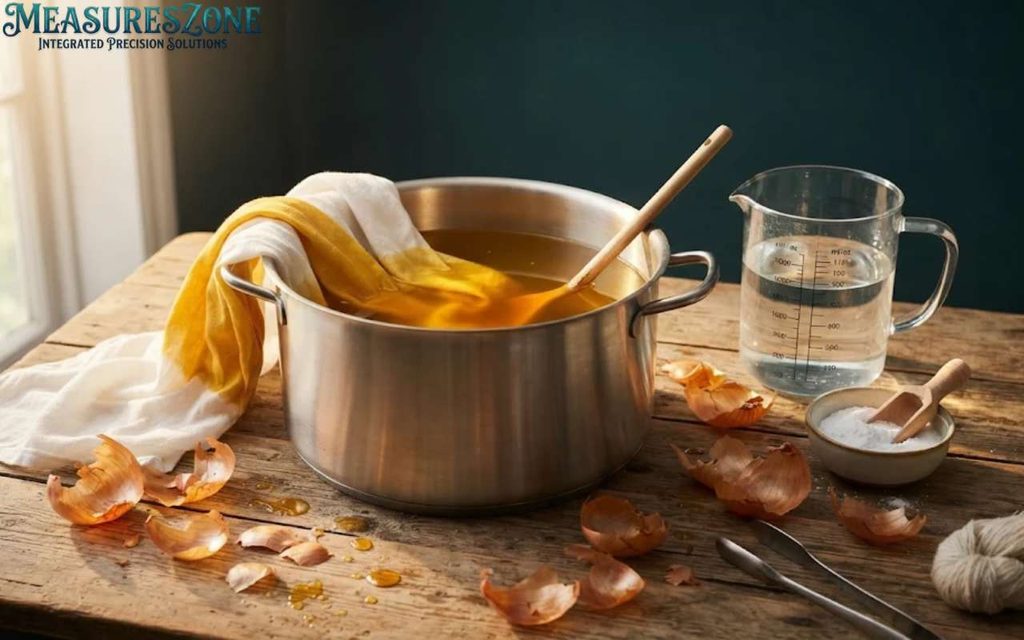
Want to see a liter in action? This natural dye experiment turns kitchen scraps into color. It uses onion skin dye, a classic plant-based dye that gives warm yellows and golds.
Aim
Extract color from onion skins and dye cotton fabric using 1000 ml of water per bath.
Materials
- 50 g of clean cotton fabric (a small cut of an old white T-shirt works)
- About 25 g of dry yellow or brown onion skins
- 10 g of alum (sold as a pickling or dyeing mordant)
- 2 liters of water in total
- Two stainless steel or enamel pots kept only for dyeing
- A kitchen scale, a measuring jug, tongs, a strainer, and rubber gloves
Method
- Wash the fabric with mild soap to remove oils and finishes. Rinse well.
- Alum treatment: Dissolve 10 g of alum in 1000 ml of hot water. Add the wet fabric. Simmer gently for about an hour. Let it cool, then rinse lightly.
- Natural color extraction: Add the onion skins to a second pot with 1000 ml of water. Simmer for 45 to 60 minutes. Strain out the skins.
- Place the treated fabric into the warm dye bath. Simmer for 30 to 60 minutes, stirring gently.
- Turn off the heat. Let the fabric sit in the bath for several hours or overnight for deeper shades.
- Rinse until the water runs clear. Hang the cloth to dry away from direct sun.
Expected Results
Expect a soft yellow, golden tan, or light orange. Cotton fabric dyeing gives gentler tones than wool or silk because plant fibers hold less dye. Color depth depends on how many skins you use and how long the fabric soaks.
Conclusion
A single liter of water is enough to produce a visible, usable shade. The test also proves why careful volume measurement matters. Too much water dilutes the dye. Too little can leave uneven patches. Repeat the test with different amounts of skins and compare swatches.
Safety Precautions
- Wear gloves. Hot dye baths and alum can irritate skin.
- Avoid breathing alum powder. Mix it carefully.
- Never use dyeing pots for food afterward.
- Keep the tools away from kids and pets.
- Work in a ventilated area and handle hot liquid with care.
Explore how tall 1000 feet looks in real life.
More FAQs About 1000 ml
Here are some quick answers to common questions about 1000 ml, its conversions, weight, and everyday uses.
How many tablespoons are in 1000 ml?
1000 ml equals about 67.6 US tablespoons or 66.7 metric tablespoons.
Does 1000 ml of every liquid weigh 1 kg?
No. Only water weighs approximately 1 kg per liter. Milk weighs about 1.03 kg, olive oil 0.92 kg, and honey 1.4 kg per liter.
Can you take 1000 ml of liquid in carry-on luggage?
Usually, no. Most airports limit liquids to 100 ml per container in carry-on luggage. Rules may vary by airport, so check before traveling.
Final Thoughts
So, how much is 1000 ml? It is 1 liter, 1,000 cm³, about 33.8 US fluid ounces, and roughly 1 kg of water. That one number links your water bottle, your kitchen scale, your car’s oil change, and even a hospital IV bag.
Next time you grab a bottle or pour a measuring jug, you will know exactly what a liter looks like. Try the dye experiment for a hands-on test. And when a recipe uses milliliters, convert before you pour.
See how long 1 inch is with everyday objects.

David John is an experienced blogger and the admin of the Measurements category at Measures Zone. He shares accurate and easy to understand measurement guides for readers.