
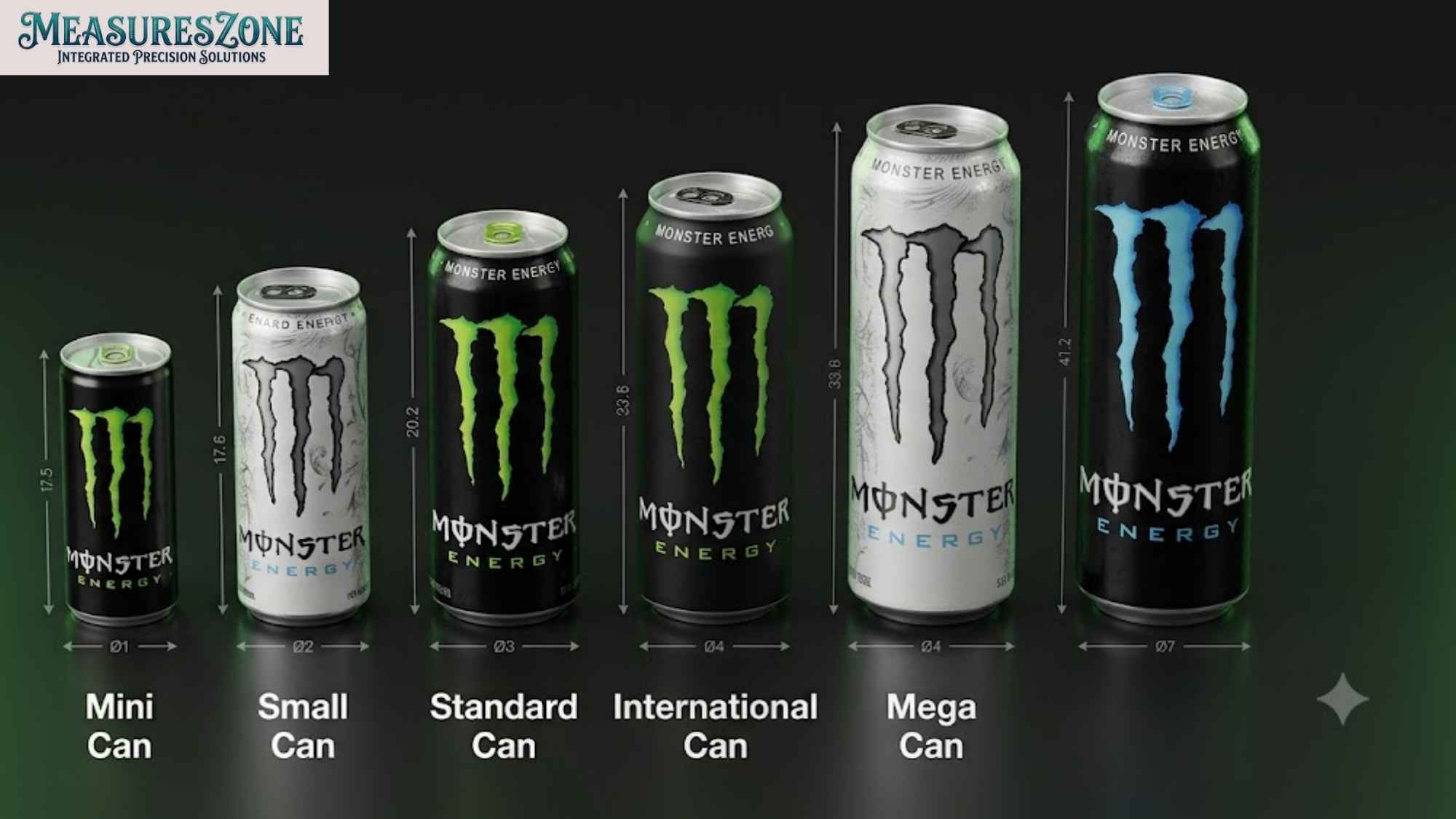
Have you ever grabbed two cans of Monster and wondered why one is so much heavier than the other? Well, that is not your imagination playing tricks on you. There is more to Monster than one size of can; there are different kinds of cans of Monster, depending on their size and shape.
That is exactly what this guide sorts out. We are breaking down every Monster can Monster Beverage Corporation currently makes, real heights, diameters, weights, and caffeine numbers, no fluff, no repeated stats. Read it once and you will actually know what you are grabbing before it is even in your hand.
An Overview of Monster Energy Drink
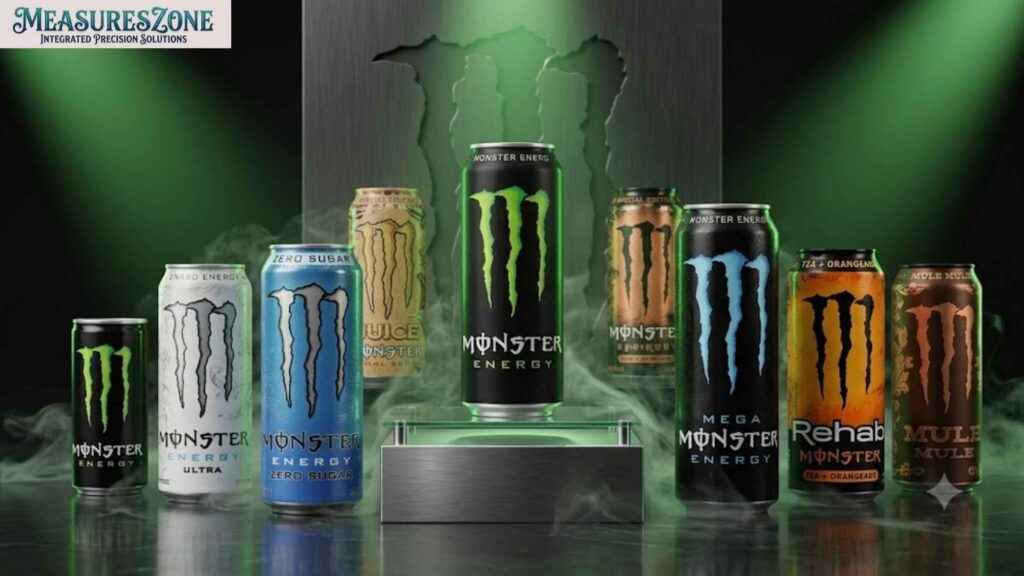
Monster Energy launched in 2002 and quickly became the number two energy drink brand after Red Bull. Most people credit the marketing or the taste, but a lot of that success comes down to something rarely considered: the can. Monster went with a bold, wide can instead of the thin, standard soda can shape.
The brand now runs several distinct product lines, each using a different can shape or bottle format. That matters beyond looks. Can size affects how a drink fits in your bag, what it costs per ounce, and how it stacks up against rival brands on the shelf.
It also changes how stores merchandise the product. A wider can just plain eats up more shelf space than a slim one does, and retailers notice that when they are deciding what to stock. That is a big reason the 16 oz standard can gets the prime real estate on shelves nationwide, while something like the Mega 24 oz or the mini 8.3 oz ends up tucked into a narrower, more limited spot..
Standard Monster Can Size
The standard Monster can holds 16 oz (473 ml), and it is the version most people picture when someone says “Monster Energy can.” It is the size stacked in convenience store coolers nationwide, and it is the benchmark every other Monster can size gets measured against.
| Measurement | Standard 16 oz Can |
|---|---|
| Height | 6.2 in (15.7 cm) |
| Diameter | 2.6 in (6.6 cm) |
| Weight (full) | ~16.9 oz (479 g) |
| Weight (empty) | ~0.5 oz (14 g) |
| Material | Aluminum |
| Caffeine | 160 mg |
That 2.6-inch diameter is noticeably wider than your typical 12 oz soda can. Pick one up, and you will feel the difference before you even notice how much liquid’s inside. And that is no accident, either.
Red Bull had already locked down the slim, narrow can look by the time Monster hit shelves, so Monster’s team did the opposite on purpose. Wider. Taller. Not just “more soda in a bigger can,” but a genuinely different shape.
Other Monster Can Sizes
| Can Size | Volume | Height | Diameter | Caffeine |
|---|---|---|---|---|
| Mini | 8.3 oz (246 ml) | 4.75 in | 2.1 in | 80 mg |
| Small | 12 oz (355 ml) | 6.1 in | 2.25 in | 120 mg |
| Standard | 16 oz (473 ml) | 6.2 in | 2.6 in | 160 mg |
| International | 500 ml | 6.7 in | 2.6 in | 160 mg |
| Mega | 24 oz (710 ml) | 7.5–8.0 in | 3.0 in | 240 mg |
A few things jump out here. Take the 8.3 oz mini can. It cuts both height and caffeine roughly in half compared to the standard size. That makes it a solid pick if you are testing a new flavour and do not want to commit to a full serving. It is also the only Monster can small enough to slip into a jacket pocket without bulging out.
The 12 oz can plays it differently. It keeps nearly the same height as the standard can but trims the diameter, so it feels slimmer in your hand even though it is holding only slightly less liquid.
Then there is the 24 oz can, better known as the Mega Monster, and this is where the real upgrade shows up. It is not just bigger, it comes with a resealable can top that lets you close the drink and come back later. That is what makes it the go to for truckers, gamers, and anyone on a long shift who will not finish a can in one go.
Nutrition Facts of Monster Original (16 oz)
| Nutrient | Amount per 16 oz can |
|---|---|
| Calories | 210 |
| Total Sugar | 54 g |
| Caffeine | 160 mg |
| Sodium | 370 mg |
| Total Carbohydrates | 54 g |
| Vitamin B6 | 250% Daily Value |
| Vitamin B12 | 200% Daily Value |
Specialty Product Lines and Their Can Shapes
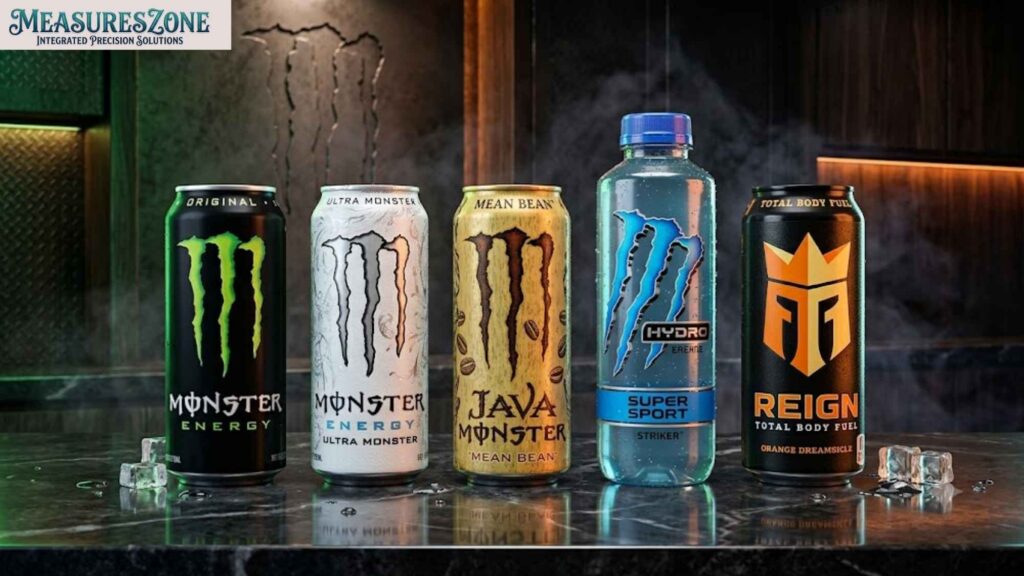
Monster’s sub-brands each get their own can or bottle, shaped around how people actually use them, not just a bigger or smaller version of the standard can.
Ultra Monster
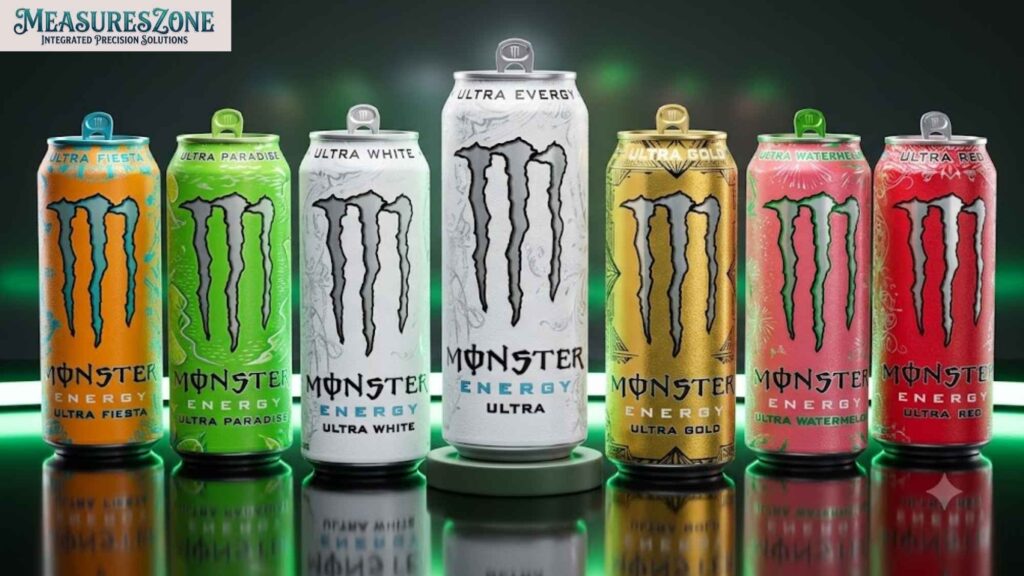
Ultra Monster is basically Monster Original without the sugar crash waiting for you afterward. Same 16 oz can, same fit in your cup holder or the vending machine down the hall, but you are only looking at about 10 calories instead of the full sugar load.
Caffeine barely budges either, still sitting around 150 to 160 mg depending on which flavour you grab. So really, the only thing you are giving up is the sugar. Everything else stays put.
See the standard Coke can dimensions and sizes.
Monster Hydro bottle
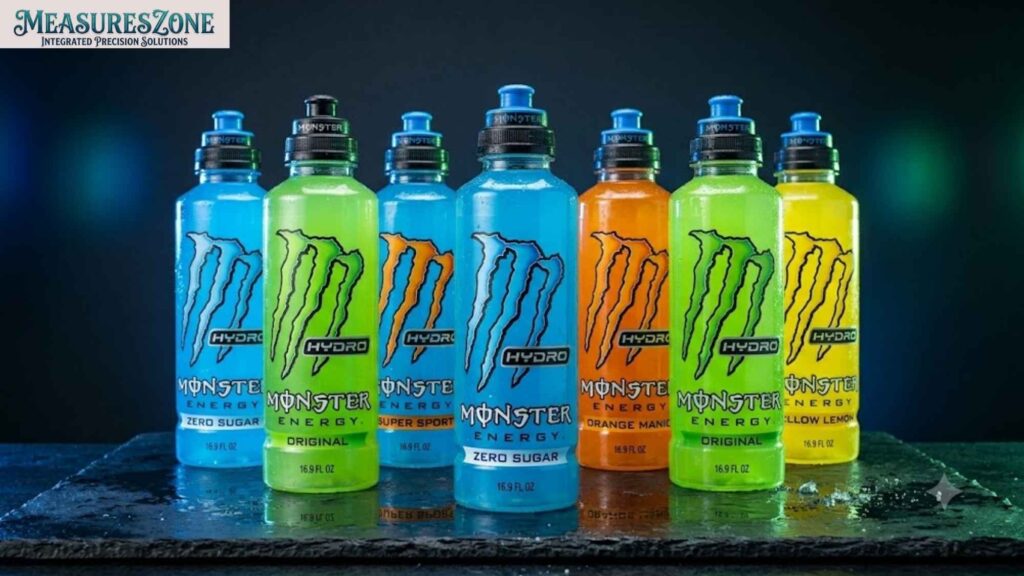
The Monster Hydro bottle ditches the can altogether. It is a 25 oz (739 ml) plastic bottle, about 8.7 inches tall, with a 2.75-inch diameter and a wide screw cap you can reseal. Toss it in a backpack and it holds up way better than a can would. Plus, you are not stuck chugging the whole thing in one go.
Java Monster line
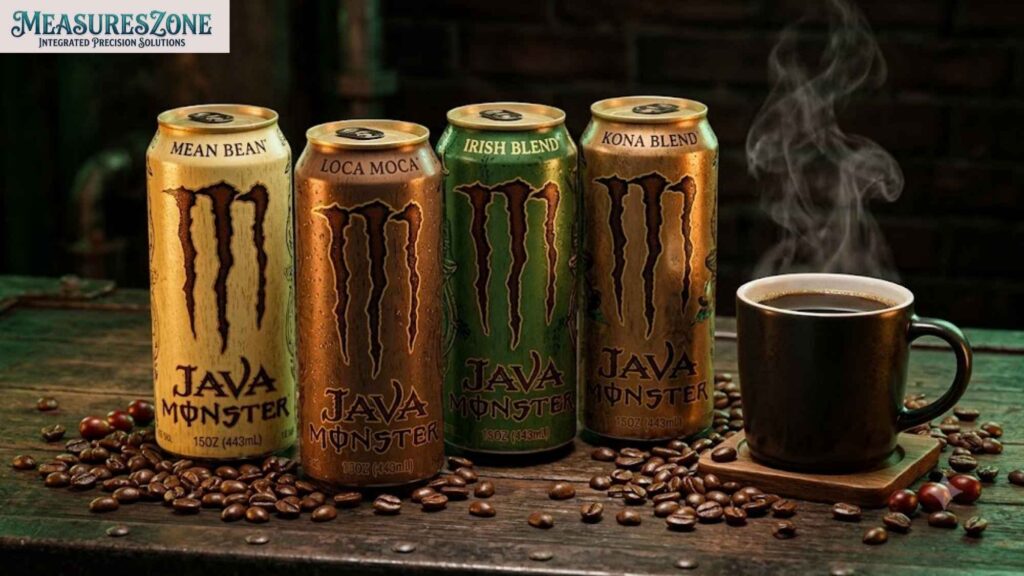
The Java Monster line blends coffee into the energy formula, using a shorter, wider can than Monster’s usual shape. At 15 oz (443–458 ml), it stands about 4.9 inches tall with a 2.6-inch diameter, closer to a soda can profile. It still packs roughly 188 mg of caffeine thanks to the added coffee extract.
Reign Total Body Fuel
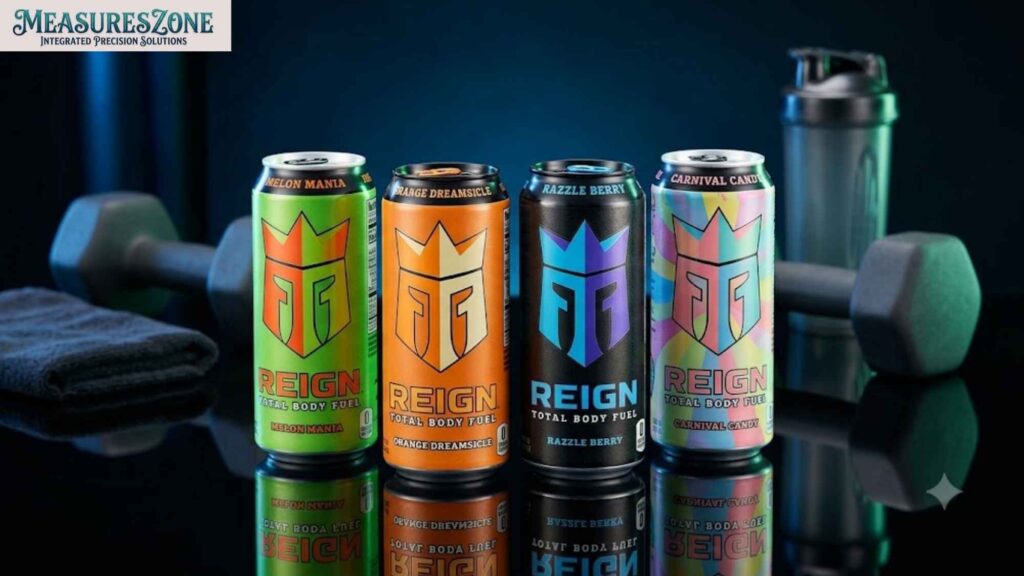
Reign Total Body Fuel is built for a different crowd, the gym-and-workout crowd, and it shows in the can itself: a taller, slimmer 16 oz design that stands about 6.6 inches tall with a 2.5-inch diameter.
But the real standout is not the shape, it is what is inside. Reign packs 300 mg of caffeine per can, nearly double what you would get from Monster Original, along with BCAAs, CoQ10, and electrolytes. This is not a drink meant for an afternoon slump. It is built for right before you lift.
Learn about Pringles can sizes and dimensions.
Aluminum Can Construction and Why Thickness Matters
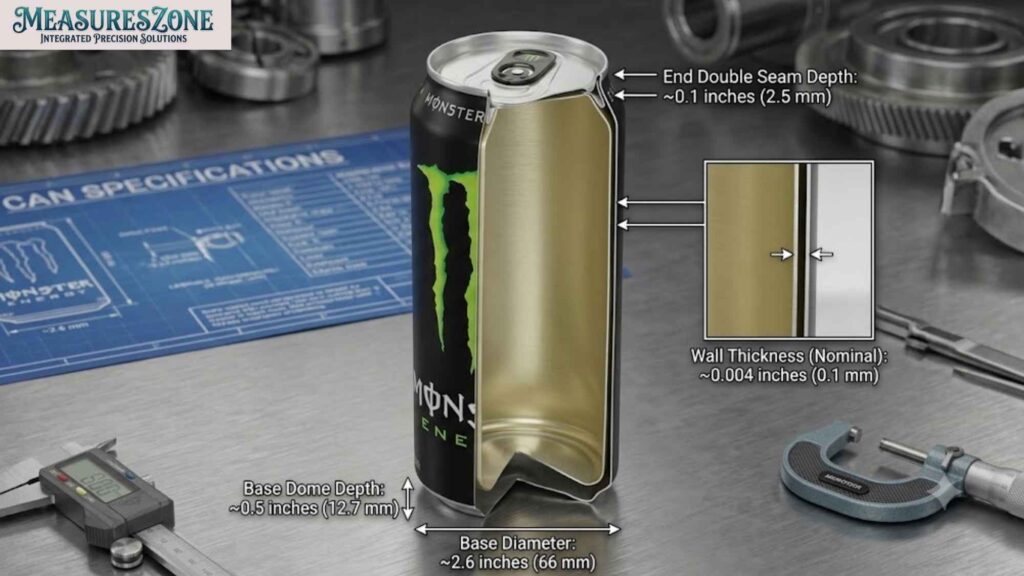
Monster cans stick with aluminium instead of steel, and that is not just a cost decision. Aluminium shrugs off corrosion from the acidity in energy drinks, cools down faster once it hits ice, and recycles far more easily once you are done with it.
Take the standard 16 oz can: its wall thickness comes in around 0.0043 inches, which sounds paper-thin, and honestly, it kind of is. But that thin wall still holds its own against the carbonation pressure inside, staying light enough to toss in a bag while sturdy enough not to buckle in your hand.
Can gauge varies by size. The 24 oz Mega can gets a reinforced base to handle the extra liquid weight and its resealable cap, while the smaller 8.3 oz mini uses thinner aluminum since it carries less pressure and less weight overall.
This build quality is why Monster cans keep their shape better than cheaper store brands. A can that dents easily during transport risks breaking its seal, letting carbonation leak out before it ever reaches a cooler.
Common Myths About Monster Can Sizes
A few misconceptions about Monster can dimensions keep circulating online, so it is worth clearing them up directly:
- “The 16 oz can and the 500 ml international can are identical.” They are close, but not the same. The international version runs about half an inch taller due to a different production mold used for markets outside the US.
- “Bigger cans always mean more caffeine per ounce.” Not true. The Mega 24 oz can actually delivers roughly the same caffeine concentration per ounce as the standard can; the total dose is higher simply because there is more liquid, not because the formula changes.
- “Java Monster is just Monster Original with coffee added.” The can shape alone disproves this. Java Monster uses a shorter, wider mold entirely different from the standard line, closer to a traditional soda can than Monster’s signature silhouette.
- “All Monster cans are recyclable the same way.” The aluminium body recycles the same across sizes, but the Mega can’s plastic resealable cap needs to be removed and recycled separately in most municipal programs, since mixed-material caps can jam sorting equipment.
Check out these easy ways to visualise 8 inches.
Why Can Dimensions Vary Between Sources
If you have searched for Monster can measurements before, you have likely run into conflicting numbers. One source lists a 16 oz can at 6.2 inches tall, another says 6.9 inches. This discrepancy has a few real causes, not just sloppy reporting:
- Measurement point differences: some sources measure base-to-lid-tab, others measure base-to-rim, and that alone can shift a reading by a few tenths of an inch
- Metric-to-imperial rounding: a can listed as “16.5 cm” rounds differently depending on how many decimal places a source uses
- Manufacturing tolerance: aluminium can production allows small variances between production runs and plants
- SKU confusion: mixing up the domestic 473 ml can with the international 500 ml version, which genuinely does stand slightly taller
How Monster Compares to Other Energy Drink Brands
Monster is not the only wide-body can on the market, but its dimensions still stand out against its closest rivals.
| Brand | Standard Size | Height | Diameter |
|---|---|---|---|
| Monster Energy | 16 oz | 6.2 in | 2.6 in |
| Red Bull | 8.4 oz | 4.9 in | 2.1 in |
| Rockstar | 16 oz | 6.2 in | 2.6 in |
| Celsius | 12 oz | 6.25 in | 2.25 in |
| Bang Energy | 16 oz | 6.3 in | 2.6 in |
Rockstar is Monster’s closest dimensional match, which tracks, since both brands compete directly for the same wide-can shelf space. Celsius takes the opposite approach, favoring a slim can profile that leans on height rather than width, giving it a leaner look despite a comparable overall volume.
Real-World Fit: Cup Holders, Fridges, and Bags
This is the question most people actually came here to answer, so here is the practical breakdown:
- Car cup holders (typically 2.5–3 in wide): the standard 16 oz can and the 12 oz can both fit without issue. The 24 oz Mega can is often too wide for narrower holder designs.
- Mini fridge door bins: The 8.3 oz mini and 12 oz cans slide in easily, while the 24 oz can usually needs a shelf instead.
- Backpack side pockets: the mini can and the Monster Hydro bottle work best, and the bottle’s resealable cap means less risk of a spill if it tips.
- Vending machines: most slots are built around the 16 oz standard can, which is a big part of why it remains Monster’s flagship size.
Bulk and Retail Packaging
For anyone buying in bulk, reselling, or just curious about how cases stack up:
| Package Type | Case Configuration | Cans per Case |
|---|---|---|
| Standard 16 oz | 12-pack | 12 cans |
| Standard 16 oz | 24-pack | 24 cans |
| Mini 8.3 oz | 12-pack | 12 cans |
| Mega 24 oz | 12-pack | 12 cans |
A standard 24-can case of 16 oz Monster typically measures around 15 x 10 x 13 inches, though exact case dimensions shift slightly depending on the distributor and regional packaging run.
See how big 10 inches really is with everyday objects.
Case Study: How Can Design Shaped Monster’s Market Position
Background:
When Monster Energy entered the market in 2002, Red Bull already dominated the category with its small, slim 8.3 oz can and a marketing budget built on years of sponsorships.
Challenge:
Monster needed to carve out shelf presence without the advertising war chest Red Bull already had.
Strategy:
Instead of competing with a similar can, Monster went wide and tall, a 16 oz format that signaled “more for your money” at a glance. The black-and-green claw logo reinforced an aggressive, extreme-sports identity that stood in sharp contrast to Red Bull’s minimalist branding.
Results:
The larger can capacity, paired with a lower price per ounce than Red Bull, helped Monster capture significant market share within just a few years of launch. Offering more volume for a comparable price positioned the brand as the value-forward alternative without cutting into caffeine content.
Key Takeaway:
Can dimensions are not a minor packaging detail. For Monster, size became a defining part of the brand’s identity and a genuine competitive edge against a much bigger rival.
Fun Facts About Monster Cans
- The 16 oz can’s wide-body shape was inspired partly by industrial paint cans, which is part of why Monster’s silhouette looks so different from the slim, tapered cans most beverage brands use.
- Monster’s claw-mark logo was designed to work at any can size, from the compact 8.3 oz mini to the 24 oz Mega, without needing a redesign for proportion.
- The Mega 24 oz can was one of the first energy drink formats in the US market to include a screw-on resealable cap, a feature that is since been copied by several competing brands.
- Java Monster’s shorter, wider can shape borrows more from canned iced coffee packaging than from Monster’s own energy drink lineup, making it visually closer to a coffee product than an energy drink on the shelf.
- Despite the size differences across the lineup, every Monster can, from mini to Mega, uses the same 202 or 206 standard aluminum can-end diameter used across the beverage industry, which is why all sizes accept the same type of can opener attachment or tab-pull mechanism
Discover what 100 feet looks like in real life.
Monster Can Dimensions Quiz
1. What is the standard Monster Energy can size in the US market?
A) 12 oz
B) 16 oz
C) 20 oz
D) 24 oz
2. What is the diameter of the standard 16 oz Monster can?
A) 2.1 in
B) 2.25 in
C) 2.6 in
D) 3.0 in
3. How much caffeine does the 24 oz Mega Monster can contain?
A) 80 mg
B) 160 mg
C) 188 mg
D) 240 mg
4. What packaging format does the Monster Hydro line use instead of a standard can?
A) Glass bottle
B) Steel can
C) Plastic resealable bottle
D) Pouch
Answers:
- B) 16 oz
- C) 2.6 in
- D) 240 mg
- C) Plastic resealable bottle
conclusion
Monster can dimensions matter well beyond the store shelf. They decide whether a drink fits your cup holder, slides into a gym bag, or stacks neatly in the fridge. The 16 oz standard can remains Monster’s flagship size because it balances portability and volume better than any other option in the lineup.
From a quick mini can to a resealable 24 oz Mega can, knowing the real measurements takes the guesswork out of choosing. Next time you are at the cooler, you will know exactly what you are grabbing before you even pick it up.
Frequently Asked Questions
Curious about a few details that did not fit neatly into the sections above? Here are quick answers to the questions readers ask most.
1. What is the most common Monster can size sold in stores?
The 16 oz (473 ml) standard can is the most widely stocked size across gas stations, grocery stores, and vending machines in the US.
2. Does can size affect the taste of Monster Energy?
No. The formula stays consistent across can sizes within the same product line; only the volume and caffeine dose change.
3. Is the Mega 24 oz can worth it over two 12 oz cans?
It depends on your habits. The Mega can costs less per ounce in most markets and includes a resealable cap, but two smaller cans give you more control over portioning caffeine intake throughout the day.
4. Why does Java Monster look so different from other Monster cans?
Its shorter, wider can shape mirrors traditional canned coffee packaging rather than Monster’s usual tall energy drink silhouette, a deliberate choice to visually signal it as a coffee-forward product.
See how long 6 inches is using everyday objects.

Sam Glen is an experienced blogger and the author of the Dimension category at Measures Zone. He specializes in creating accurate, easy-to-understand size and dimension guides, helping readers quickly find reliable information for everyday objects and products.