

100 feet is one of those measurements that sounds simple until someone actually asks you to picture it. Is that far? Is that short? Your brain sort of stalls out without a reference point to grab onto.
That is exactly what this guide fixes. Keep reading and you will get real-world examples, a full breakdown of what 100 feet actually looks like, plus a bunch of everyday objects and landmarks that hit that mark, or come pretty darn close
By the end, you will not need a calculator or a tape measure to picture 100 feet. You will just think of the blue whale, or the bowling lanes, or whatever comparison happens to stick.
How Big Is 100 Feet, Really?
| Unit | Measurement |
|---|---|
| Feet | 100 ft |
| Inches | 1,200 in |
| Yards | 33.33 yd |
| Meters | 30.48 m |
| Centimeters | 3,048 cm |
| Millimeters | 30,480 mm |
| Kilometers | 0.03048 km |
| Miles | 0.0189 mi |
19 Things That Are Exactly (or Almost Exactly) 100 Feet Long
These real-life examples span nature, sports, transportation, and architecture. Some are precise. Others are close approximations, and we will tell you which is which.
1. A 10-Story Building

Architects generally estimate about 10 feet per story when accounting for floor thickness, ceiling height, and structural elements. So a 10-story building lands right around 100 feet tall. Not every building follows this rule exactly.
Offices tend to run a bit taller per floor than apartment buildings do, but as a rule of thumb, a 10-story building is one of the most reliable object size references for 100 feet. Next time you are standing at the base of a mid-rise building downtown, look up. That is your 100 feet, standing on end.
2. One-Third of a Football Field
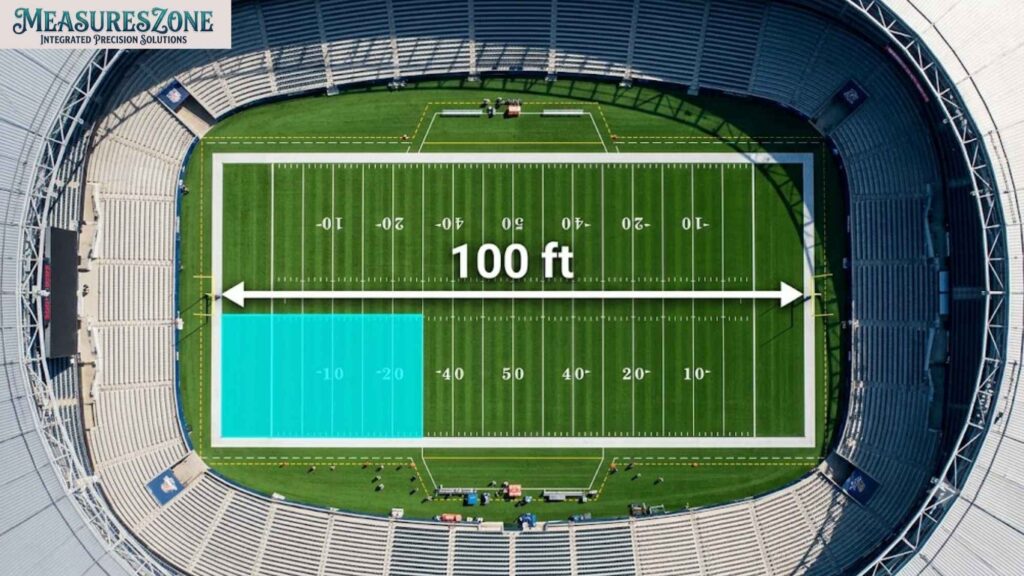
An American football field measures 300 feet from end zone to end zone, not counting the end zones themselves. So one-third of a football field gets you almost exactly to 100 feet.
If you have ever watched a team need “one more first down” to keep a drive alive, that first-down marker is roughly a third of the way to our target length. Football field comparisons work especially well because most people, sports fans or not, have a decent instinct for field dimensions from watching games on TV.
3. Two School Buses Parked End to End
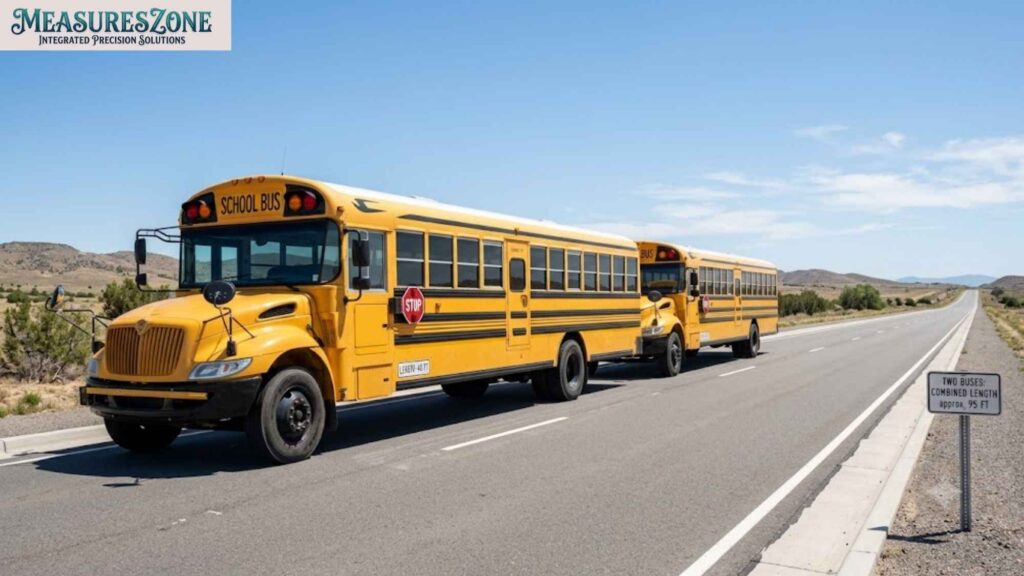
The biggest school buses stretch about 45 feet, though most run closer to 35–40 feet. Park two of them nose to tail and you will land somewhere between 90 and 100 feet, depending on the models.
It is not a perfect match. But it is close enough, and everyone’s ridden a school bus at some point, so it just clicks.
4. A Large Oak Tree
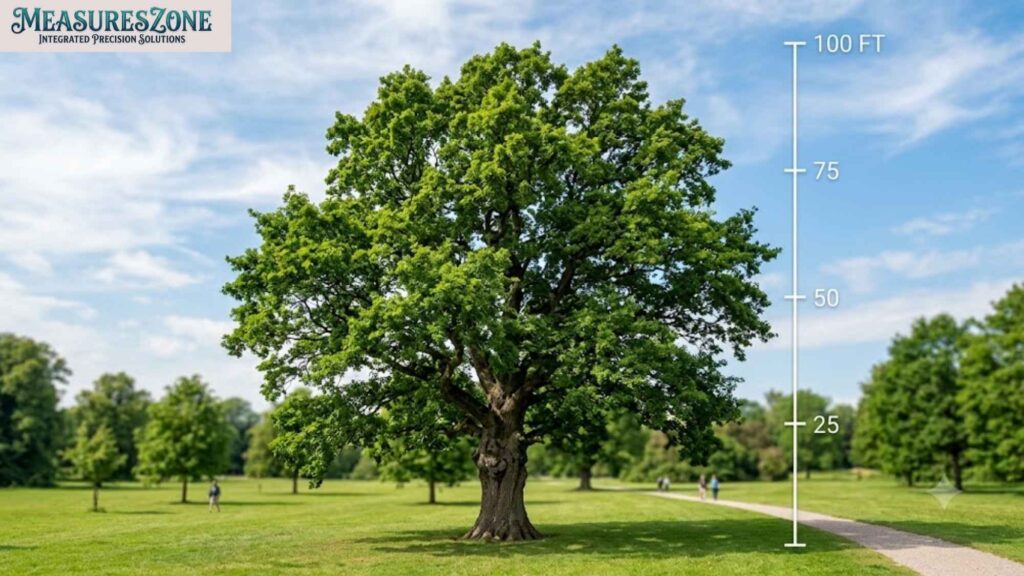
Mature oak trees can reach heights of 100 feet or more, particularly species like the white oak or northern red oak growing in ideal forest conditions. Not every oak gets there. Urban oaks, crowded ones, or younger trees tend to stay shorter. But a healthy, decades-old oak tree standing in open land is a genuinely useful natural yardstick for 100 feet.
“A tree this size did not grow overnight; it took generations,” says one common line among arborists, and it is worth remembering next time you see one towering over a park.
5. A Blue Whale
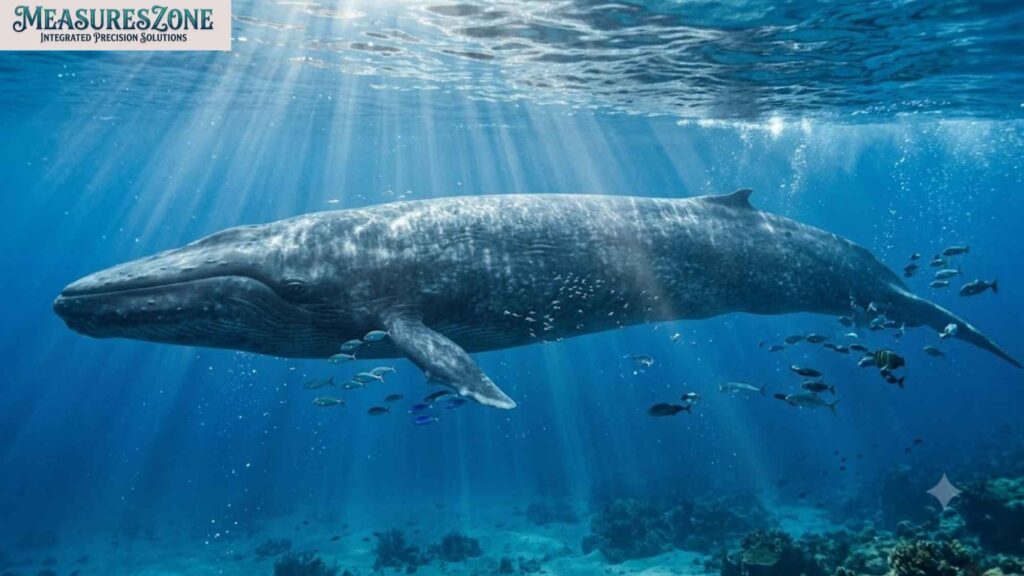
Now for the big one. Blue whales are the largest animals ever to exist, full stop, bigger than any dinosaur that ever walked the earth. A full-grown adult can stretch close to 100 feet, though most land somewhere between 70 and 90 feet. The biggest ones ever recorded? They have come within spitting distance of the full 100.
Numbers alone do not really do it justice, though. Picture this: a blue whale’s heart weighs about as much as a small car. Its tongue can outweigh an entire elephant. So later on, when we compare something to “20 blue whale hearts lined up,” we were not exaggerating for effect. That is just how big these animals actually are.
See the standard Coke can dimensions and sizes.
6. The Boeing 737-500
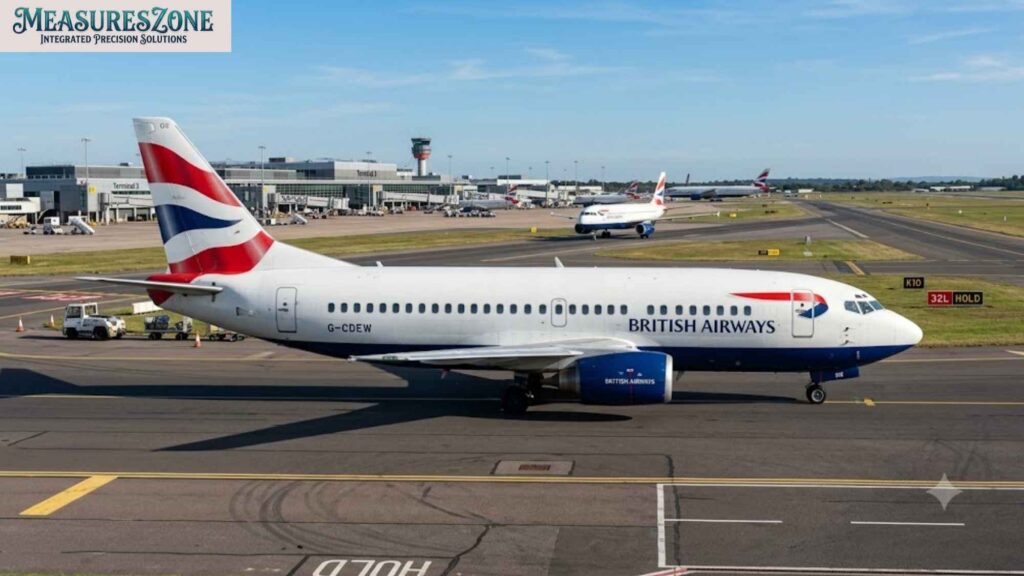
Planes do not usually come to mind when you think about 100 feet, but the Boeing 737-500 comes close. At about 101 feet nose to tail, it’s one of the best man-made matches on this list. It is actually the shorter cousin in the 737 family, built for shorter hops and lighter passenger loads. Somehow, its length just happens to land almost dead-on with our number..
Next time you are at the airport and a smaller narrow-body jet taxis past, there is a decent chance you are looking at something very close to 100 feet of aircraft.
7. 20x The Heart of a Blue Whale
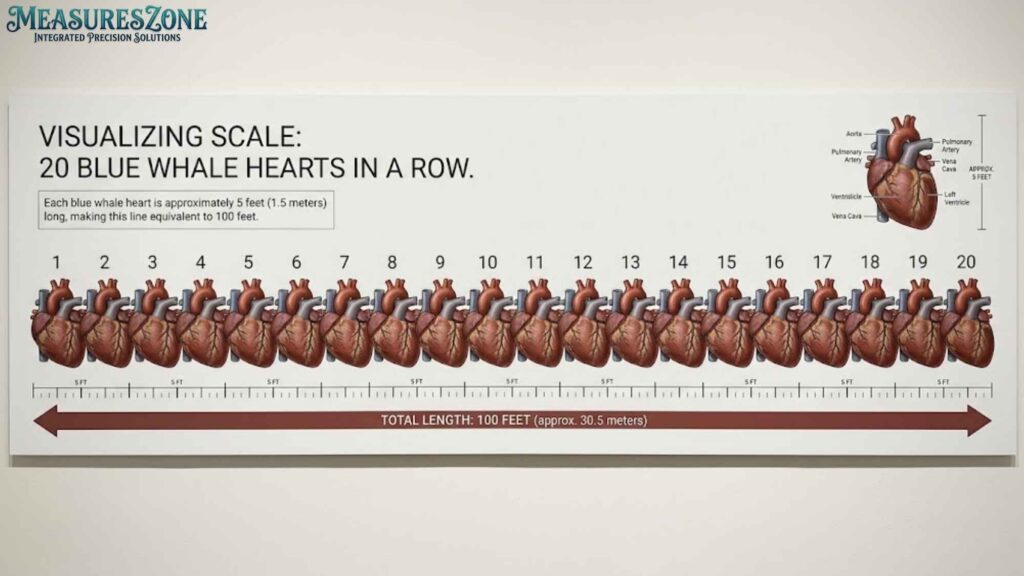
We already mentioned this one, but it deserves its own spot. A blue whale’s heart is about 5 feet long. Line up 20 of them, and you have hit 100 feet. Odd comparison, sure, but it shows just how massive these animals really are. One organ, stacked 20 times, equals our entire measurement.
8. Alligators

Full-grown American alligators usually run somewhere between 10 and 15 feet, though the biggest ones on record have topped 14 feet. Line up eight to ten of them nose to tail and you have basically hit 100 feet. It is not exact, since no two alligators measure quite the same, but it’s a picture that sticks with you.
Learn about Pringles can sizes and dimensions.
9. 10x Kayaks

A standard recreational kayak runs about 10 feet long, though sea kayaks and touring models can stretch closer to 12–17 feet. Using the standard 10-foot model, 10 kayaks lined up bow to stern gets you to exactly 100 feet. This one’s especially handy if you have ever paddled a lake or river and wanted a mental image for distance while out on the water.
10. The Eastern Cottonwood Tree
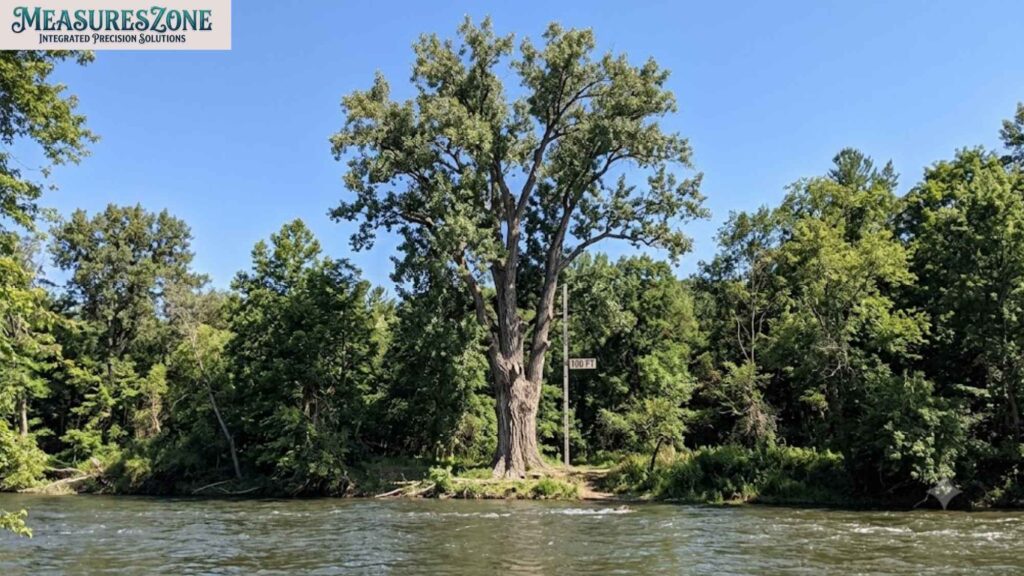
Eastern cottonwoods are some of the fastest-growing trees in North America, and it shows. Give one decent river-bottom spot and enough time, and they will shoot past 100 feet without much trouble. Oaks need decades to get anywhere close to that height. Cottonwoods? They can pack on several feet a year while they are young, which is wild when you think about it
That speed makes them a common sight along rivers and floodplains across the central and eastern United States.
11. A Small Rope Bridge or Zipline

Many recreational rope bridges and short zipline runs, especially those found at adventure parks or eco-tourism sites, measure close to 100 feet from platform to platform. It varies a lot by installation, but a “short” zipline course often uses this length as a starting point before longer, more advanced lines.
If you have ever taken a short zip through a canopy tour, there is a good chance that first run was close to our measurement.
12. A Hockey Rink’s Width
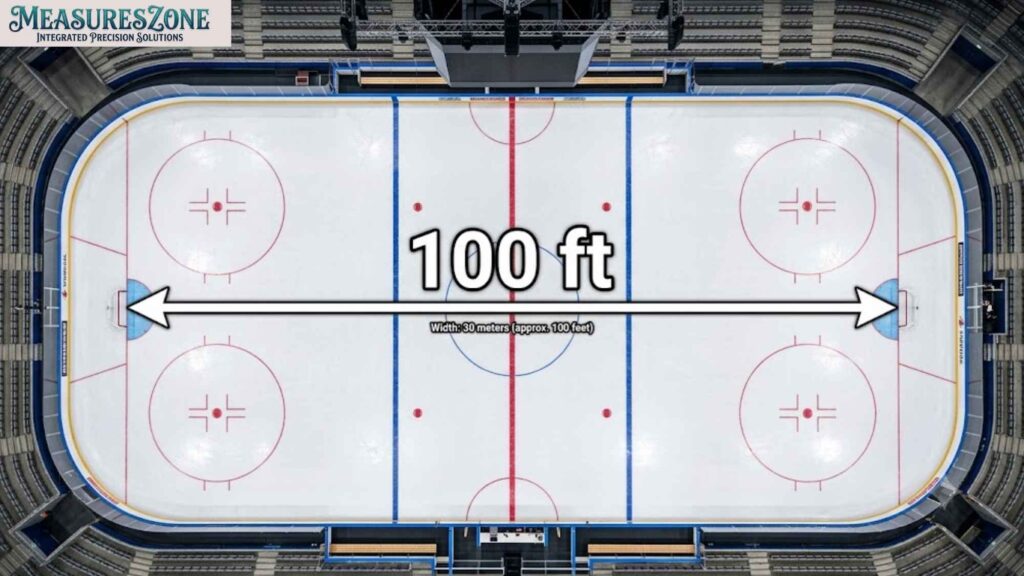
North American hockey rinks run 200 feet long and 85 feet wide, but cross the pond and things change a bit. International rinks stretch out to around 100 feet in width. Ever caught an Olympic hockey game and noticed the ice looked a little roomier than what you’re used to on TV? That is not your imagination. You were watching a rink almost exactly 100 feet across, wider ice that gives skaters more room to work with and changes how the whole game flows.
Check out these easy ways to visualise 8 inches.
13. A Basketball Court
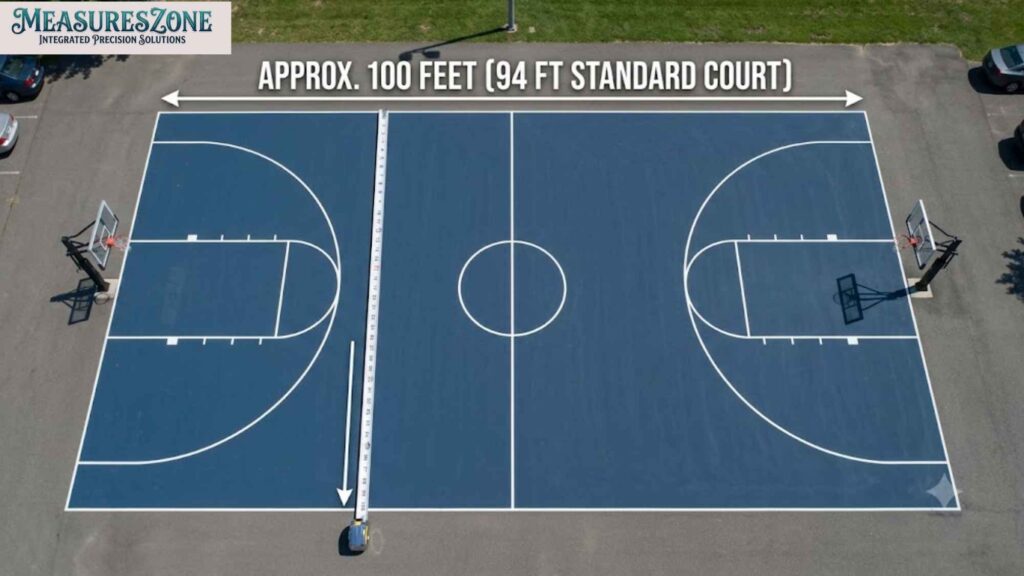
An NBA court runs 94 feet long. FIBA courts, used in international play, are actually a touch shorter at about 91.86 feet. High school courts are where things get interesting, though, since some stretch out to a full 100 feet depending on the school and facility.
So it is not a perfect match across the board. But get a high school court on the larger end of that range, and you are basically standing on our exact measurement.
14. 10 Basketball Hoops
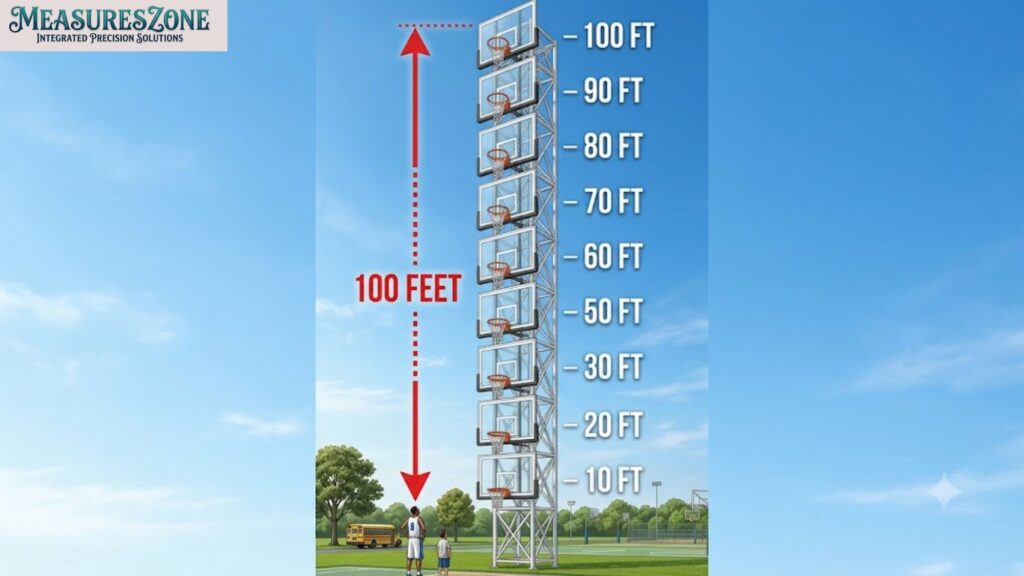
A basketball hoop sits exactly 10 feet off the ground, no matter the level, from youth leagues all the way up to the NBA. Stack 10 hoops on top of each other and you would hit 100 feet, right on the nose. Honestly, it is one of the cleanest comparisons on this whole list.
15. Twice the Height of the Hollywood Sign

The famous Hollywood Sign in Los Angeles stands about 45 feet tall, letter by letter. Double it, and you land close to 90–100 feet, depending on which measurement source you use for the sign’s exact height. It is a fun one for anyone picturing California landmarks rather than construction sites or ocean life.
16. Two-Thirds of an Olympic Swimming Pool
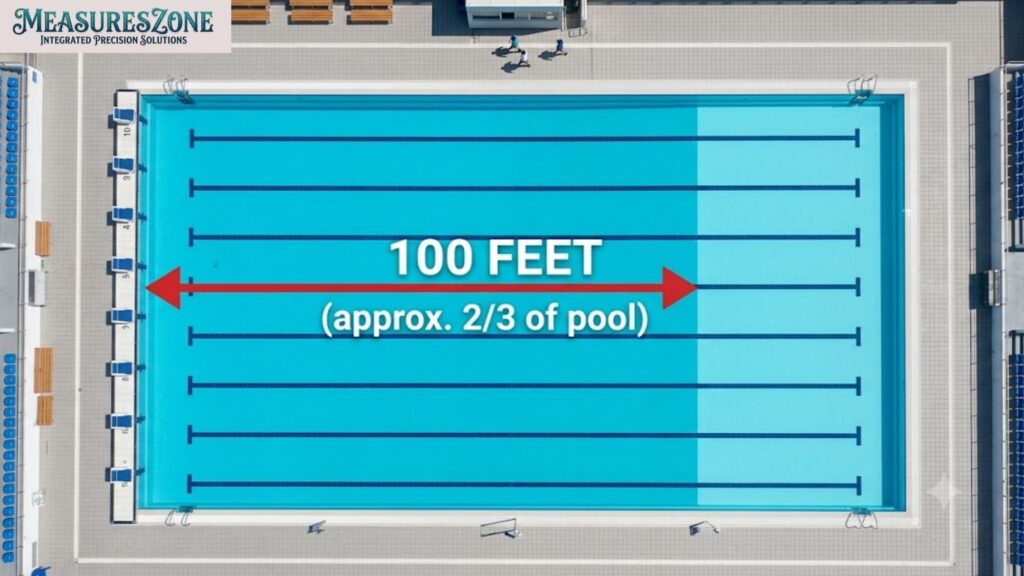
An Olympic pool runs 50 meters, or about 164 feet. Two-thirds of that gets you close to our 100-foot mark. Swimmers finish two laps and they’ve already gone further than that.
See how big 10 inches really is with everyday objects.
17. 100 Feet Compared to Two Semi-Trailers
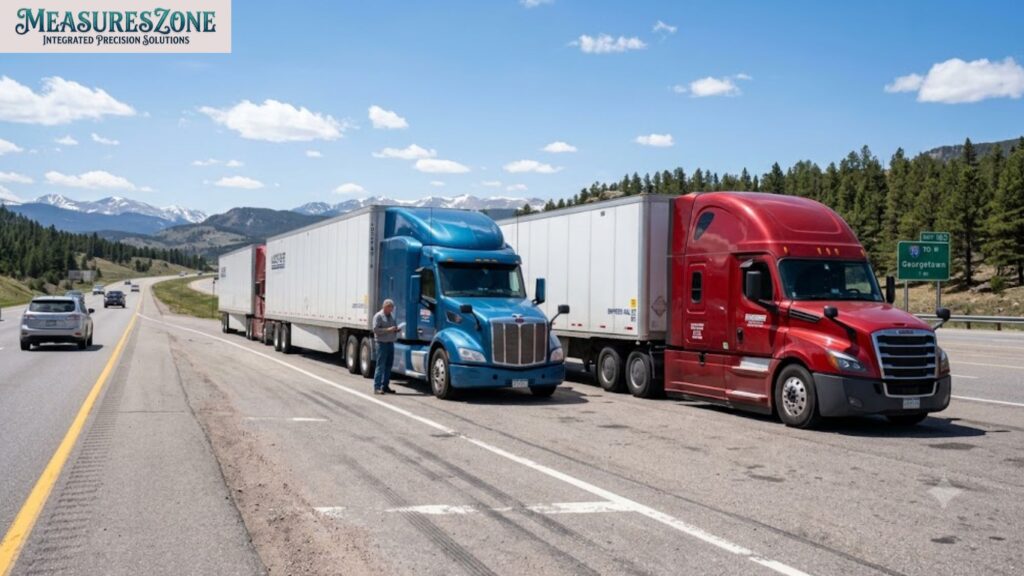
A standard semi-trailer measures about 48 to 53 feet long, depending on the hauling configuration. Park two semi-trailers end to end, and you will land somewhere between 96 and 106 feet.
Making this one of the more flexible but still reliable real-world measurements on the list, especially for anyone picturing highway traffic or freight yards.
18. 1.5 Cricket Pitches
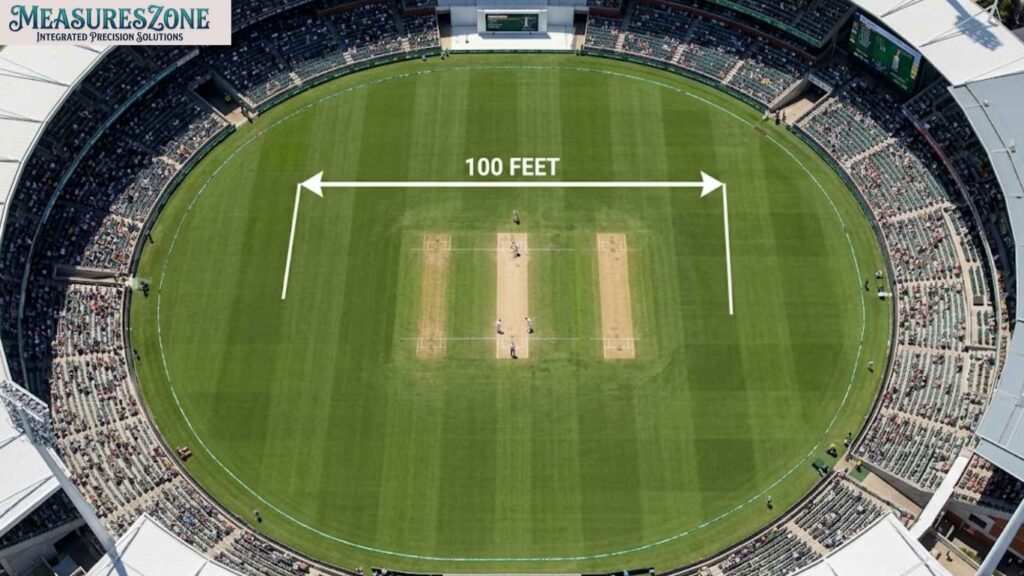
A cricket pitch, the strip between the two sets of stumps, measures exactly 22 yards, or 66 feet. One and a half cricket pitches gets you to 99 feet, essentially our full target length.
For cricket fans, this is a genuinely intuitive way to picture the distance, since pitch length is something players and spectators reference constantly during a match.
19. One and Two-Thirds Bowling Lanes
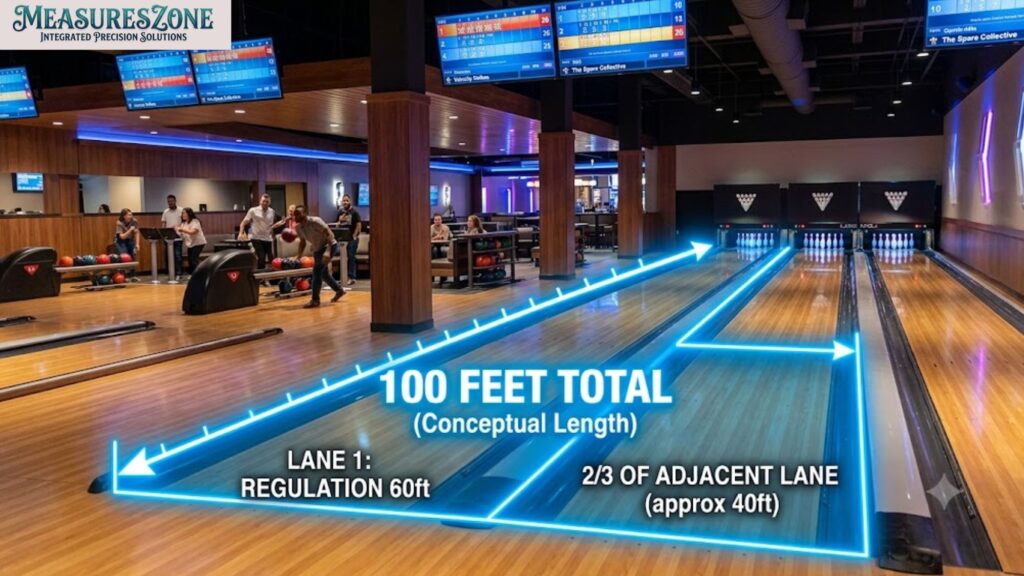
A regulation bowling lane measures 60 feet from the foul line to the head pin. That means it takes roughly 1⅔ bowling lanes laid end to end to reach 100 feet, not quite the “one and a third” figure you might see floating around online.
If you have ever stood at the foul line and stared down the lane, just imagine one and two-thirds of that same view.
Find the exact sizes and dimensions of Monster cans.
How Long Does It Take to Walk 100 Feet?

Walk at a normal pace, about 3 to 3.5 feet per second, and you will cover 100 feet in 28 to 33 seconds. That is quicker than a stroll through the park, but slower than a jog.
Most people walk around 3 to 4 miles per hour without even thinking about it. So really, 100 feet isn’t much ground to cover. Think of a short hallway. Or the walk from your front door out to the mailbox.
Pick up the pace a bit, say 4.5 feet per second, and you will knock that time down to about 22 seconds. Either way, it is a quick walk. It just sounds a lot longer once you stack it straight up or lay it out in one unbroken line.
Why Do We Still Measure in Feet?
The foot as a unit of measurement goes back thousands of years, rooted in ancient Egyptian, Greek, and Roman systems that literally used the human foot as a reference length. That is exactly why standardization eventually took over: not everyone’s foot is the same size.
The imperial unit system later formalized in England and spread through British colonization, including to the United States, while most of the world moved on to the cleaner, base-10 metric system.
So why has not the U.S. switched? Mostly cultural inertia, the cost of overhauling infrastructure, and plain familiarity. Road signs, construction standards, and consumer products are all built around feet and inches, so for now, that is the everyday standard across the U.S., even as the rest of the world counts in meters.
DIY Project: Measure 100 Feet with a Chalk Walk
A five-minute version of the measuring line project above, perfect for driveways or sidewalks. No cutting, no stakes, just chalk and a tape measure.
What You will Need
- Sidewalk chalk
- A 25-foot tape measure (you will reposition it four times)
- A flat driveway, sidewalk, or empty parking lot
Steps
1. Mark your starting point. Draw a bold chalk line or “X” on the ground to mark zero.
2. Measure in 25-foot increments. Extend your tape measure to its full 25 feet, mark that spot with chalk, then move the tape and repeat three more times until you have marked 25, 50, 75, and 100 feet.
3. Label each mark. Write the distance next to each chalk line so you (or the kids) can see the numbers add up as you go.
4. Walk the full stretch. Start at zero and walk to the 100-foot mark, counting your steps along the way.
Why It is Worth Doing
It is quick to set up, and it turns a number on paper into something you can actually feel. Great for a backyard activity with the kids, a quick driveway science lesson, or just settling an argument about how far away that tree really is.
100 Feet Knowledge Quiz
1. How many meters does 100 feet equal?
A) 20.48 meters B) 30.48 meters C) 40.48 meters D) 33.3 meters
2. Which commercial aircraft measures approximately 100 feet in length?
A) Boeing 747 B) Airbus A320 C) Boeing 737-500 D) Boeing 777
3. How many regulation bowling lanes, laid end to end, does it take to reach 100 feet?
A) 1 lane B) 1⅓ lanes C) 1⅔ lanes D) 2 lanes
4. What fraction of an American football field (not counting end zones) equals roughly 100 feet?
A) One-half B) One-third C) One-quarter D) Two-thirds
5. Which of these is the closest real-world match to 100 feet?
A) A standard NBA basketball court B) The Boeing 737-500 C) A single school bus D) A cricket pitch
6. Roughly how long does it take an average adult to walk 100 feet?
A) 5–10 seconds B) 28–33 seconds C) 1 minute D) 2 minutes
Quiz Answers
- B) 30.48 meters
- C) Boeing 737-500
- C) 1⅔ lanes
- B) One-third
- B) The Boeing 737-500
- B) 28–33 seconds
conclusion
A hundred feet does not sound like much on its own. But stack it up against something real, a 10-story building, a blue whale swimming past, two semi-trailers parked nose to tail, and it clicks. That is the point. Turning a number into something your brain can actually hold onto.
Next time someone tells you a distance in feet, you will not need a calculator. You will just picture the whale.
Frequently Asked Questions
Still have questions about how 100 feet stacks up in the real world? Here are quick answers to the ones people ask most.
1. What is a good way to estimate 100 feet without a tape measure?
Count your steps. Most adults stride about 2.5 feet per step, so roughly 40 steps gets you to 100 feet. Or just picture a third of a football field.
2. Is 100 feet the same as 100 yards?
No, and this is a common mix-up. 100 yards equals 300 feet, three times longer than 100 feet. A full football field, not counting end zones, measures 300 feet, or 100 yards. Do not confuse the two when picturing distance.
3. What is bigger, 100 feet or a city block?
Usually the city block. Most run 200–400 feet long, so 100 feet typically covers less than half a block.
4. How many football fields would it take to reach 100 feet?
Not even one full field. A football field measures 300 feet end to end, not counting the end zones. So 100 feet works out to exactly one-third of that distance, roughly the stretch from the goal line to the 33-yard line.
5. Is 100 feet longer than a blue whale?
Barely, if at all. The largest blue whales on record come close to 100 feet, though most adults measure between 70 and 90 feet. So a blue whale and 100 feet are nearly a match, with the biggest whales edging right up to that mark.
See how long 6 inches is using everyday objects.

David John is an experienced blogger and the admin of the Measurements category at Measures Zone. He shares accurate and easy to understand measurement guides for readers.