

Ever tried to picture 6 inches and drawn a blank? You are not alone. It is one of those measurements that is hard to visualize without a reference. This guide makes it easy by comparing six inches to familiar everyday objects and sharing simple ways to estimate it without a ruler.
Knowing what 6 inches looks like is surprisingly useful in daily life. It can help when checking package sizes, buying items online, packing luggage, or measuring small spaces, making everyday decisions quicker and more accurate.
How Long Is 6 Inches?
Here is the quick conversion breakdown:
| Unit | Equivalent |
|---|---|
| Inches | 6 in |
| Centimeters | 15.24 cm |
| Millimeters | 152.4 mm |
| Feet | 0.5 ft |
| Yards | 0.167 yd |
How 6 Inches Compares to a Standard Ruler
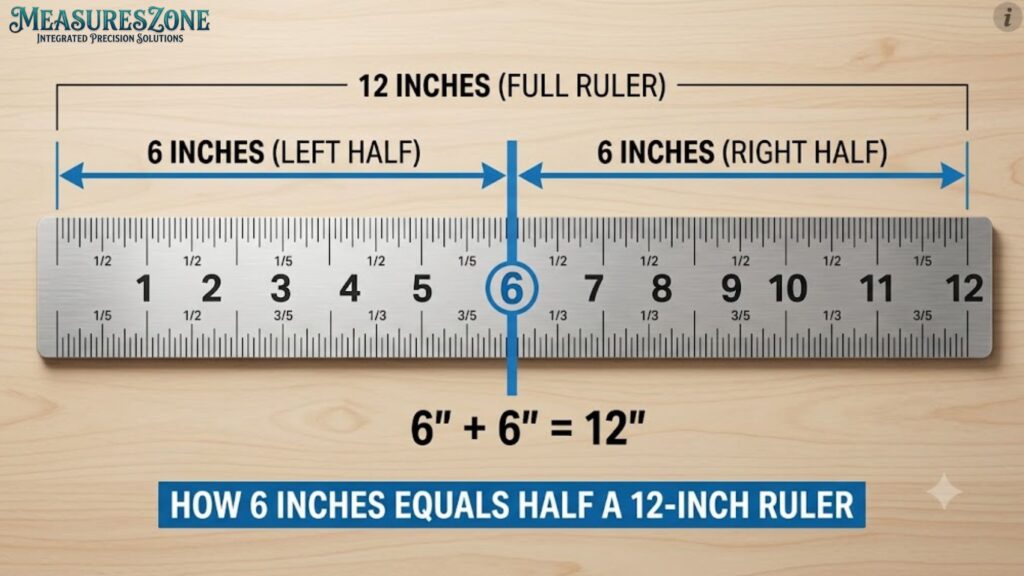
If you have got a standard ruler lying around, you have already got the perfect size reference. A typical ruler measures 12 inches, so 6 inches is exactly half of it. The midpoint, right where the ruler’s centre marking sits.
This makes the ruler comparison one of the easiest ways to internalize the measurement. Look at the halfway point on any 12 inch ruler, and that is your visual anchor for 6 inches going forward.
Even a school ruler, which usually runs the same 12 inch length, works the same way. Fold it in half, or just glance at the 6 inch mark, and you have got a built-in size guide you can carry in your memory.
How to Measure 6 Inches Without a Ruler
You will not always have a ruler handy. These two simple methods can help you estimate measurements in everyday situations.
The Hand Measurement Trick
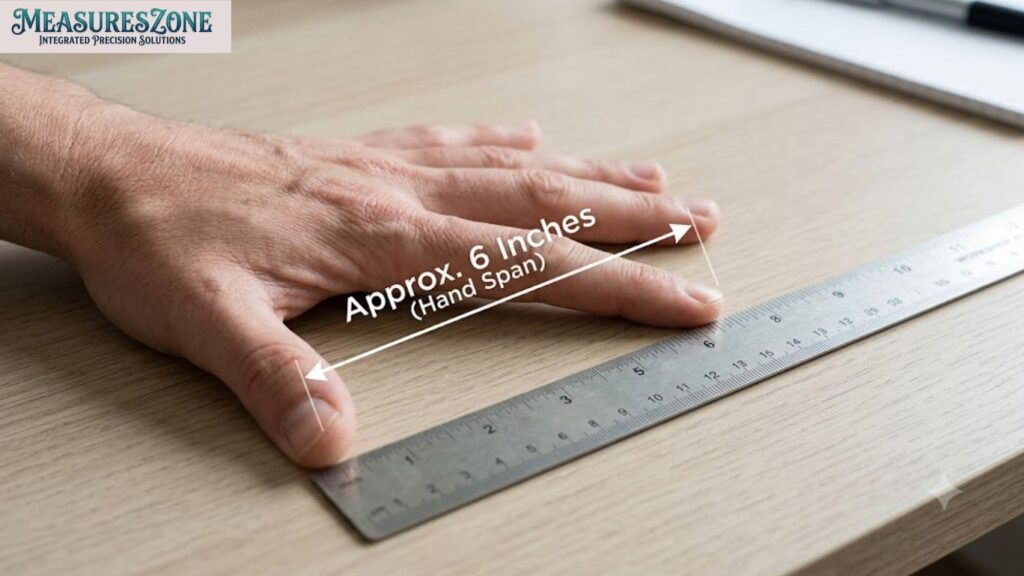
Your hand can be a surprisingly useful measuring tool when you do not have a ruler. By adjusting your hand span, you can estimate about 6 inches with a little practice. The exact distance will vary depending on the size of your hand.
Keep in mind that this method is only meant for rough estimates, not precise measurements. It works well for everyday tasks like checking small objects or spaces. For anything requiring accuracy, use a ruler or tape measure instead.
For more reliable results, measure your own hand with a ruler once and remember the measurement. Since everyone’s hands are different, your personal hand span is a better reference than the average. This gives you a convenient measuring tool that is always with you.
The US Dollar Bill Trick
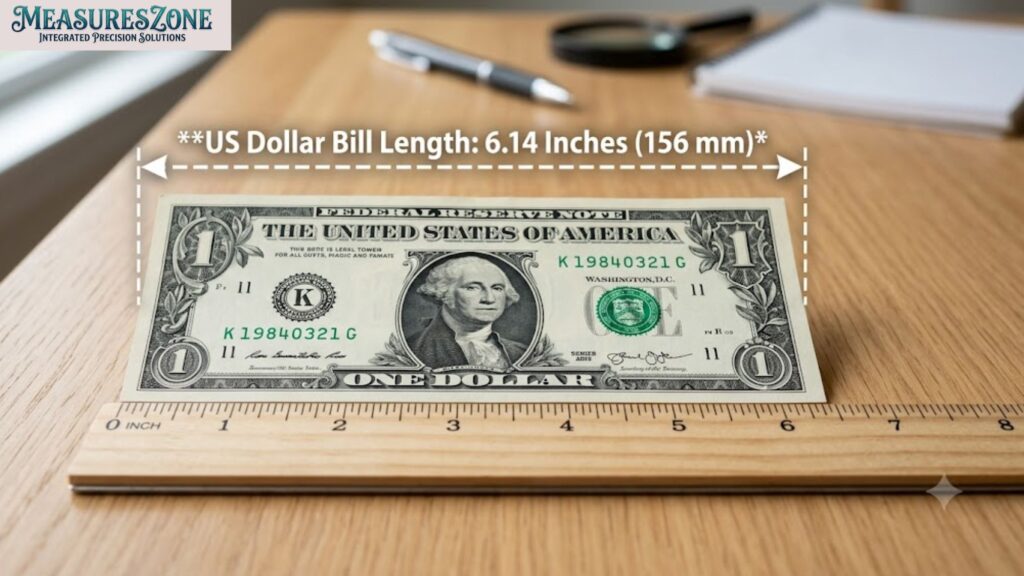
This one’s far more reliable. A standard US dollar bill measures exactly 6.14 inches long, making it one of the most consistent, pocket-sized reference tools in the world. Since US currency does not change dimensions between bills, a one dollar bill works identically to a five, a twenty, or any other denomination.
Next time you need a fast size reference and do not have a ruler on hand, pull out a dollar bill. It is about as close to 6 inches as everyday objects get, and almost everyone carries one.
Quick fact: Every piece of US paper currency, regardless of denomination, measures 6.14 inches by 2.61 inches. That consistency is exactly why it doubles so well as an informal measuring tool.
Where 6 Inch Measurements Show Up in Real Life
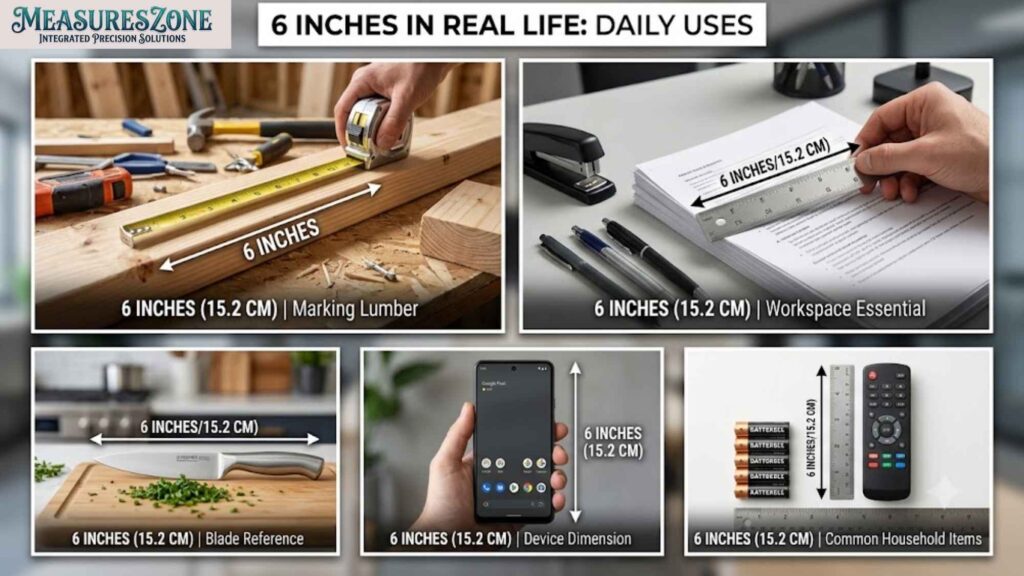
Before diving into the full object list, it helps to see just how often this specific length pops up across totally unrelated fields. It is not a random number, plenty of industries settled on 6 inches for practical reasons.
In construction and home improvement
6 inch measurements are common in construction and hardware. Standard concrete blocks, many nail lengths, and pipe fittings are built around this size because it is practical and easy to handle. A “6 inch” label usually refers to one key dimension, even if the overall object is longer.
In cooking and food service
the 6 inch measurement shows up constantly, from the already mentioned sub sandwich to cake pans, pie dishes, and knife blade lengths. A 6 inch chef’s knife, for example, is one of the most popular sizes sold, prized for being maneuverable without sacrificing too much cutting surface.
In tech and electronics
6 inches sits right in the sweet spot for smartphone screens, tablet widths, and cable lengths for short connectors. It is become such a common benchmark that manufacturers frequently market products specifically by how close they land to that number.
In office and school supplies
The 6 inch measurement is also common in everyday school and office supplies. Rulers, pencil cases, and even some notebook widths cluster around 6 inches, since it is a size that fits comfortably in a backpack or desk drawer without taking up excessive space.
Keeping these patterns in mind makes the rest of this guide easier to apply. Once you know why 6 inches keeps showing up, spotting it in new places gets a lot more intuitive.
Find easy ways to visualise 2 inches.
Household Items That Are 6 Inches Long
Your home is full of common household objects that hover right around the 6 inch mark. Once you know where to look, you will start using them as built-in reference points for all kinds of everyday measurements.
Small Paperback Book
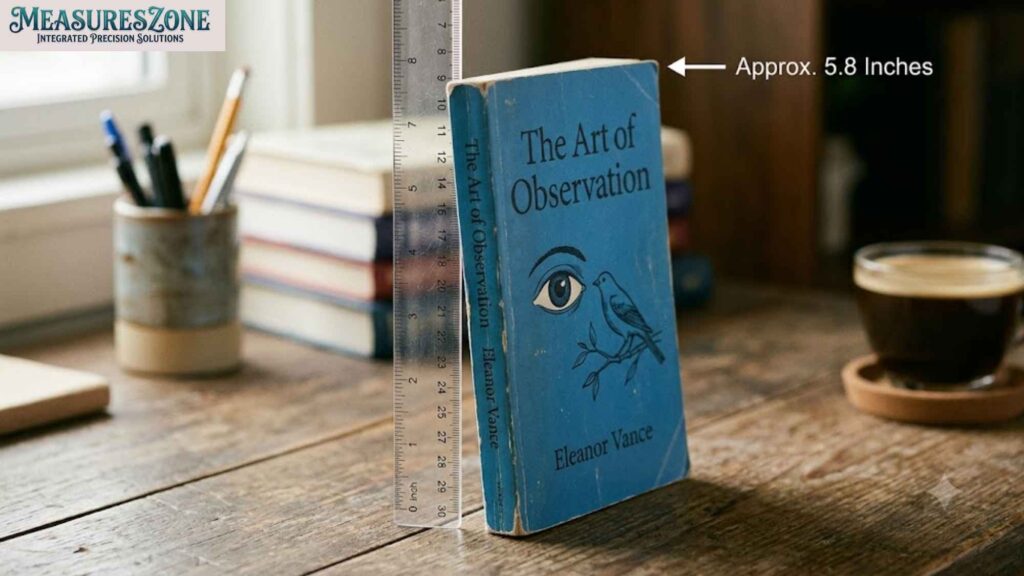
Pick up a mass-market paperback. The compact book size you would find in an airport bookstore and you will notice it runs close to 6.75 inches tall by 4.25 inches wide.
The height is not an exact match, but it is close enough that a small paperback book makes a solid visual size guide when you need something bigger than a dollar bill but smaller than a full sheet of paper.
Men’s Wallet, Fully Opened
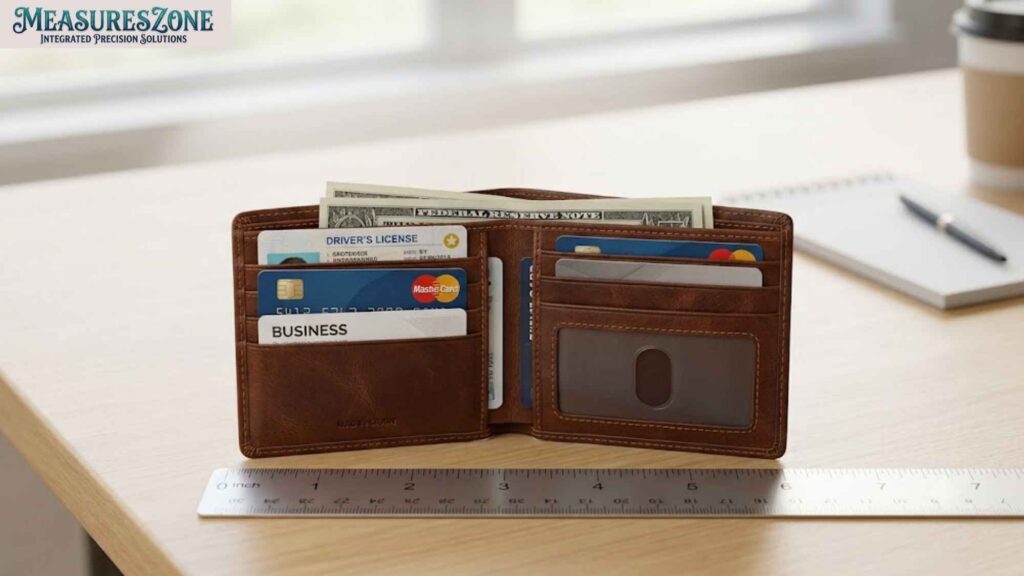
A folded men’s wallet typically measures around 4.5 inches long, but open it flat and the wallet size stretches closer to 7-8 inches edge to edge. Somewhere in that unfolding process, right around the halfway point of opening it, you will pass through the 6 inch range.
It is not a perfect match closed, but it is a useful comparison for anyone picturing mid-sized objects.
Check out these easy ways to visualise 8 inches.
Door Handle
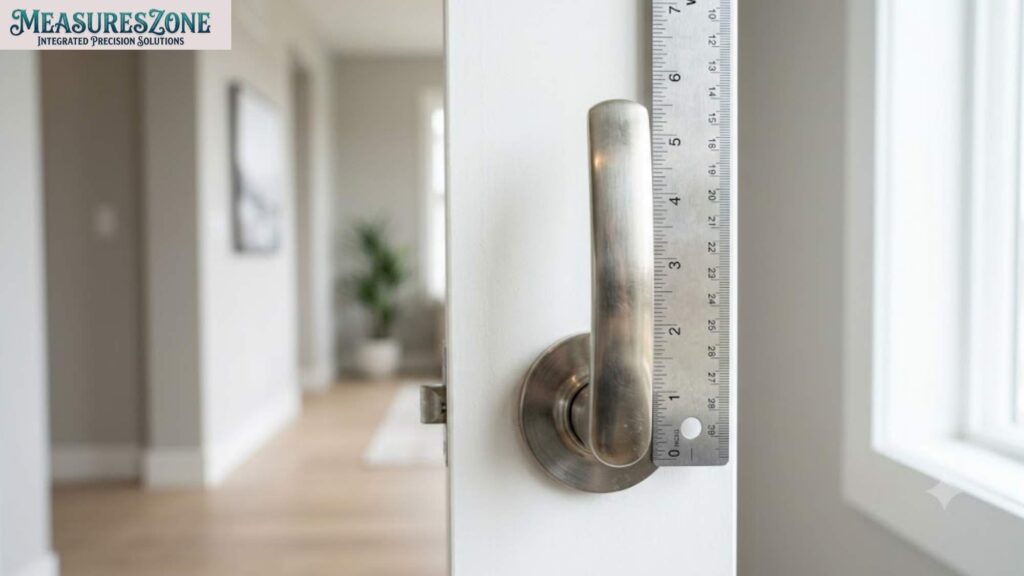
Most interior door handle levers run between 4 and 6 inches, depending on the manufacturer and style. Lever-style handles on standard interior doors often land right at the top of that range, making them a decent real-world example of 6 inch length hardware you interact with every single day without thinking about it.
Post-it Notes
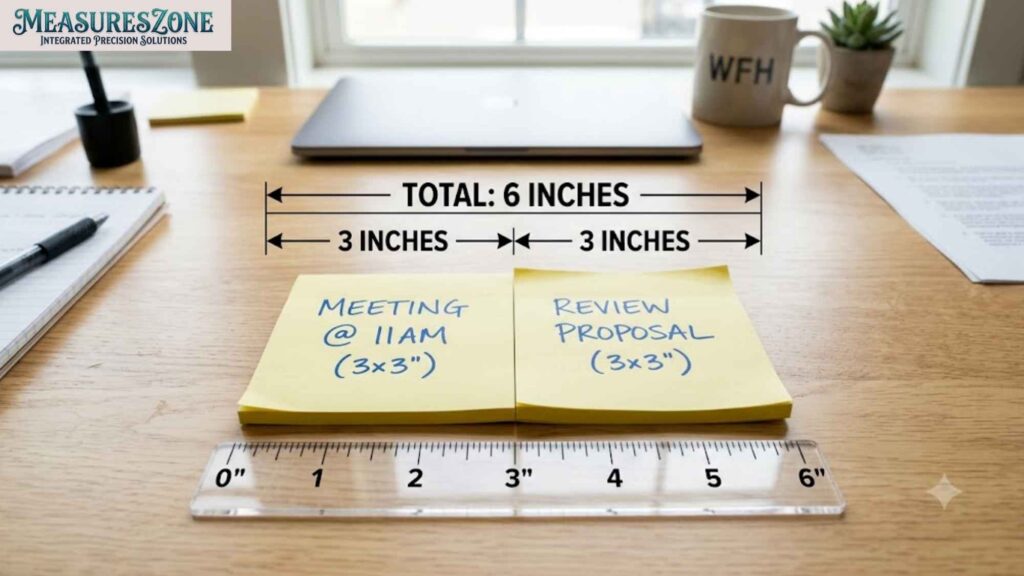
A single standard Post-it note measures 3 inches by 3 inches, so it does not hit 6 inches on its own. But line up two Post-it notes side by side, or stack a small pad on its edge.
you have got a visual comparison that lands right around the 6 inch mark. It is a handy trick when you are estimating length using whatever’s on your desk.
Toothbrush
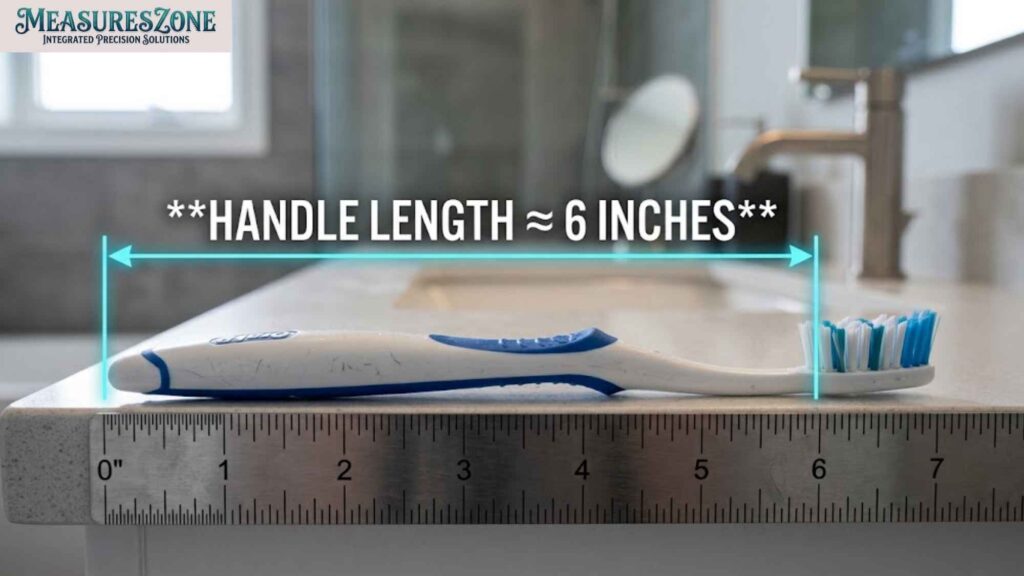
A full-length adult toothbrush usually measures around 7.5 to 8 inches from tip to handle end. The handle portion alone, though, excluding the bristled head, often comes in closer to 6 inches. It is not a flawless match but it is a familiar object you can glance at for a rough length comparison.
Find the exact sizes and dimensions of Monster cans.
Screwdriver Handle
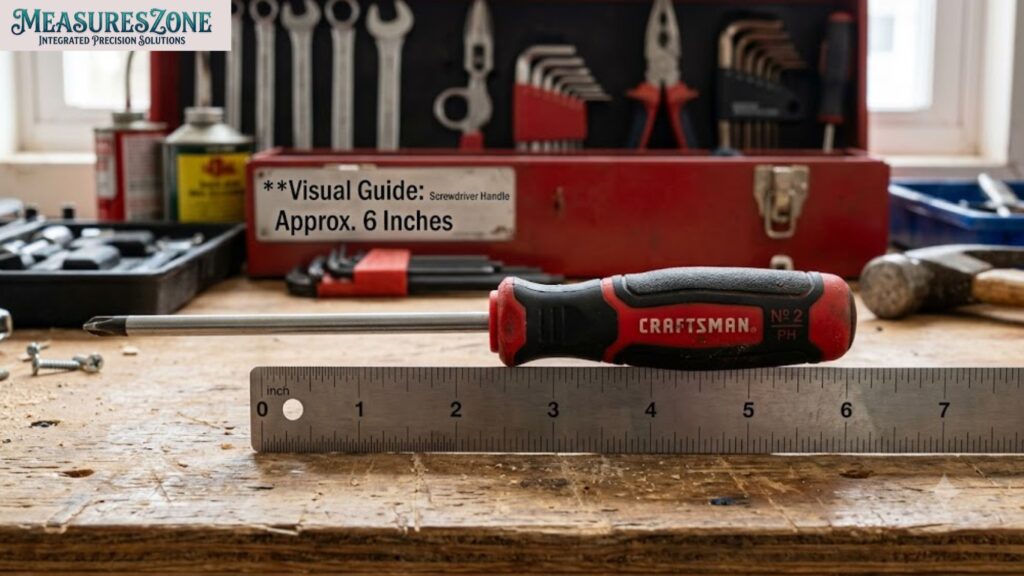
Grab a standard screwdriver from your toolbox, and the screwdriver handle alone, not including the metal shaft, frequently measures somewhere in the 4 to 6 inch range, with many mid-sized handles landing right at 6 inches.
Combine it with a short shaft, and the whole tool often approaches this length too, making it a practical measurement reference for anyone working around the house.
Tech and Everyday Carry Items That Measure About 6 Inches
Beyond the household drawer, a handful of tech items and everyday carry essentials line up with the 6 inch mark too, some more precisely than others.
Large Smartphone
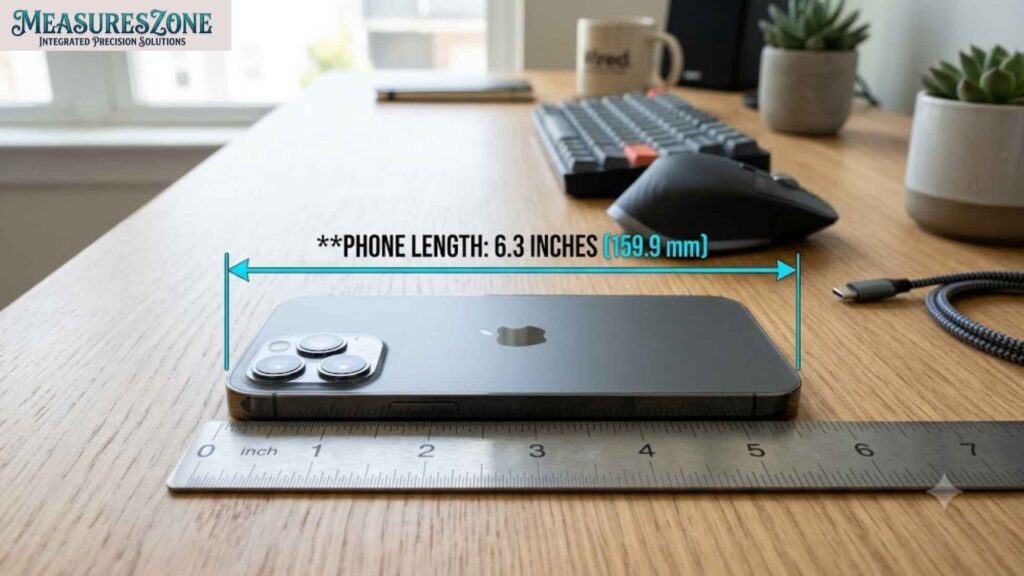
Smartphone size has crept upward for years, and today’s large smartphone screens routinely brush against 6 inches diagonally. Take the iPhone 16 Pro, for example, its screen measures 6.3 inches diagonally, while the physical body itself stands 5.89 inches tall.
That is close enough to 6 inches that most people would not notice the difference just by holding it. It is one of the most current, real-world examples of a 6 inch range object nearly everyone owns.
Two Bank Cards Side by Side
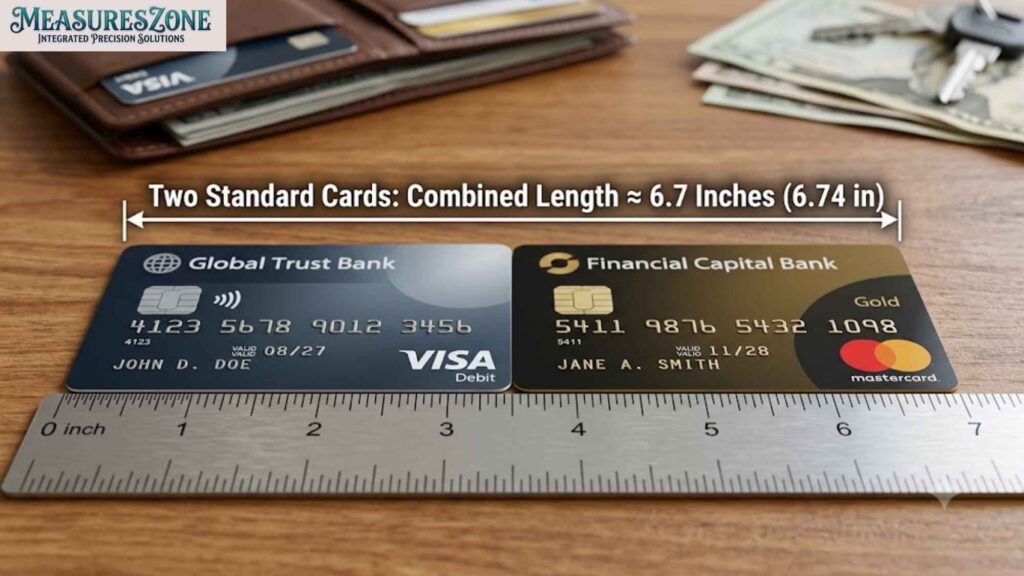
A single standard bank card measures 3.37 inches long. The same size used for credit cards, debit cards, and most ID cards worldwide. Line up two bank cards end to end, and you land at roughly 6.74 inches, just slightly over the 6 inch mark.
It is an easy object comparison since most people are never far from at least two cards in their wallet.
Travel Bottle
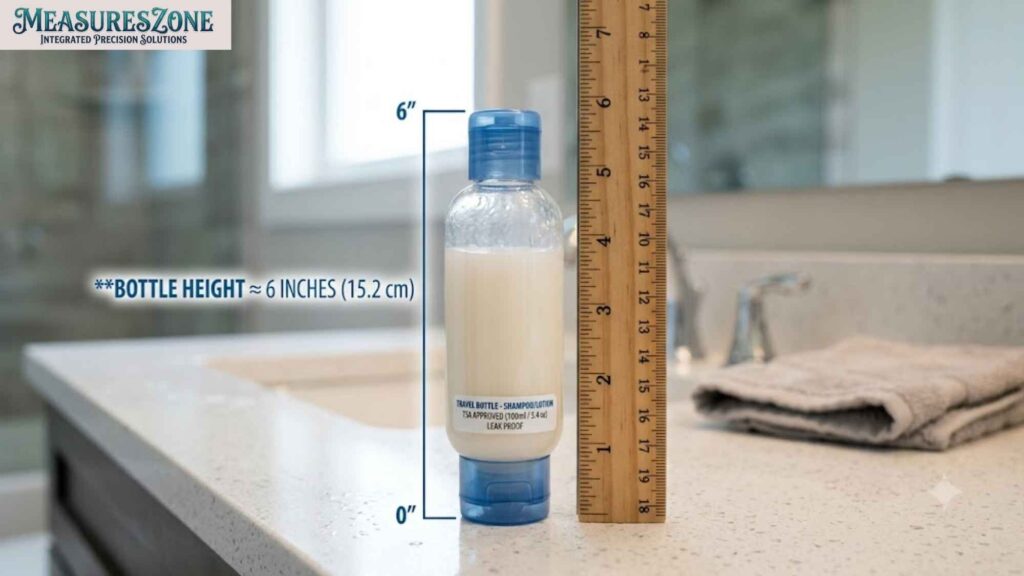
TSA-compliant travel bottle containers max out at 3.4 ounces, and the bottles themselves typically stand somewhere between 4 and 6 inches tall depending on the brand and shape. Taller travel-sized bottles for shampoo or lotion often reach that upper range, putting them squarely in 6 inch territory.
Discover what 100 feet looks like in real life.
TV Remote
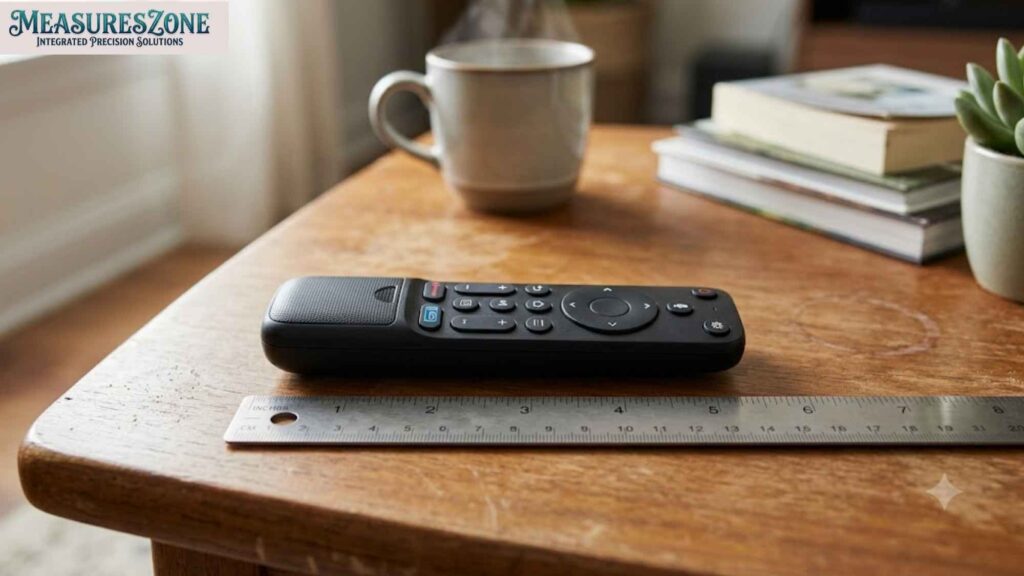
Most TV remote controls measure between 6 and 9 inches long, while compact streaming remotes like Roku or Apple TV remotes are often close to 6 inches. If you have one on your coffee table, it is an easy everyday reference for this measurement.
Other common items around 6 inches long include a folded eyeglass case, a compact pencil case, and the head to handle section of many kitchen spatulas. These familiar objects make it easier to picture 6 inches without using a ruler.
Food and Nature: 6 Inch Comparisons You Can Eat
Some of the most relatable size references come straight from the kitchen table.
6 Inch Sub Sandwich
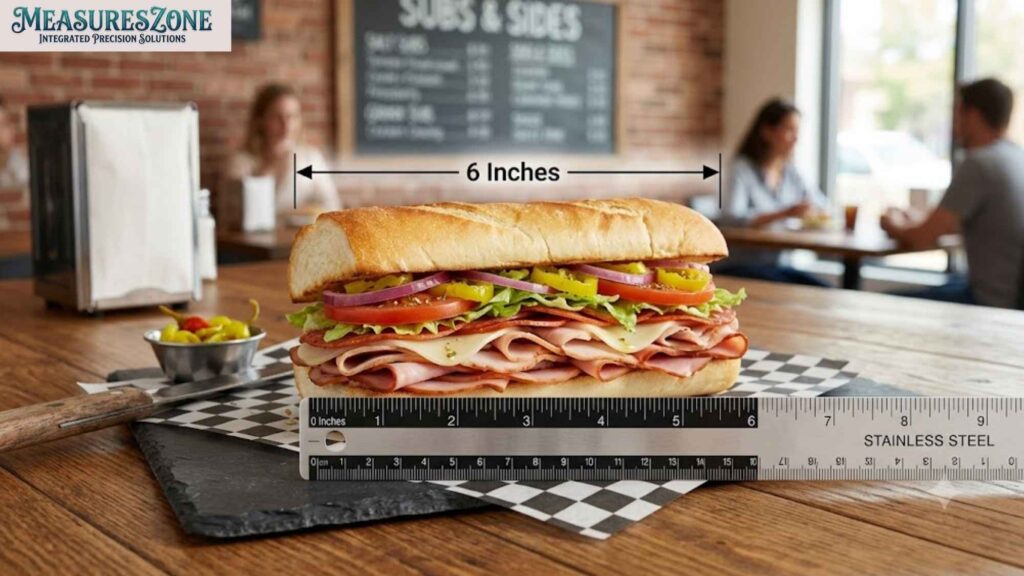
This one needs no estimating, a 6 inch sub sandwich is measured and sold at exactly that length by sandwich chains everywhere. It is arguably the single most universally recognized food-based length comparison out there, since millions of people order one by that exact name every day.
Small Sized Banana vs. Medium Banana
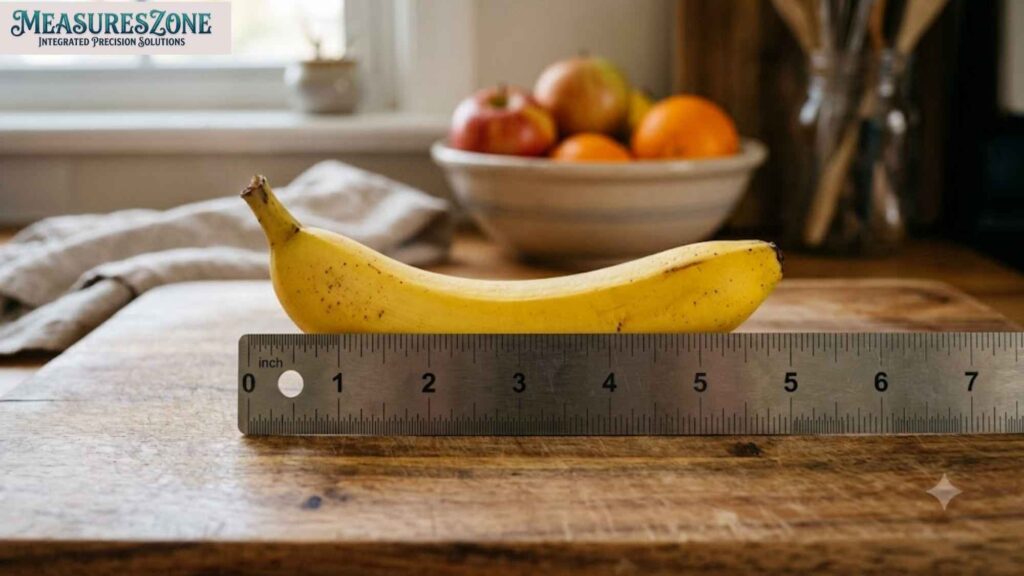
Banana length varies more than people expect. A small sized banana typically measures 5 to 6 inches, landing it right in our target range, while a medium banana usually stretches closer to 7 inches.
If you are picking through a bunch at the grocery store, the shorter, less-ripe bananas toward the smaller end of the bunch tend to match 6 inches most closely.
See how big 10 inches really is with everyday objects.
Two Baseballs
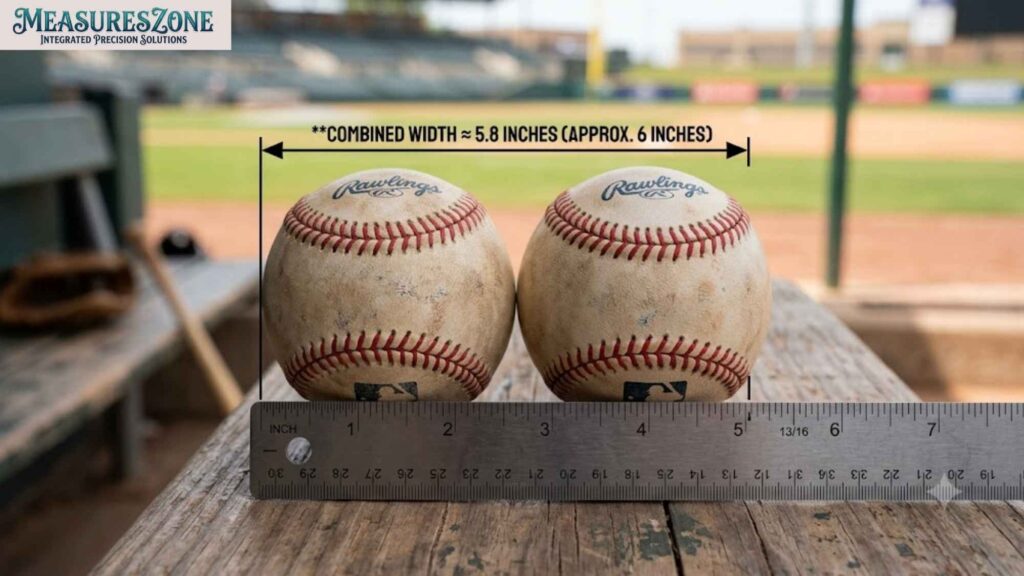
A single baseball measures about 2.9 inches in diameter. Line up two baseballs side by side, touching, and you get roughly 5.8 inches, just shy of a true 6 inch mark but close enough to serve as a rough visual comparison if you happen to have a couple of baseballs on hand and nothing else to measure with.
Why “About 6 Inches” Still Counts as a Measurement Guide
Not every object on this list hits exactly 6.00 inches, and that is worth addressing head on. Manufactured, labelled items, a dollar bill, a 6 inch sub, a ruler’s halfway mark, give you exact, reliable numbers every time. Natural or variable objects, like bananas, hands, or wallets, shift depending on the specific item in front of you.
That distinction matters. When you need a precise measurement for something like a DIY project or a shipping label, lean on the exact examples: currency, rulers, or labeled food items.
When you are just trying to visualize size in everyday conversation, the approximate examples work perfectly well. Both categories serve a purpose, and knowing which one you are reaching for makes you far better at size estimation overall.
Quiz: How Well Do You Know 6 Inches?
1. How many centimeters are exactly equal to 6 inches?
A. 12.7 cm
B. 15.24 cm
C. 18.5 cm
D. 20.32 cm
2. Which everyday item is closest to 6 inches in length?
A. US dollar bill
B. Standard pencil
C. Soda can
D. Credit card
3. What portion of a standard 12 inch ruler is 6 inches?
A. One-third
B. One-quarter
C. Half
D. Three-quarters
4. Which food item is commonly sold at exactly 6 inches long?
A. Hot dog
B. Banana
C. Sub sandwich
D. Breadstick
5. Why are bananas described as an approximate 6 inch reference?
A. They are measured differently in each country.
B. Their size naturally varies.
C. They always measure exactly 6 inches.
D. They are sold in fixed lengths.
6. Which method gives the most reliable estimate of 6 inches without using a ruler?
A. Measuring with your hand span
B. Comparing with a US dollar bill
C. Guessing by eye
D. Using two baseballs
7. Which of these items is commonly found in a toolbox and can measure about 6 inches?
A. Screwdriver handle
B. Hammer head
C. Paintbrush bristles
D. Tape measure case
8. Which type of TV remote is often closest to 6 inches long?
A. Universal remote
B. Compact streaming remote
C. Gaming controller
D. Air conditioner remote
9. Which of these is closest to 6 inches when placed end to end?
A. Two standard Post-it notes
B. Two baseballs
C. Three credit cards
D. Two soda cans
10. Which everyday item mentioned in the guide is commonly used to carry shampoo or lotion while traveling?
A. Water bottle
B. Travel bottle
C. Coffee mug
D. Lunch container
Answers
- B. 15.24 cm
- A. US dollar bill
- C. Half
- C. Sub sandwich
- B. Their size naturally varies.
- B. Comparing with a US dollar bill
- A. Screwdriver handle
- B. Compact streaming remote
- B. Two baseballs
- B. Travel bottle
Conclusion
Six inches is easier to picture than it might seem. Everyday items like a US dollar bill, half of a standard ruler, or a 6 inch sub sandwich give you simple, reliable references you can remember without carrying a measuring tool.
The next time you need to estimate 6 inches, picture one of these familiar objects instead of guessing. With a few real-world comparisons in mind, visualizing this measurement becomes quick, accurate, and completely natural.
Common Questions About 6 Inch Measurements
1. Is 6 inches the same as half a foot?
Yes. Since 1 foot equals 12 inches, 6 inches is exactly half a foot. This is an exact conversion with no rounding, making it one of the easiest measurements to remember.
2. What is the most accurate everyday item to compare against 6 inches?
A US dollar bill, hands down. At 6.14 inches, it is the closest thing to a pocket-sized measuring tool that almost everyone already carries, and unlike hand measurement, it does not vary from person to person.
3. Why do some objects on this list say “approximate” instead of exact?
Manufactured items have fixed sizes, while natural and everyday objects can vary. Both are useful references, but only manufactured items provide an exact measurement.
4. Can I use my phone to measure 6 inches?
Many modern smartphones include a built-in measuring app that uses the camera to estimate length, and it is often accurate to within a fraction of an inch for quick checks. It is not a replacement for a real measuring tool on precise projects, but for casual estimation, it works well.
5. How many Centimetres is 6 inches?
Exactly 15.24 cm. If you are converting in your head, a rough shortcut is multiplying inches by 2.54. Inches to centimetres conversion does not get any more consistent than that.
6. How many millimeters are in 6 inches?
There are exactly 152.4 millimeters (mm) in 6 inches. This conversion is commonly used in engineering, manufacturing, and technical drawings.
7. Is 6 inches a common measurement in home improvement?
Yes. The 6 inch measurement is widely used in home improvement and construction. You will commonly find it in items such as ductwork, pipe fittings, tiles, concrete blocks, and kitchen or bathroom hardware, making it one of the most practical everyday measurements.
8. How can I estimate 6 inches while shopping?
Look for familiar reference objects, such as a US dollar bill, a compact TV remote, or a 6 inch sub sandwich. These comparisons can help you judge the size of products when a measuring tool is not available.
9. Is 6 inches considered a small measurement?
It depends on the context. For furniture or room dimensions, 6 inches is relatively small, but for handheld items like tools, smartphones, or kitchen utensils, it is a common and practical size.
10. What is 6 inches equal to in feet and yards?
Six inches equals 0.5 feet (half a foot) and approximately 0.167 yards (one-sixth of a yard). These conversions are useful when working with larger measurement units.
Learn about Pringles can sizes and dimensions.

David John is an experienced blogger and the admin of the Measurements category at Measures Zone. He shares accurate and easy to understand measurement guides for readers.