

Picturing 2 inches is trickier than it sounds. We have got a good mental grip on a foot or a mile, but 2 inches is a size most people recognize by touch rather than sight, so it is easy to end up just guessing.
That is the gap this guide fills. It breaks down what 2 inches actually looks like using real, verified everyday objects (plus a few popular comparisons like the golf ball myth that turn out to be wrong), giving you a solid visual reference whether you are sizing something for a DIY project, checking what will fit in a drawer, or just curious.
How Long Is 2 Inches, Exactly?
Let is start with the raw numbers, because everything else in this article builds on them.
| Measurement | Equivalent |
|---|---|
| Inches | 2 inches |
| Centimeters | 5.08 cm |
| Millimeters | 50.8 mm |
| Feet | 0.166 ft |
| Fraction of a foot | 1/6 of a foot (roughly) |
Here is a simple way to think about scale: 2 inches is about the width of a standard smartphone, cut in half. Or think of it as roughly a third of the length of a dollar bill. Neither of those is a perfect match, but they are close enough to give your brain something to anchor to before we get into the exact comparisons.
One more thing worth knowing: two inches sits right in the middle of what most people consider a “small measurement.” It is too big to call tiny, like a grain of rice, and too small to call substantial, like a hand span.
That in-between size is exactly why visual comparisons work so well here, the objects that match it tend to be things you already have within arm’s reach.
How Long Is 2 Inches on a Ruler?
If you have got a standard ruler nearby, here is how to find 2 inches without overthinking it.
Most rulers sold in the US show inches along one edge, usually the top, with centimetres along the other. Look for the number “2”, that is your 2 inch mark, measured from the very start of the ruler (the “0” line, not the edge of the plastic or metal, which sometimes has a small margin before the marks begin).
Between each whole number, you will see smaller lines dividing the inch into fractions:
| Line Length | Fraction | Example Between 1″ and 2″ |
|---|---|---|
| Longest line (besides the number) | 1/2 inch | 1.5″ |
| Medium line | 1/4 inch | 1.25″ or 1.75″ |
| Shorter line | 1/8 inch | 1.125″, 1.375″, etc. |
| Shortest line | 1/16 inch | Fine detail work only |
13 Everyday Objects That Are Actually About 2 Inches
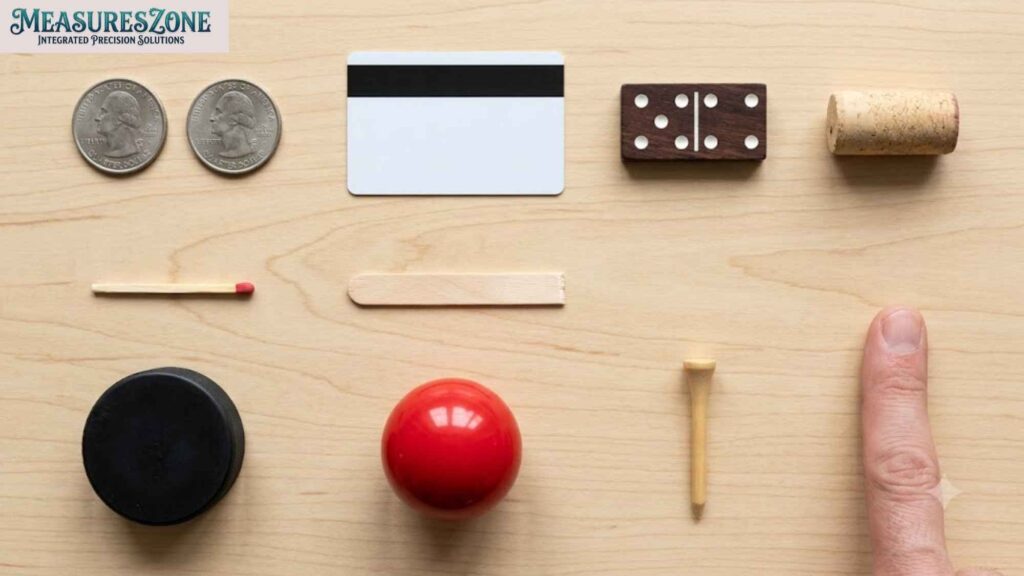
Many lists of things that are 2 inches long rely on guesses or outdated information. The examples below are based on standard sizes and widely accepted averages, giving you real measurements you can trust.
1. Two U.S. quarters, placed side by side
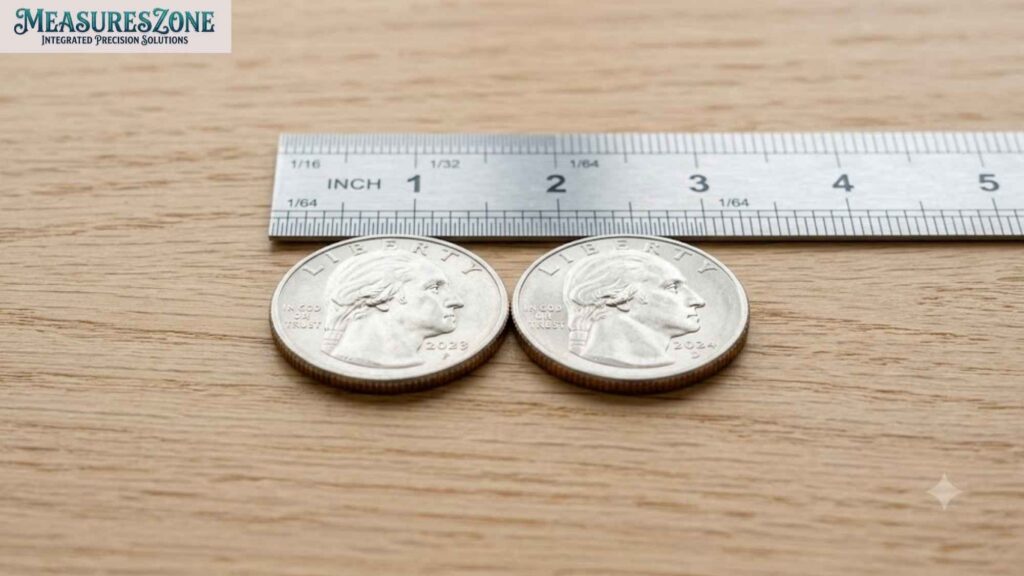
A single U.S. quarter measures 0.955 inches in diameter. Line up two of them edge to edge and you land at just under 2 inches close enough that it is one of the most reliable quick size estimates you can do with pocket change.
2. The height of a standard credit or debit card
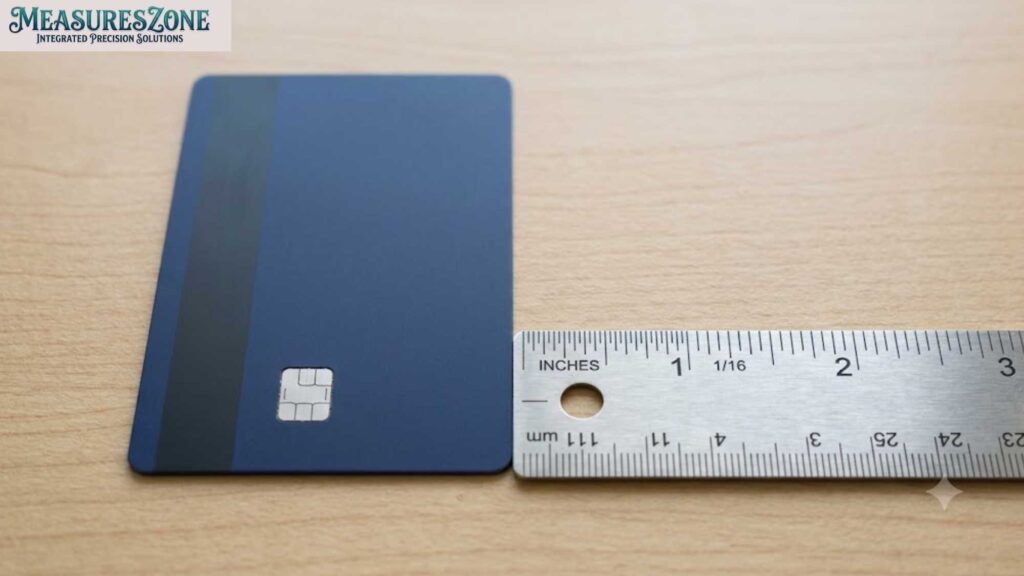
Every card that fits your wallet follows the international ID-1 standard: 3.370 inches by 2.125 inches. That short side, the height, is just a touch over 2 inches, making it one of the most consistent 2 inch size reference points around, since virtually everyone has a card like this within reach.
See how long 6 inches is using everyday objects.
3. A standard wooden domino tile
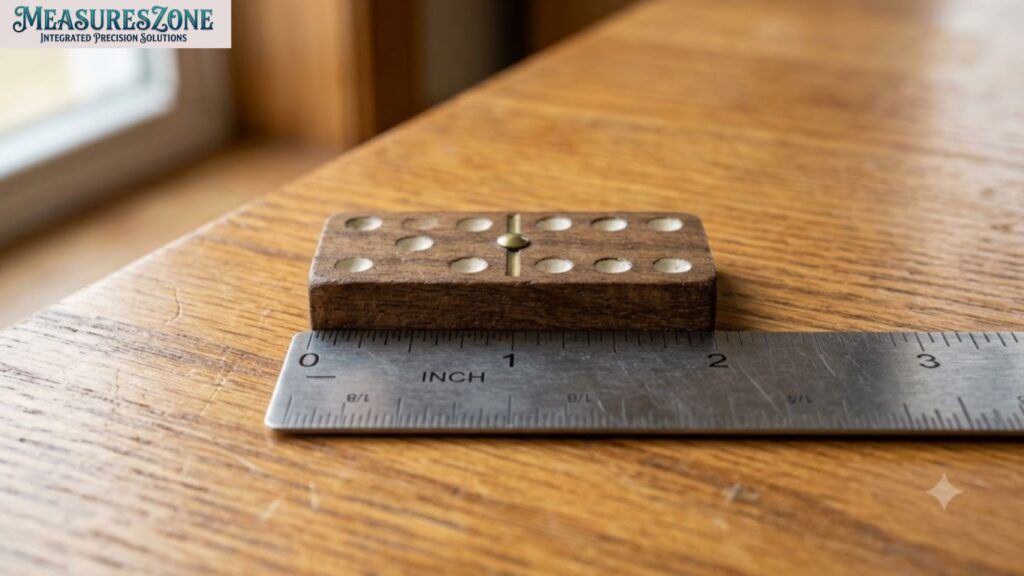
Traditional double-six domino sets use tiles that measure 2 inches long. This is one of the few objects on this list where the 2 inch measurement is not approximate. it is the actual manufacturing standard.
4. A wine cork
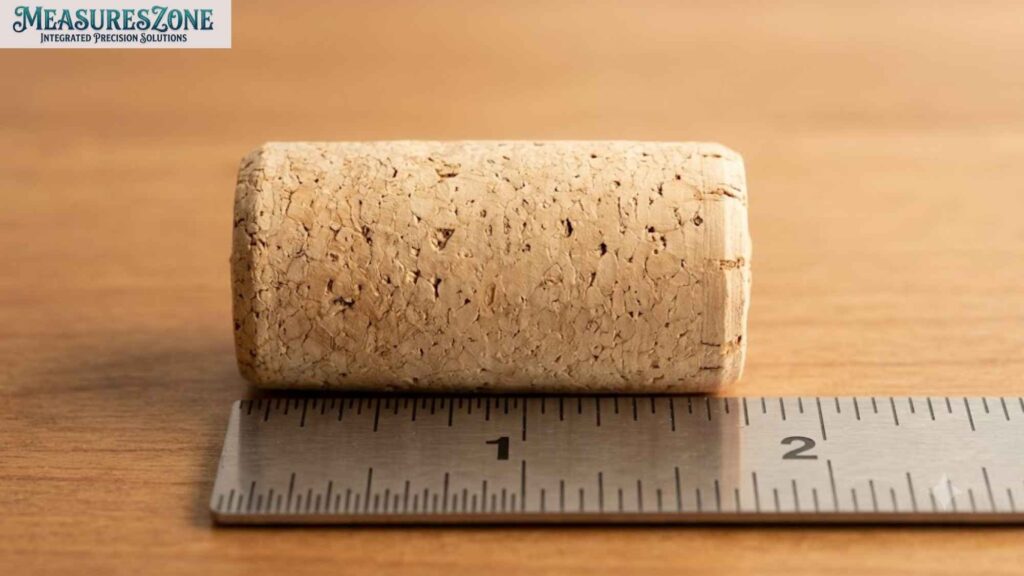
Standard wine corks run between 1.5 and 2 inches in length, depending on the wine and bottling style. Corks meant for wines intended to age longer tend to run closer to the 2 inch end, while shorter corks are more common on wines meant to be consumed soon after bottling.
5. A Wooden Matchstick 2 Inches Long
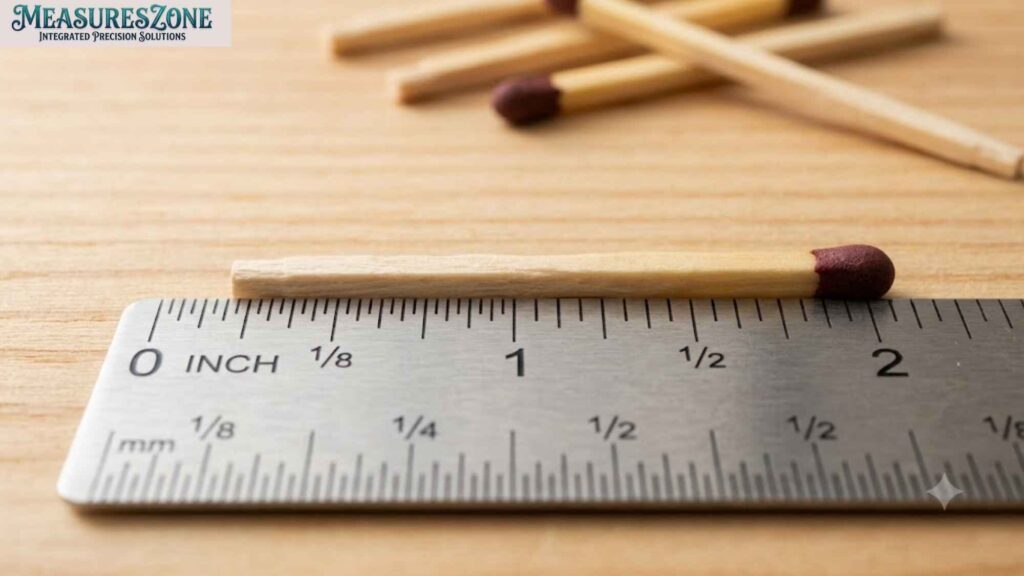
A standard matchstick measures about 1.75 to 2 inches, depending on the brand and whether it is a kitchen match or a smaller safety match.
Wooden matches tend to run longer than the thin cardboard ones you would find in a matchbook, so the range shifts a bit either way. Either version still works as a solid visual for the lower end of the 2 inch range.
Find the exact sizes and dimensions of Monster cans.
6. Half of a standard popsicle stick
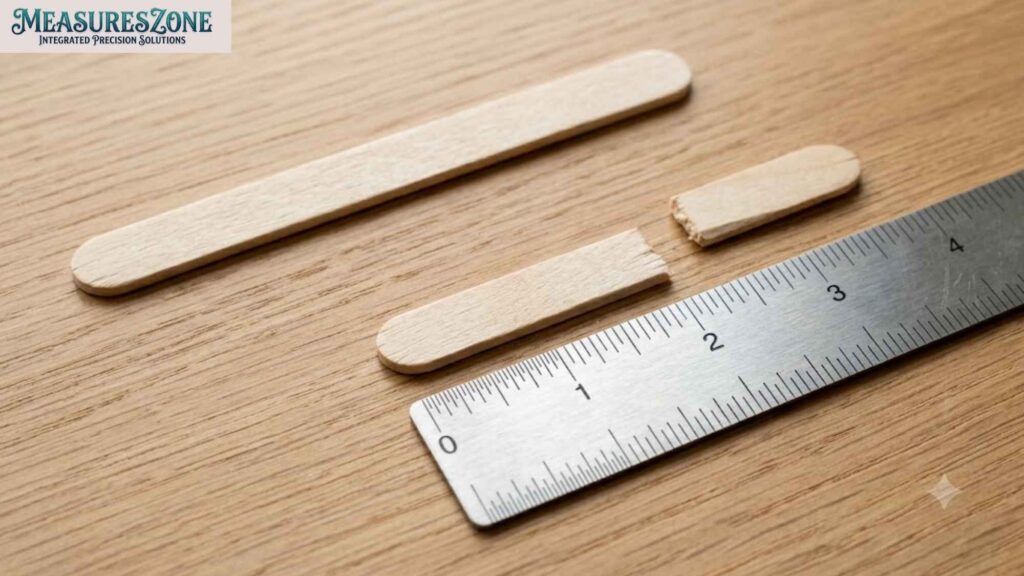
A full popsicle stick runs about 4.5 inches. Snap one in half, and each piece comes out to roughly 2.25 inches. A touch over 2 inches, but close enough to use as a rough guide, especially if you eyeball slightly past the break point.
7. Two ice hockey pucks, stacked
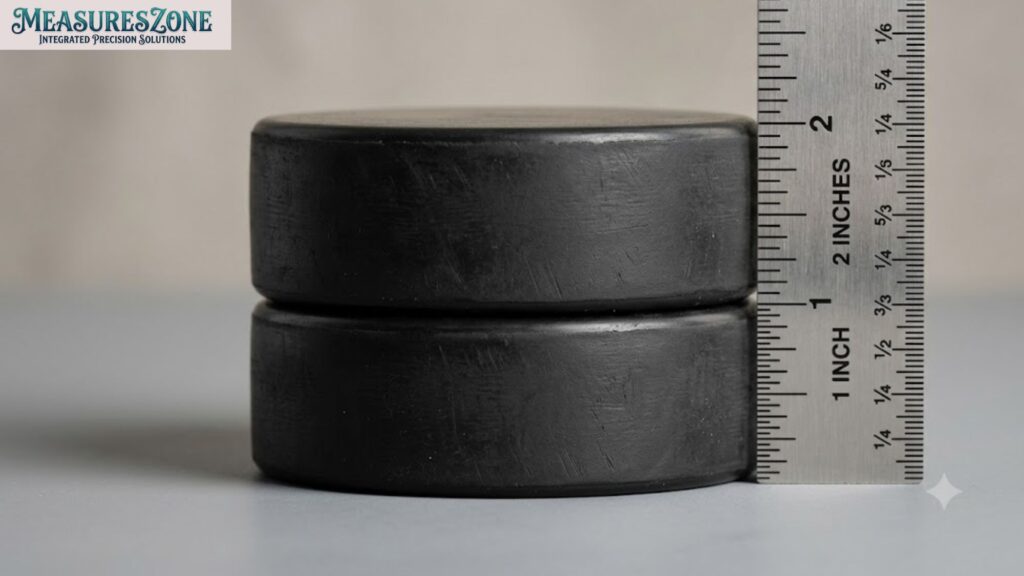
Here is a fact most people do not know: an official hockey puck is exactly 1 inch thick. Stack two of them, and you get precisely 2 inches, no rounding, no approximation. If you want the single most accurate physical 2 inch measurement reference on this entire list, this is it.
8. A snooker ball
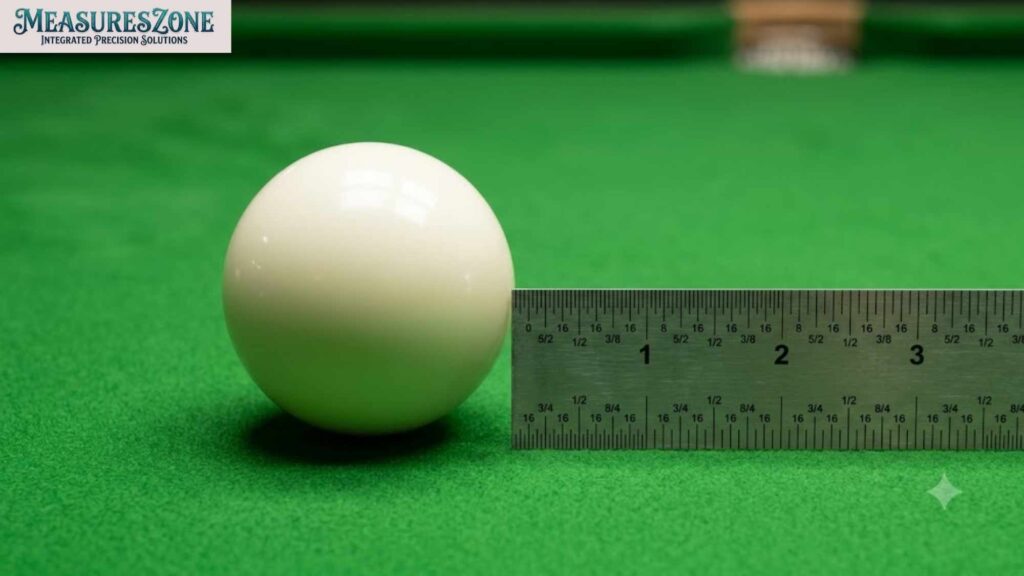
Snooker balls measure 2.06 inches in diameter, just slightly over 2 inches. It is a subtle difference, but worth noting if you need real precision rather than a rough estimate.
9. A short golf tee
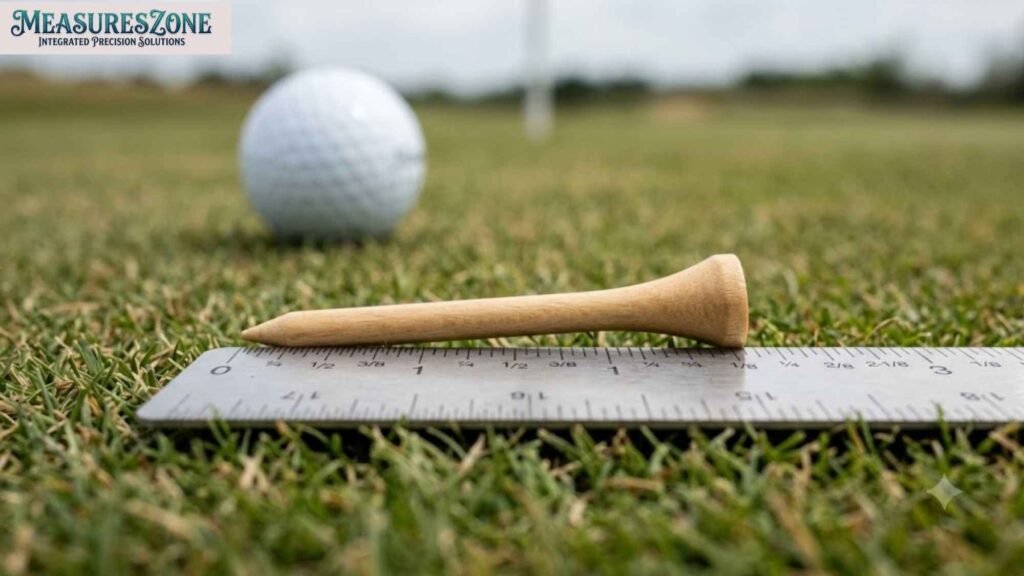
Golf tees come in a few lengths, and it is easy to grab the wrong one for a comparison. The short 2⅛ inch tee is the one that lines up closely with 2 inches, not the longer 2¾” or 3¼” tees typically used with a driver.
Discover what 100 feet looks like in real life.
10. The tip of your index finger to the first knuckle
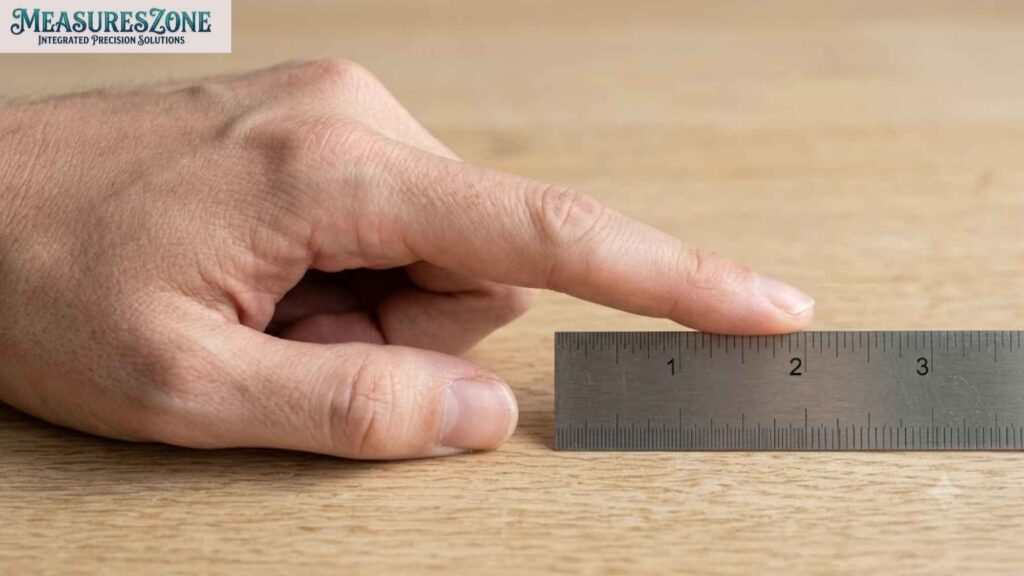
For most adults, the distance from the tip of the index finger to the first knuckle measures around 2 inches. This varies from person to person, of course, but it can be a convenient built-in measuring reference once you have compared it with a known 2 inch object.
11. AA Battery
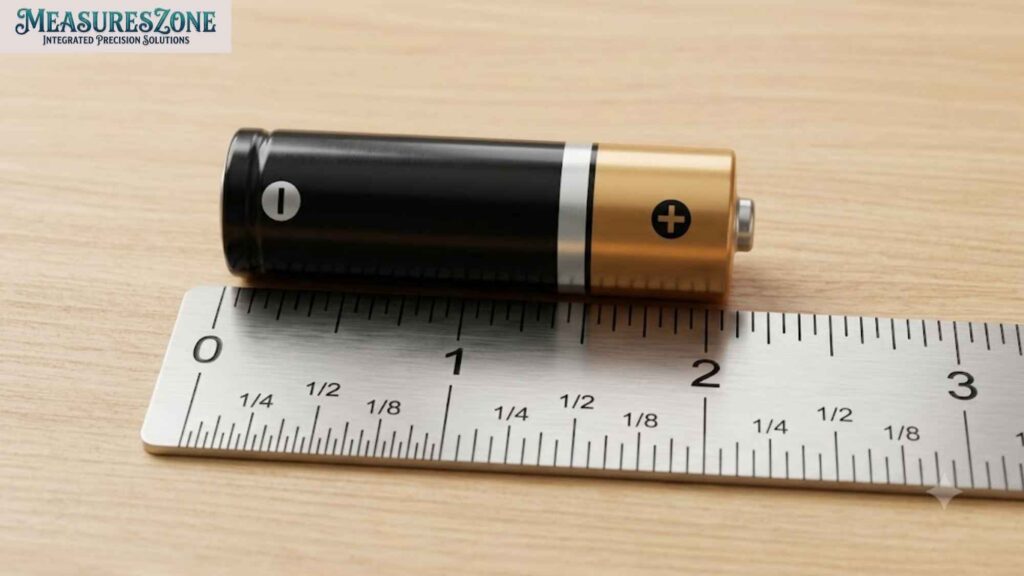
This one’s worth calling out specifically because people often reach for a battery’s diameter as a comparison, which is wrong. A standard AA battery is only about 0.57 inches across. But measured lengthwise, it is about 1.99 inches, making it essentially 2 inches long and one of the most precise, widely available references on this list.
12. Large Coat Button
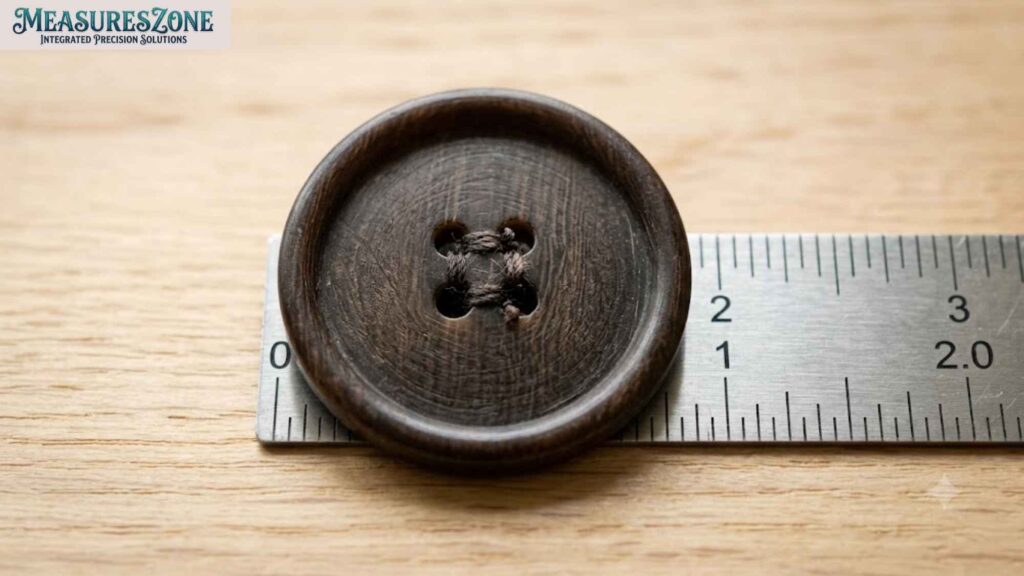
A large coat button can be a useful everyday reference for picturing 2 inches. Some oversized coat and winter jacket buttons measure around two inches across, although the exact diameter can vary depending on the design and manufacturer.
If you have a large button at home, placing it next to a ruler is an easy way to check whether it is close to the 2-inch mark.
13. Standard Pink Eraser
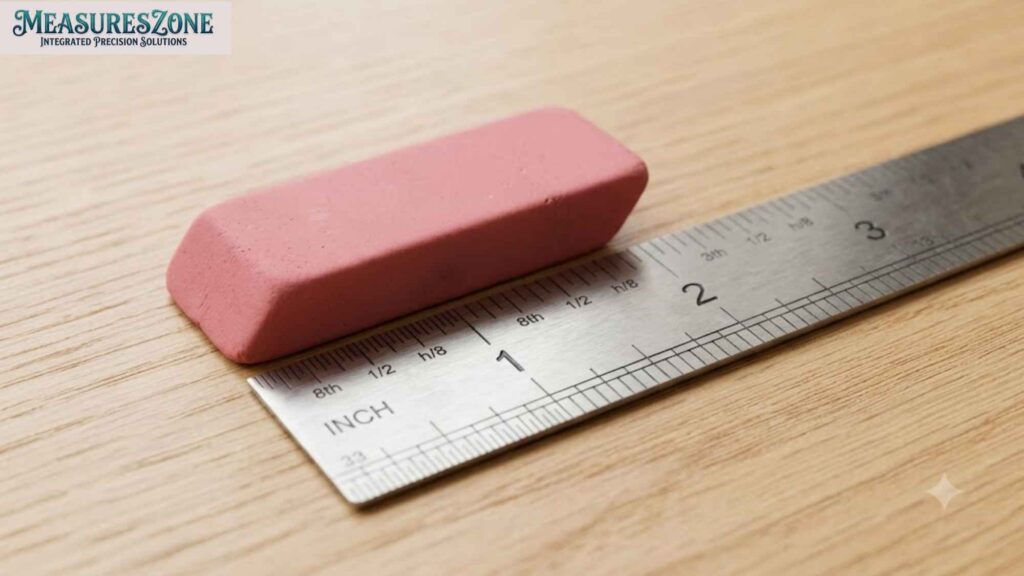
A standard rectangular pink eraser is often around 2 inches long, making it a familiar object you can use to picture this measurement. The exact size can vary slightly depending on the brand, but many traditional school and office erasers are close to the 2 inch mark.
If you have one nearby, placing it next to a ruler is an easy way to see how close it is to 2 inches.
See how big 10 inches really is with everyday objects.
How to Measure 2 Inches Without a Ruler
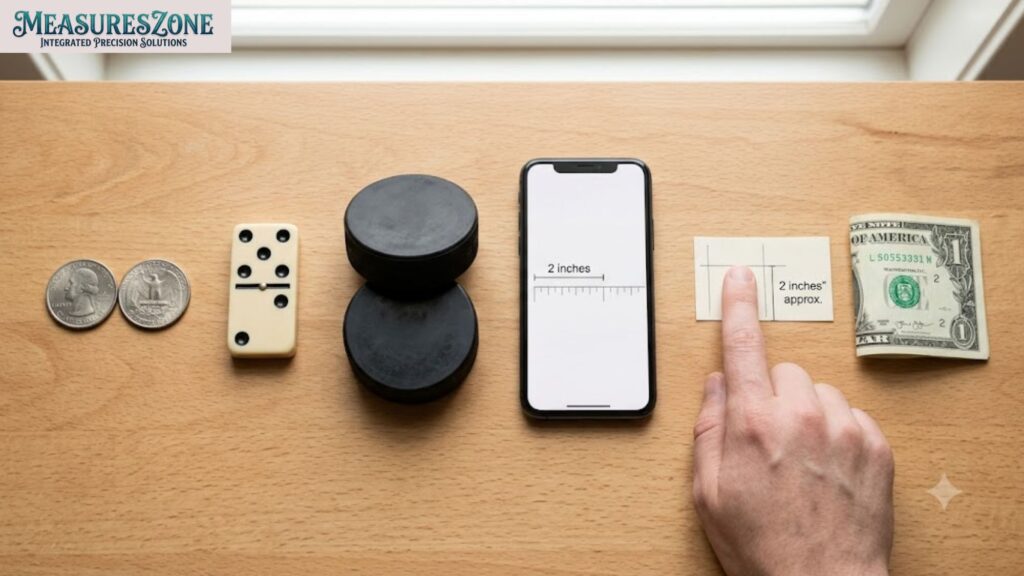
Sometimes you just do not have a standard ruler or tape measure nearby. Here is how to get a reasonably accurate 2 inch measurement using nothing but what is already around you.
Method 1: Calibrate your finger first. Since finger length varies person to person, measure your index finger against a ruler once, tip to first knuckle, and note the result. That turns your finger into an actual measuring tool instead of a guess.
Method 2: Use your phone. Most smartphones now come with a built-in measuring app (iPhone’s “Measure” app, or Google’s “Measure” on Android). These use the camera and augmented reality to estimate length reasonably well for quick checks, though they are not precise enough for anything requiring exact tolerances.
Method 3: Use a known object as a stand-in. This is the most reliable measuring without a ruler method, and it is the whole reason this guide exists. Grab two quarters, a domino tile, or a hockey puck (stacked) and use it directly as your reference.
Since these objects have fixed, known sizes, you are borrowing their accuracy instead of relying on your own eye.
Method 4: Fold a dollar bill. A U.S. dollar bill measures 6.14 inches long. Folded into thirds, each section comes out to just over 2 inches, a handy backup if you happen to have cash on hand but nothing else.
Why 2 Inch Measurements Matter in Everyday Life
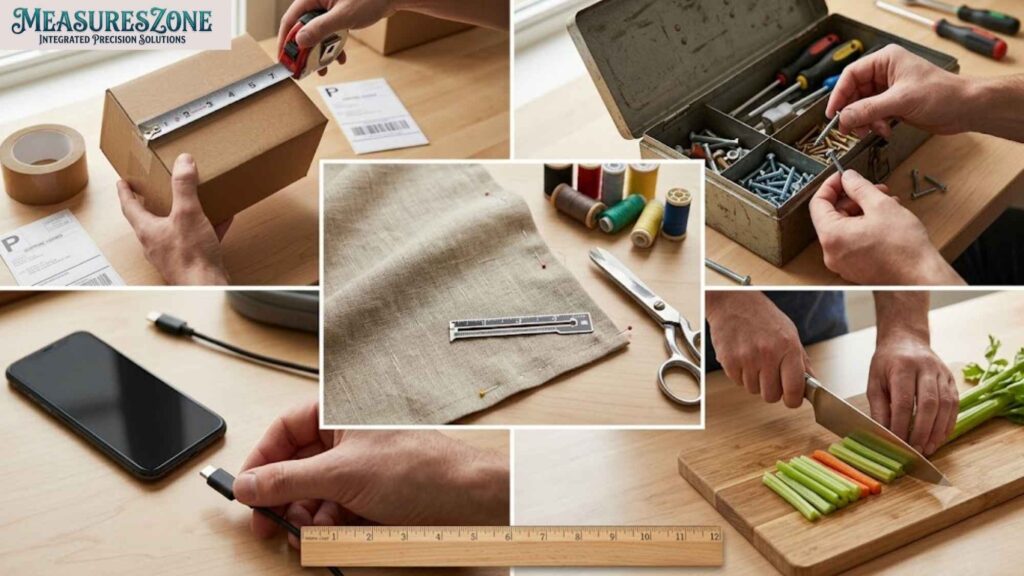
It is easy to dismiss 2 inches as too small to matter, but this exact length shows up constantly in situations where precision counts.
- Shipping and packaging: many carriers calculate dimensional weight, and a couple of inches of extra padding can bump a package into a more expensive size category.
- Home improvement: screw lengths, pipe diameters, and wall anchor depths are frequently specified in the 1 to 3 inch range, where 2 inches is a common midpoint.
- Crafting and sewing: seam allowances, hem depths, and fabric margins are often measured in small increments like this.
- Electronics and tech: smartphone widths, cable connector sizes, and port spacing frequently land close to 2 inches.
- Cooking: recipes calling for ingredients “cut into 2 inch pieces” rely on a shared, consistent understanding of that size.
In each of these cases, being off by even half an inch can cause a real, practical problem, a part that does not fit, a package that costs more to ship, a hem that sits wrong. Having a mental library of accurate 2 inch measurement references is a small thing that quietly saves time and mistakes.
Check out these easy ways to visualise 8 inches.
A Quick Case Study: When 2 Inches Made the Difference
To see why accurate small measurements actually matter, consider a common scenario in online retail. A seller shipping a stack of phone cases estimated their packaging at “about 2 inches thick” by eye, without measuring. The actual stack came in closer to 2.4 inches once padding was added.
That small gap pushed the package into the next dimensional-weight bracket with their shipping carrier, adding a few dollars in cost per order. Multiplied across a few hundred shipments a month, that rough estimate turned into a real, recurring expense, all from skipping a 30 second measurement.
The fix was simple: the seller started using a stacked set of two hockey pucks as a quick physical gauge before boxing anything up, since it is an exact, reliable 2 inch reference that does not require digging out a tape measure every time.
It is a small example, but it makes the point well. Visual estimation is fine for casual use, but real objects with fixed, known sizes are what you want when the outcome actually costs money.
2 Inch Measurement Quiz: Test Your Knowledge
1. What is the exact thickness of a single official hockey puck?
A) 0.5 inches
B) 1 inch
C) 1.5 inches
D) 2 inches
2. Which of these is the actual diameter of a regulation golf ball?
A) 1.68 inches
B) 2 inches
C) 2.25 inches
D) 1.2 inches
3. What is 2 inches converted into centimetres?
A) 4.08 cm
B) 5.08 cm
C) 6.08 cm
D) 2.54 cm
4. Which object is manufactured to be exactly 2 inches long, not just approximately?
A) A standard paperclip
B) A half-dollar coin
C) A domino tile
D) A golf ball
5. On a ruler, which type of line marks a 1/4-inch increment?
A) The longest line besides the number
B) A medium-length line
C) The shortest line
D) There is no line for quarter-inches
Answers
- B) 1 inch
- A) 1.68 inches
- B) 5.08 cm
- C) A domino tile
- B) A medium-length line
Conclusion
Two inches might seem like a small, unremarkable length, but once you have got a handful of reliable everyday objects to compare it to, it becomes a lot easier to picture and a lot easier to measure accurately without reaching for a ruler every time.
Keep this guide bookmarked as your quick reference the next time you need a fast, accurate 2 inch measurement. Between the stacked hockey pucks, the domino tile, and two quarters side by side, you have now got several dependable standard measurement tools sitting in your junk drawer or wallet right now. You know which popular comparisons to skip entirely.
Frequently Asked Questions
Still have a few lingering questions about 2 inches? Here are quick, straight answers to the ones that come up most.
1. Does 2 inches mean the same thing in the US and UK?
Yes. The inch is standardized internationally at 2.54 cm, so it is identical everywhere imperial units are used.
2. What household item is closest to exactly 2 inches?
Two stacked hockey pucks are the most precise match at exactly 2 inches, followed closely by a standard domino tile, which is also manufactured to a 2 inch length.
3. Can I trust my finger as a measuring tool?
Only after calibrating it against a real ruler first. Finger and knuckle sizes vary enough between individuals that an uncalibrated estimate can be off by a quarter inch or more.
4. Is “nominal” 2 inches the same as actual 2 inches?
Not always. Lumber and some hardware use nominal sizing, which measures the material before finishing. The actual size often comes in slightly smaller.
Learn about Pringles can sizes and dimensions.

David John is an experienced blogger and the admin of the Measurements category at Measures Zone. He shares accurate and easy to understand measurement guides for readers.