

Numbers on a page rarely mean much until you picture them. Tell someone a hallway is “500 feet long,” and their eyes glaze over. Show them it’s the same as five blue whales lined up nose to tail, and suddenly the number clicks. That’s the goal of this guide: to turn an abstract measurement into something you can actually see in your head.
By the end, you’ll know exactly how a 500 feet length stacks up against football fields, swimming pools, school buses, city blocks, and a handful of famous landmarks. Let’s get into it.
How Long Is 500 Feet, Exactly?
Before comparing 500 feet to anything else, it helps to pin down the raw conversions. Here’s the 500-foot distance broken into the units you’ll actually use:
| Unit | Equivalent |
|---|---|
| Yards | 166.67 yards |
| Meters | 152.4 meters |
| Miles | 0.095 miles (about a tenth of a mile) |
| Inches | 6,000 inches |
500 Feet Compared to Sports and Recreation
1.4 Football Fields, Goal Line to Goal Line
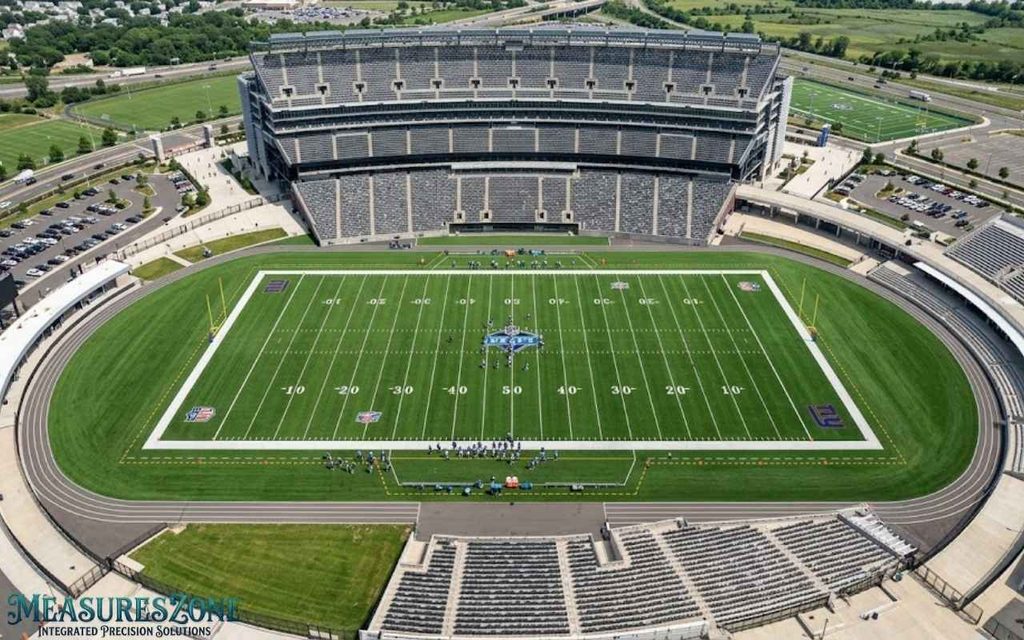
A regulation football field, end zones included, runs 360 feet, so 500 feet works out to about 1.4 fields. Strip the end zones out and measure just the 300-foot playing surface, and that number climbs to roughly 1.67 fields. Either way, football field length remains the go-to comparison for most Americans trying to picture a distance.
Three Olympic Swimming Pools

An Olympic swimming pool measures exactly 50 meters, or about 164 feet. Line up three of them and you get roughly 492 feet, just eight feet short of 500. That makes “three Olympic pools” one of the cleanest, most accurate comparisons on this list, and a favorite among swimmers trying to visualize open-water distances.
Five Basketball Courts and Two and a Half Hockey Rinks

An NBA basketball court runs 94 feet long, so five courts placed end to end get you to 470 feet, close enough to 500 that the comparison holds up well. NHL hockey rinks measure 200 feet, meaning two and a half rinks land almost exactly on five hundred feet.
500 Feet Compared to Buildings and Landmarks
Just Past the Eiffel Tower’s Second Platform

The Eiffel Tower height, including its broadcast antennas, reaches 1,083 feet. But you don’t need the whole tower to hit five hundred feet. The tower’s second observation platform sits at 377 feet, and the distance from the ground to a point roughly 500 feet up lands you just above that platform and well below the summit.
It’s a useful way to grasp how tall this Paris landmark really is, since most visitors only ever reach the second level.
About 80 Percent of the Gateway Arch

St. Louis’s Gateway Arch stands 630 feet tall, and its Gateway Arch ground span, the horizontal distance between its two legs, also measures 630 feet, since the structure forms a perfect catenary curve with equal height and width.
A 500-foot length covers about 80% of that architectural span in either direction. Few landmarks make for such a clean visual since the horizontal and vertical measurements mirror each other.
See real-life examples of 11 inches.
One and a Half Statues of Liberty

Measured from the ground to the torch’s flame instead, the statue climbs even higher: 305 feet from pedestal base or 151 feet for the copper figure alone, depending on which number you’re citing.
Either way, you’d need to stack the statue on itself nearly twice over to match a 500-foot length, which says a lot about how much taller modern skyscrapers really are compared to this 1886 icon.
Transportation and Infrastructure
About 12 School Buses, Bumper to Bumper

A standard school bus runs close to 40 feet long, so lining up roughly 12 buses will carry you the full 500 feet. This school bus length comparison works particularly well for kids, since it’s one of the few objects on this list most people see every single day.
Two Boeing 747s, Nose to Tail

A Boeing 747 measures about 231 to 250 feet depending on the variant. Two of them parked nose to tail land right around 500 feet, which is a genuinely useful way to grasp just how enormous commercial aircraft really are.
See the size and dimensions of a football field.
A Tenth of a Commercial Airport Runway

Airport runway lengths for commercial jets typically run between 8,000 and 13,000 feet. A 500-foot runway section is only about a twentieth to a tenth of the full strip, just enough for a plane to taxi a short distance, nowhere close to enough room for takeoff.
Roughly Half a Large Cruise Ship

Big modern cruise ships run anywhere from 900 to over 1,180 feet. A 500-foot length covers roughly half of a mid-to-large cruise liner, which helps explain why walking bow to stern on one of these ships can feel like a genuine hike.
Nature and Large Objects
Five Blue Whales, Head to Tail

Blue whales are the largest animals ever known to have lived, reaching lengths of up to 100 feet. Five blue whales end to end get you almost exactly to 500 feet, making this one of the most vivid comparisons on the list, and a reminder of just how massive these marine animals truly are.
Visualize 3 inches with everyday objects.
A Seagoing Barge and a Half

A large seagoing barge used for industrial cargo transport typically measures around 300 to 350 feet. A 500-foot distance covers roughly one and a half of these vessels, a helpful comparison if you’ve ever watched one pass slowly down a river or coastline.
Public Spaces and City Layout
Roughly Two New York City Blocks

In Manhattan, the distance between avenues runs about 750 feet, but the shorter east-west blocks (the more common “city block” reference) measure closer to 264 feet each. That puts a 500-foot distance at just under two typical city blocks, a handy way to judge urban distances when you’re navigating on foot.
A Long Downtown Pier

Public piers built for fishing or scenic walks commonly stretch between 400 and 600 feet, so 500 feet sits right in the middle of a typical long pier, long enough to feel like a proper walk out over the water.
See how 4 inches compares to everyday objects.
Frequently Asked Questions About 500 Feet
Got questions about how 500 feet stacks up in real life? Here are quick answers to the ones people ask most.
How far can you see across 500 feet?
In clear conditions, 500 feet is a relatively short viewing distance. You can easily recognize large objects, buildings, and people at this range.
Is 500 feet taller than a 40-story building?
Yes. Most 40-story buildings top out around 400 to 450 feet, so a 500-foot height would clear the roofline of a typical 40-story tower with room to spare.
How long would it take to drive 500 feet in a car?
At a typical residential speed of 25 mph, covering 500 feet takes roughly 14 seconds, about the length of one short city block.
Conclusion
As the old measuring saying goes, “a number without a reference is just noise.” Once you’ve seen 500 feet as five blue whales, three swimming pools, or a dozen school buses lined up in a row, the distance stops being abstract and starts being something you can actually picture the next time you hear it.
Quiz: How Well Do You Know 500 Feet?
Test your knowledge of 500 feet with these quick questions about its conversions and real-world comparisons.
1. How long is a regulation American football field, including both end zones?
A) 300 feet
B) 360 feet
C) 500 feet
D) 100 feet
2. Roughly how many blue whales, lined up head to tail, would it take to cover 500 feet?
A) Two
B) Ten
C) Five
D) Twenty
3. What’s the height of the Gateway Arch in St. Louis?
A) 500 feet
B) 305 feet
C) 630 feet
D) 1,083 feet
Answers:
1. B) 360 feet
2. C) Five
3. C) 630 feet
Visualize 18 inches with everyday objects.

David John is an experienced blogger and the admin of the Measurements category at Measures Zone. He shares accurate and easy to understand measurement guides for readers.