

Grab a Coke from the fridge and you probably do not think twice about its shape. It just fits your hand, the cup holder, the fridge door. That is not an accident. Every Coke can dimension, from the body diameter down to the lid, comes from decades of engineering refinement.
In this guide, we will walk through the standard Coke can size, every major variant Coca-Cola produces, and the actual physics and manufacturing decisions that shape a can you have probably never really looked at closely.
The Standard 12 oz Coke Can, By the Numbers
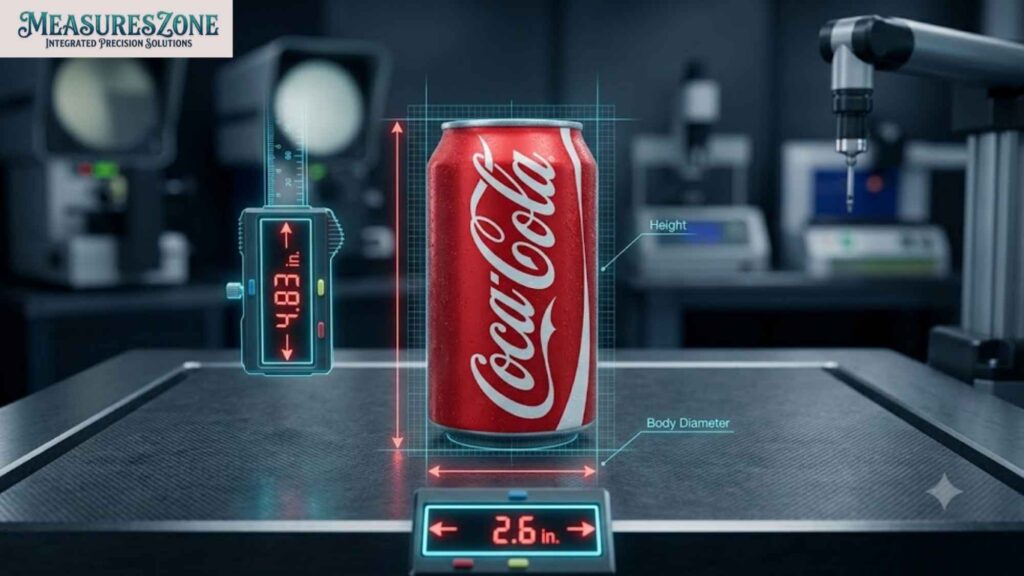
The standard Coke can is the one you already know: the 12 fl oz (355 ml) aluminium can sold in six-packs, twelve-packs, and vending machines across North America. Here is what the Coke can measurements actually look like:
- Height: 4.83 inches (12.3 cm)
- Body diameter: 2.6 inches (6.6 cm)
- Lid diameter: 2.13 inches (5.4 cm)
- Circumference: approximately 8.2 inches (20.8 cm)
- Empty weight: roughly 0.5 oz (14–15 grams)
- Full weight: around 13 oz (370–380 grams), can plus liquid
These numbers have barely moved since Coca-Cola settled on aluminium packaging decades ago. That consistency matters more than it sounds. Vending machines, six-pack rings, cooler shelving, and grocery store dividers are all built around this exact can size guide.
Change the diameter by even a few millimetres and you would break compatibility across an entire industry’s worth of equipment.
Worth noting: the standard soda can dimensions used by Coke are not unique to Coke. Pepsi, Sprite, Dr Pepper, and most major sodas use the same 2.6-inch outside diameter, because it is a shared industry benchmark rather than a brand-specific design choice.
Every Coke Can Size at a Glance
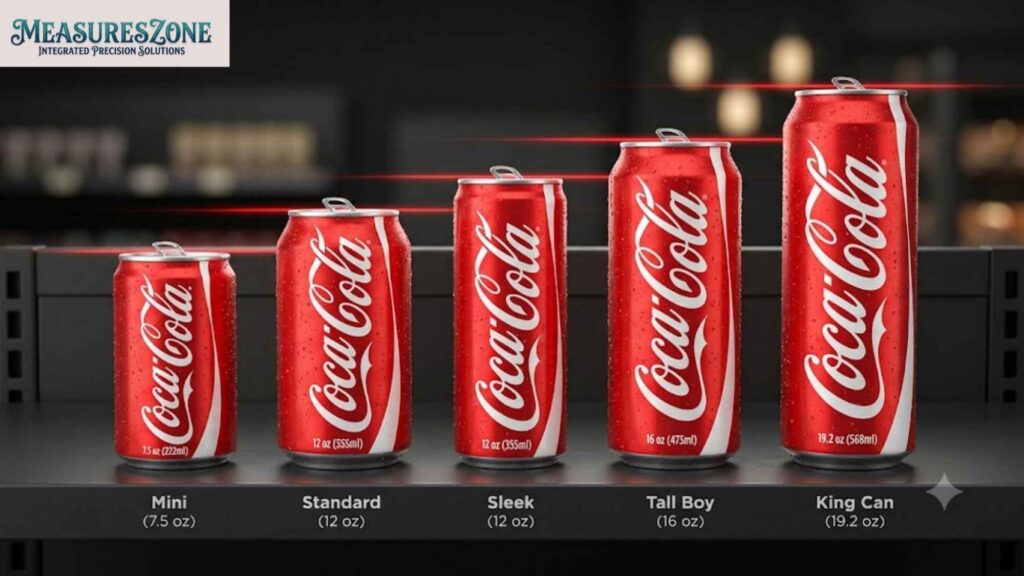
Coca-Cola does not stop at one size. Depending on where you shop, you will find several formats, each built for a different occasion. Here is a full Coke can size comparison:
| Can Type | Volume | Height | Diameter |
|---|---|---|---|
| Mini can | 7.5 oz (222 ml) | 4.2 in (10.7 cm) | 2.13 in (5.4 cm) |
| Standard can | 12 oz (355 ml) | 4.83 in (12.3 cm) | 2.6 in (6.6 cm) |
| Slim/sleek can | 12 oz (355 ml) | 6.1 in (15.6 cm) | 2.25 in (5.7 cm) |
| Tall boy | 16 oz (473 ml) | 6.2 in (15.75 cm) | 2.7 in (6.9 cm) |
| King can | 24 oz (710 ml) | 7.4 in (18.8 cm) | 2.9 in (7.3 cm) |
Notice the pattern: as volume goes up, height does most of the work. Diameter shifts only slightly across formats, which keeps every can compatible with the same production lines, retail shelving, and (mostly) the same cup holder.
Check out these easy ways to visualise 8 inches.
Why Slim Cans Are not Just a Smaller Standard Can
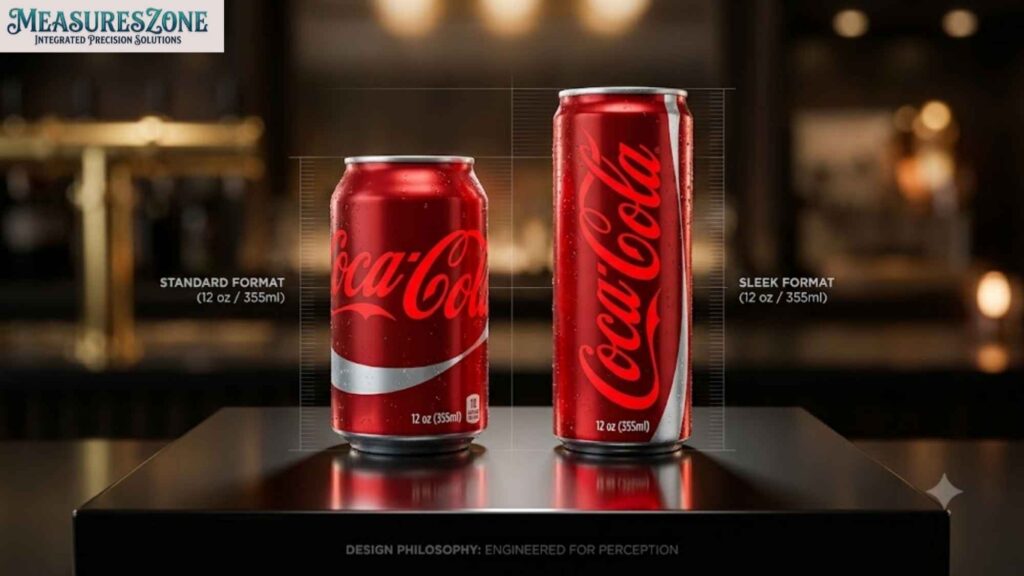
Here is where things get interesting. A slim Coke can holds the exact same 12 oz as a standard can, but it is not a shrunk-down version of one. It is a completely different ratio of height to width. Where a regular can is short and wide, a slim can is tall and narrow, standing about 6.1 inches high on a 2.25-inch diameter.
Why bother? A few reasons:
- Shelf efficiency. Retailers can fit more sleek cans per linear foot of shelf space.
- Premium positioning. The narrower profile reads as modern and upscale, which is why you will see it used for Diet Coke and specialty flavors.
- Cup holder feel. A narrower can feels different in hand, and in newer cars with adjustable cup holder inserts, it fits snugly rather than rattling around.
Mini cans solve a different problem entirely. They shrink the volume, not the shape, keeping a similar profile to the standard can but at 7.5 oz instead of 12. If you are picturing portion control over premium branding, that is the mini can’s whole purpose.
How a Coke Can Is Actually Built

Manufacturers don’t stamp a Coke can from one piece. They shape it through two-piece drawn and wall-ironed (DWI) construction. A machine punches a flat aluminium disc into a cup, then a series of rings stretches it thinner and taller.
Workers trim the top and neck it in, so the lid diameter (2.13 in) ends up smaller than the body diameter (2.6 in). They seam the lid on separately, after filling.
That tapered top saves aluminium, not looks. A narrower lid costs less across billions of cans. Most 12 oz cans use a “202 end” lid spec; some specialty formats use a slightly wider “204 end.”
The walls run just 0.09–0.10 mm thick, yet withstand around 90 psi of carbonation pressure, since the cylinder shape spreads the load evenly. Tolerances hold to about ±0.003 inches, keeping every can consistent enough for vending machines and filling lines to run without jamming.
Learn about Pringles can sizes and dimensions.
Dimensions of Coke Can Around the World
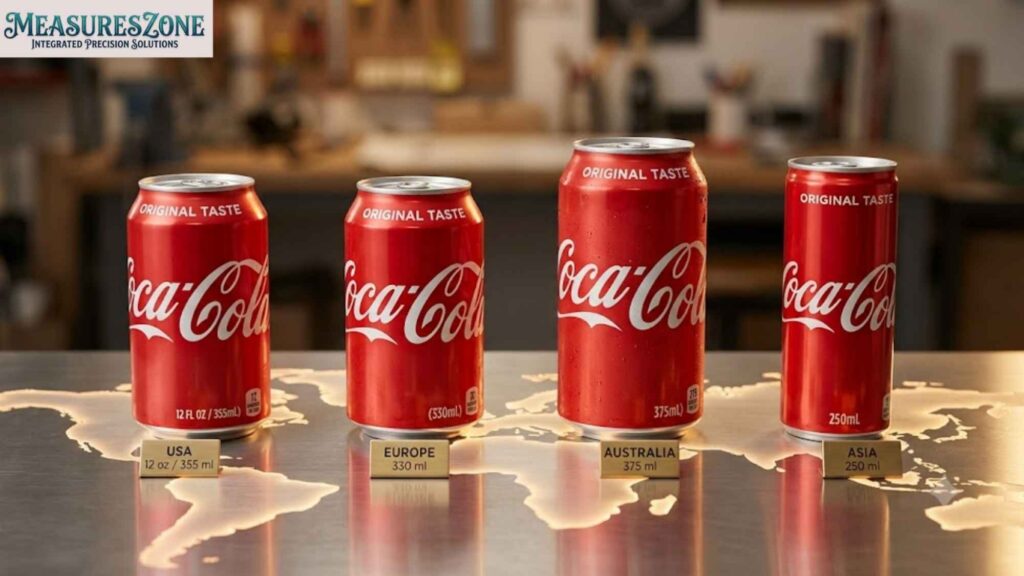
Across the world, Coke can size is not identical, but the differences are smaller than you would expect.
| Region | Volume | Height | Diameter |
|---|---|---|---|
| United States | 12 oz (355 ml) | 4.83 in (12.3 cm) | 2.6 in (6.6 cm) |
| Europe | 330 ml | 4.75 in (11.5–12 cm) | 2.6 in (6.6 cm) |
| Australia | 375 ml | 5.11 in (12.9 cm) | 2.6 in (6.6 cm) |
| Asia (common format) | 250 ml | 4.1 in (10.4 cm) | 2.1–2.13 in (5.4 cm) |
Coke Can vs. Other Beverage Cans
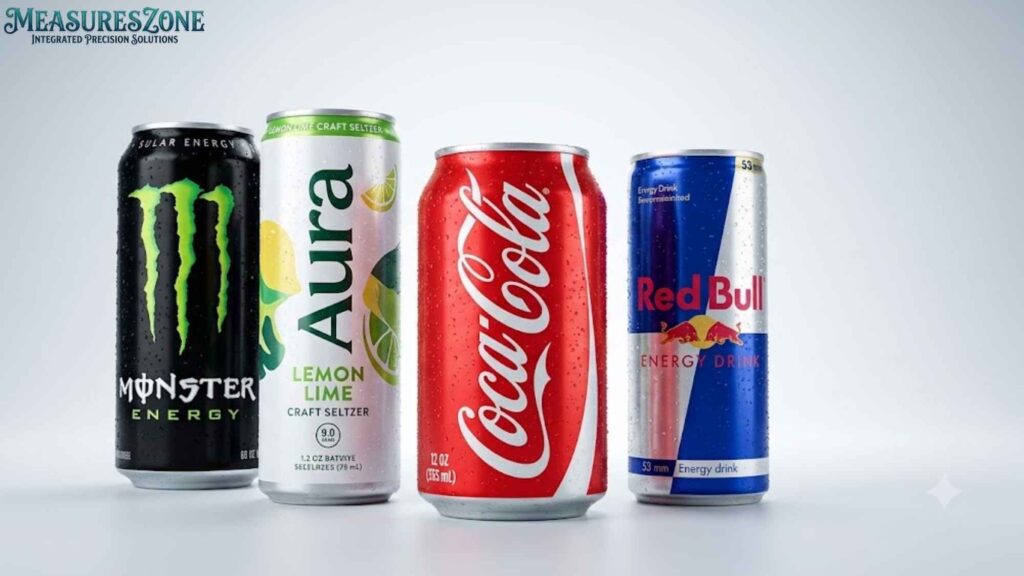
Coke is not operating in isolation. The beverage can industry largely standardizes its dimensions, though a few brands break from the norm:
- Pepsi, Sprite, Dr Pepper: essentially identical 12 oz specs to Coke, thanks to shared industry standards set decades ago.
- Red Bull: uses a narrower ~53 mm diameter can, which is why it feels noticeably slimmer in hand than a Coke.
- Monster Energy: sticks to the standard 66 mm diameter, closer to Coke’s tall boy than to Red Bull’s narrow format.
- Craft beer and hard seltzers: frequently borrow the sleek/slim profile for the same shelf-appeal reasons Coke uses it for Diet Coke.
So if you have ever noticed that a Coke and a Monster feel similar in your grip while a Red Bull feels skinnier, that is not your imagination. It is a real, measurable difference in can diameter.
Check out these easy ways to visualise 8 inches.
Does a Coke Can Actually Fit Your Cup Holder or Fridge Shelf?
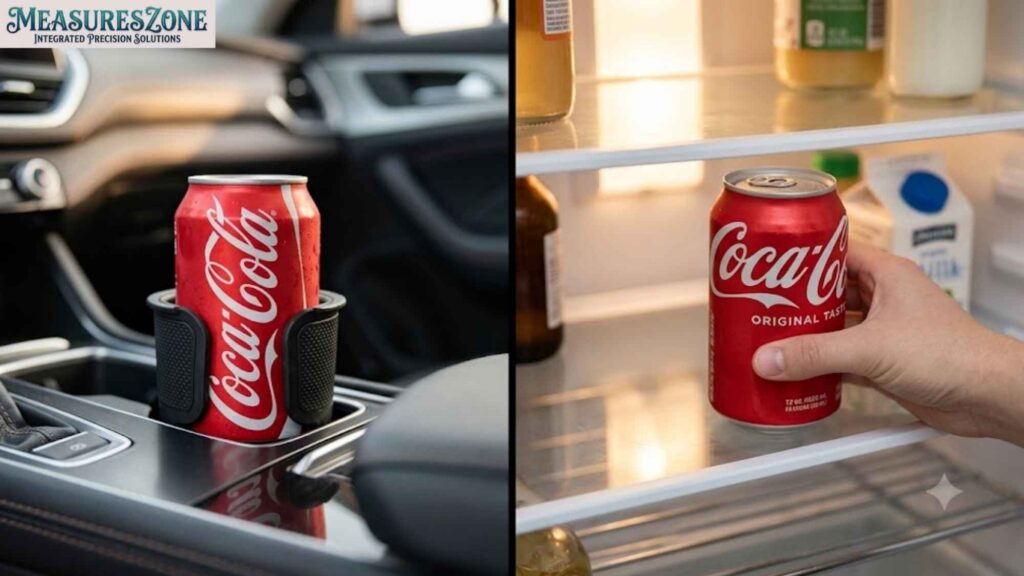
This is the practical question most people are really asking when they search for Coke can dimensions.
- Cup holders: Most U.S. vehicle cup holders are designed for a 2.5–3 inch diameter, which comfortably covers the standard can’s 2.6 inches. Slim cans at 2.25 inches can rattle in older, non-adjustable holders.
- Fridge shelves: A standard can needs about 5 inches of vertical clearance including spacing to slide in and out easily. Slim cans need closer to 6.5 inches, since their extra height is the trade off for their narrower body.
- Mini fridges and lunchboxes: Mini cans solve tight-space storage problems . At just 4.2 inches tall, this format handles that job specifically.
Have Coke Can Dimensions Changed Over Time?
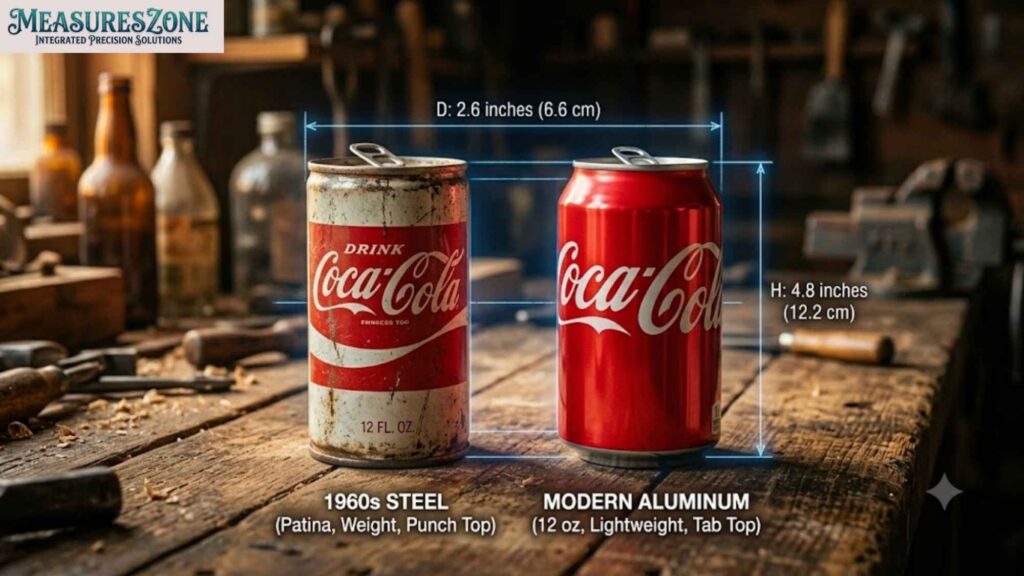
Surprisingly little has changed, given how long Coke has been in cans. Steel gave way to lighter aluminum by the 1980s, but the core can size stayed the same, which kept the transition smooth for filling lines and vending machines everywhere.
Since then, Coca-Cola has not redesigned the standard can. It is just added new formats around it. Mini cans cover portion control, slim and sleek cans give certain lines a premium look, and tall boys or king cans offer more volume without doubling up. The original 4.83 x 2.6-inch standard never got replaced; it just gained company on the shelf.
See how big 10 inches really is with everyday objects.
Coke Can Dimensions Quiz
1. What is the body diameter of a standard 12 oz Coke can?
A) 2.13 inches
B) 2.6 inches
C) 3.0 inches
D) 1.8 inches
2. What manufacturing process is used to form a Coke can from a flat aluminum disc?
A) Injection molding
B) Blow forming
C) Two-piece drawn and wall-ironed (DWI) construction
D) Rotational casting
3. Roughly how much internal pressure (from carbonation) does a Coke can need to withstand?
A) 20 psi
B) 45 psi
C) 90 psi
D) 150 psi
Answers
- B) 2.6 inches
- C) Two-piece drawn and wall-ironed (DWI) construction
- C) 90 psi
Conclusion
You probably do not think about it while cracking one open, but a Coke can’s shape is real engineering: minimal aluminum for maximum strength, built to hold 90 psi of internal pressure, with a diameter that is stayed the same for decades since changing it would disrupt the entire supply chain.
Whether you are comparing a slim can to a tall boy or checking if a case fits your mini fridge, these numbers cover every format Coca-Cola sells.
Discover what 100 feet looks like in real life.
Frequently Asked Questions
1. Are Coke and Pepsi cans the same size?
Yes. Both use identical 4.83-inch height and 2.6-inch diameter specs for their standard 12 oz cans, a result of shared industry standardization rather than coincidence.
2. What is the diameter of a Coke can in millimeters?
The body diameter is 66 mm, with the lid narrowing to about 54 mm.
3. Do all countries use the same size can?
No, volume varies by region (330 ml in Europe, 375 ml in Australia, 355 ml in the U.S.), but the body diameter stays close to 66 mm nearly everywhere, which keeps global manufacturing and shipping equipment compatible.
Find the exact sizes and dimensions of Monster cans.

Sam Glen is an experienced blogger and the author of the Dimension category at Measures Zone. He specializes in creating accurate, easy-to-understand size and dimension guides, helping readers quickly find reliable information for everyday objects and products.