

Picture a cornfield that runs farther than you can see on a foggy morning. That is roughly what 100 acres feels like on foot.
A 100-acre parcel covers 4,356,000 square feet. That equals about 76 NFL football fields. This guide gives you the exact acreage size, real dimensions, comparisons, uses, and current land cost figures from the USDA.
What Is 100 Acres? The Short Answer
An acre equals 43,560 square feet. It started as a strip one chain wide (66 feet) and one furlong long (660 feet). Farmers once defined it as a day’s plowing for a team of oxen.
Here is the quick version. A 100-acre parcel is about 0.16 square miles. You could drive its perimeter in about three minutes but would need roughly 16 hours to mow it. The United States still sells land by the acre while most countries use metric units. That is why this guide shows both systems side by side.
| Unit | 100 acres equals |
|---|---|
| Square feet | 4,356,000 |
| Square yards | 484,000 |
| Square meters | 404,686 |
| Hectares | 40.47 |
| Square kilometers | 0.405 |
| Square miles | 0.15625 |
100 Acres Converted to Other Units
Good area measurement starts with the right multiplier. Here is how a hundred acres looks in each common unit.
100 Acres in Square Feet
Multiply acres by 43,560. The total square footage is 4,356,000. County records usually list land area in square feet for small lots and switch to acres for big ones. A simple square footage conversion shows the scale: your 100-acre land could hold 2,178 homes with 2,000-square-foot footprints. That is a small town’s worth of houses on one tract.
100 Acres in Square Meters
One acre equals 4,046.86 square meters. The square meter calculation gives about 404,686 square meters. As a square, the area in meters is roughly 636 meters per side. Metric units help when you read foreign listings. A quick metric area conversion also keeps surveys consistent.
100 Acres in Hectares
Multiply by 0.4047 for 40.47 hectares. For a fast hectares conversion in your head, multiply by 0.4.
100 Acres in Square Kilometers and Square Miles
Divide the hectare figure by 100 and you get 0.405 square kilometers. That is a tiny metric land size. A square kilometer measurement suits cities rather than parcels. In miles, a full square mile holds 640 acres. So this land area conversion lands at 0.15625 square miles.
Quick Reference Chart
Use this chart for any quick area calculation. It adds 160 acres (a quarter section) and 640 acres (a full section) as handy benchmarks.
| Acres | Square feet | Square meters | Hectares | Square miles |
|---|---|---|---|---|
| 1 | 43,560 | 4,047 | 0.405 | 0.0016 |
| 10 | 435,600 | 40,469 | 4.05 | 0.0156 |
| 100 | 4,356,000 | 404,686 | 40.47 | 0.1563 |
| 160 | 6,969,600 | 647,497 | 64.75 | 0.25 |
| 640 | 27,878,400 | 2,589,988 | 259.0 | 1.0 |
100 Acres Dimensions: How Long and Wide Is It?
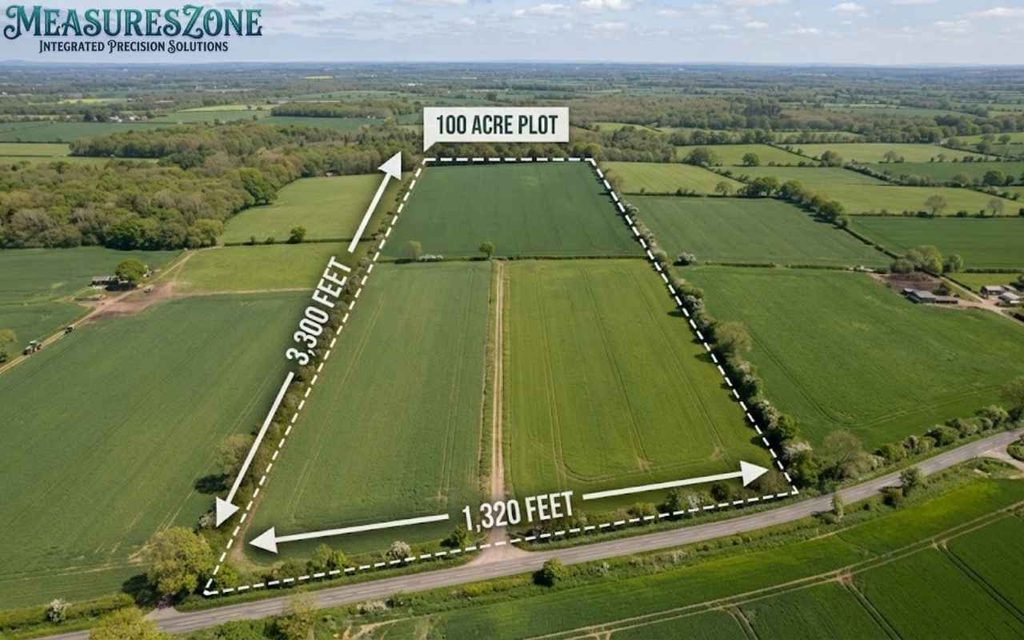
Acres measure area. They do not tell you the shape. Your property dimensions change fencing cost and travel time.
The Square Layout
A square tract measures about 2,087 feet per side, or 0.395 miles. The perimeter runs roughly 8,348 feet, or 1.58 miles.
100 Acres as a Rectangle
Real parcels vary. Here are common shapes and their boundary lengths.
| Width x length | Perimeter |
|---|---|
| 2,087 ft x 2,087 ft | 8,348 ft (1.58 mi) |
| 1,320 ft x 3,300 ft | 9,240 ft (1.75 mi) |
| 660 ft x 6,600 ft | 14,520 ft (2.75 mi) |
The long ribbon needs 74 percent more fence than the square. Compact shapes save money on every mile of boundary.
The Circular Layout
A circle gives the shortest edge for any area. A round 100-acre parcel has a radius near 1,177 feet and a diameter of about 2,355 feet. Its circumference runs roughly 7,400 feet, or 1.4 miles. Nobody builds round farms. Still, the math shows why shape matters.
What Does 100 Acres Look Like?
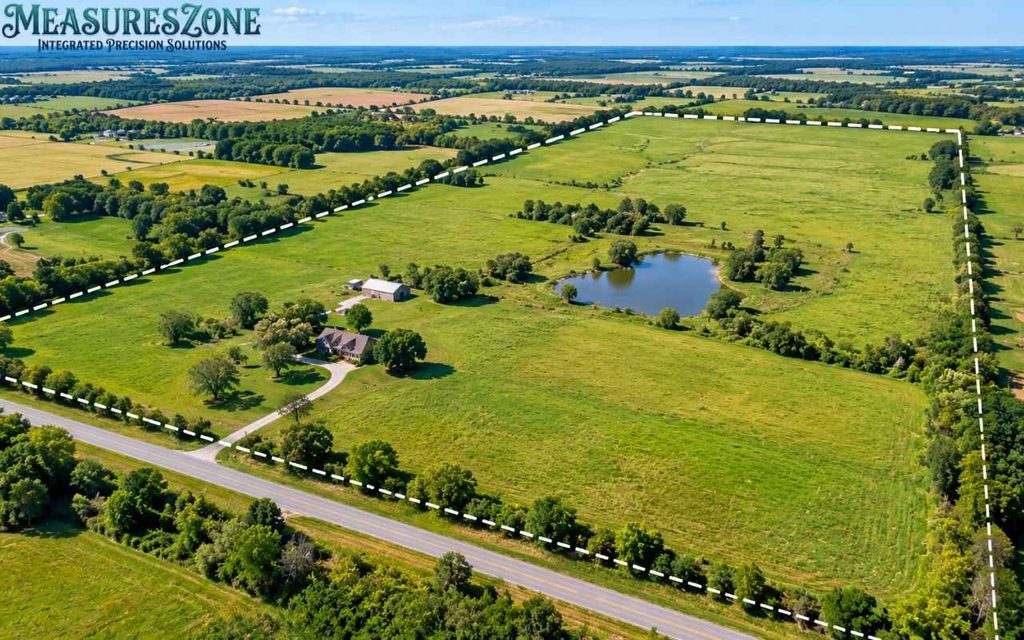
Numbers only go so far. Let is compare them to familiar things.
A Football Field Comparison
Here is the NFL field comparison. A full field with end zones measures 360 by 160 feet, or 57,600 square feet. So 100 acres equals about 76 football fields. Count only the 100-yard playing area (48,000 square feet) and you get roughly 91. Both are right because sports field dimensions differ by definition.
Soccer offers another land size comparison. A common 105 by 68 meter pitch covers 7,140 square meters. That gives about 57 pitches. Always check which playing field area a source used. Any field measurement can shift the count.
Compare Gatorade bottle sizes and dimensions.
City Blocks and Walking Distance
A 200 by 200 foot city block covers about 0.92 acre. Your parcel equals roughly 109 blocks.
Parking works as a yardstick too. One 9 by 18 foot space uses 162 square feet. Ignoring aisles, 100 acres could hold about 26,900 cars. Real lots lose space to driving lanes.
Now try walking it. A square boundary of 1.58 miles at 3 mph takes about 32 minutes. Cutting across the diagonal, roughly 2,950 feet, takes about 11 minutes.
Real Places That Are About 100 Acres
| Place | Approximate size |
|---|---|
| Magic Kingdom, Florida | 107 acres |
| Disneyland Park, California | 85 acres |
| Tiananmen Square, Beijing | About 109 acres |
Case study: Magic Kingdom covers 107 acres. Disney’s own trivia says its parking lot spans 125 acres. The lot is bigger than the park. For a larger yardstick, Central Park covers 843 acres, or about eight of these tracts.
Is 100 Acres a Lot of Land?
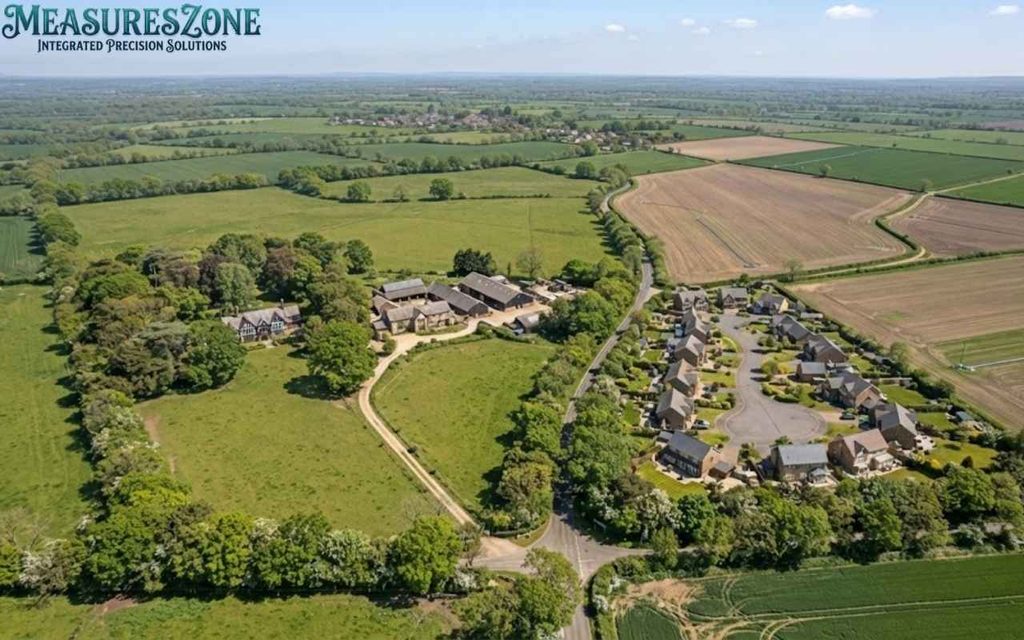
The amount of land you need depends on your goals, whether you plan to build a home, start a farm, or manage a larger rural property.
100 Acres vs. Average House Lots
Suburban housing plots often run from a fifth to half an acre. At a quarter acre, 100 acres holds 400 average house lots before roads. A typical residential lot size makes your tract look huge.
100 Acres vs. the Average American Farm
The USDA’s 2022 Census of Agriculture counted 1.9 million farms. The average American farm covered 463 acres. So 100 acres equals about 22 percent of the typical operation.
That is the key point for U.S. farm acreage. In commercial agriculture it is a small-to-midsize base. A hay seller or vegetable grower can thrive on this farm property size.
100 Acres vs. a Homestead-Era Quarter Section
The Homestead Act offered 160-acre claims. Your tract equals 62.5 percent of one. Four quarter sections make a 640-acre section.
The Bottom Line
For a household, it is a large property. For a full-time grain farm, it is modest. Think of it as a rural property that gives you real room without the workload of a ranch. You can raise animals, grow food, build a home, and still leave woods untouched. Few suburban plots offer that mix.
Discover what 12 cm looks like with common objects.
Usable vs. Total: How Much of 100 Acres Can You Use?
A listing says 100 acres. Your building footprint will not match. Several things shrink the usable property size:
- Wetlands and floodplains limit building
- Steep slopes raise grading costs
- Easements for power lines, pipelines, and roads
- Setbacks from property lines and streams
Order a survey and soil report. Large undeveloped land often hides surprises that show up only on a map. A buildable core of 70 to 80 acres is common on rolling or wet ground. Your own site could land higher or lower.
Reading 100 Acres in Deeds and Surveys
Old deeds use old measurement units. Here is your decoder.
| Unit | Length |
|---|---|
| 1 rod | 16.5 feet |
| 1 chain | 66 feet (4 rods) |
| 1 furlong | 660 feet (10 chains) |
| 1 mile | 5,280 feet (80 chains) |
Land surveying records describe a 100-acre parcel with “metes and bounds,” a walk around the edge using distances and compass bearings. Many deeds add “more or less.” Treat that as a warning that the true acreage conversion may differ. A land tract in the Public Land Survey System may be a piece of a 640-acre section.
What Can You Do With 100 Acres of Land?
A 100-acre rural property supports many uses.
Farming and Ranching
Row crops, hay, orchards, and pasture all fit. Cattle stocking rates swing widely. Wet regions may need an acre or two per animal unit. Dry rangeland needs dozens.
Residential Development
Developers turn rural acreage into a housing subdivision all the time. Zoning controls the count. Roads, drainage, and open space consume a chunk. This table uses a rough 25 percent loss as a planning example.
| Zoning lot size | Raw count | After roads and open space |
|---|---|---|
| 1 acre | 100 | About 75 |
| Half acre | 200 | About 150 |
| Quarter acre | 400 | About 300 |
Good property planning matters here. A strong plan covers land development costs, utilities, and permits. Then residential construction can follow. A housing project this size can run for years. Residential development also creates building lots with their own home property area rules.
Solar, Timber, and Recreation
Utility-scale solar often needs 5 to 10 acres per megawatt. So 100 acres could host roughly 10 to 20 megawatts. Woodlots, hunting land, trails, and campgrounds also suit a hundred acres well.
Some owners place part of the land under a conservation easement. That can earn tax benefits while protecting wildlife habitat. Others build a private retreat with a pond, cabins, and riding trails. At this size, one owner can do all of it.
See what 250 ml looks like in everyday objects.
Fencing, Mowing, and Upkeep for 100 Acres
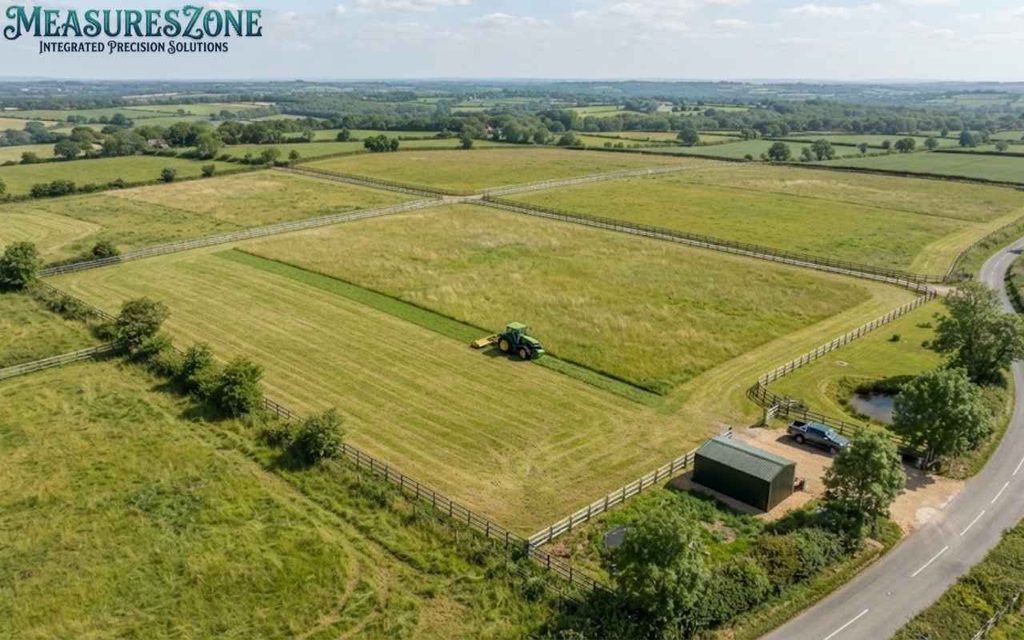
Owning land means maintaining it. A square needs about 8,350 feet of fence. A long ribbon can need 14,520 feet.
Mowing math is simple: acres per hour = width in feet x mph / 8.25. A 10-foot deck at 5 mph covers about 6 acres per hour in theory. A full 100 acres then takes roughly 16.5 hours. Turns and overlap push the real time higher.
How Much Does 100 Acres Cost? Land Cost in 2026
Land cost varies by state, soil, water, and access. The USDA’s Land Values 2026 Summary gives clear farmland prices. Average farm real estate (land and buildings) hit $4,500 per acre. Cropland averaged $6,020 and pasture $2,000.
| Land type or state | Per acre | Cost for 100 acres |
|---|---|---|
| U.S. pasture | $2,000 | $200,000 |
| U.S. farm real estate | $4,500 | $450,000 |
| U.S. cropland | $6,020 | $602,000 |
| Kansas cropland | $3,540 | $354,000 |
| Iowa cropland | $10,700 | $1,070,000 |
| New Mexico farm real estate | $735 | $73,500 |
| Rhode Island farm real estate | $23,600 | $2,360,000 |
Acreage pricing swings hard. The same land purchase cost runs $73,500 in New Mexico and over $2.3 million in Rhode Island.
Case study: Iowa cropland averages $10,700 per acre and Kansas $3,540. That gap adds $716,000 to 100 acres. Soil, rainfall, and yield history explain most of it.
The American Farm Bureau says the real question is who is able to farm it. Farm values have climbed nearly 44 percent since 2020. Renters pay about $160 per acre for cropland, so a lease runs near $16,000 yearly.
Budget for these extras too:
- Survey and title work, which confirm your property boundaries
- Closing costs and legal fees
- Property taxes, which many states reduce for active farmland
- Fencing, roads, and wells if the land lacks them
A lender’s real estate valuation compares recent sales of similar land nearby. Land near growing towns often carries a higher property value because buyers see development potential. Remote tracts with poor access usually sell for less.
See what 100 ml looks like in everyday life.
FAQs About 100 Acres
Still have questions about the size of 100 acres? You are not alone. These quick answers cover the ones people ask most.
How long does it take to drive around 100 acres?
It depends on the property’s shape, road access, and terrain. Some parcels have roads around their boundaries, while others require walking or using trails.
Can you see across 100 acres from one end to the other?
It depends on the terrain and vegetation. Open, flat land offers longer views, while hills, trees, and buildings can block your sightline.
How many people can live on 100 acres?
There is no fixed number. It depends on local housing regulations, available utilities, building space, and whether the land is used for individual homes or shared housing.
Conclusion
A hundred acres is a serious chunk of earth. You now know the core facts: 4,356,000 square feet, 40.47 hectares, 0.405 square kilometers, and about 76 football fields. The best way to grasp 100 acres is simple.
Stand at one corner and look across. Most people guess the far edge sits closer than it does. A square tract is nearly 0.4 miles wide, and that is farther than most of us can judge by eye. Before you buy any large land parcel, walk it. Order a survey of the property boundaries. Then run the numbers for your plan.
Quiz: How Big Is 100 Acres?
Test your knowledge of 100 acres with these quick questions about land area, conversions, and dimensions.
1. How many square feet are in 100 acres?
A) 435,600
B) 4,356,000
C) 43,560,000
D) 404,686
2. About how many hectares equal 100 acres?
A) 4.05
B) 25
C) 40.47
D) 100
3. If 100 acres forms a perfect square, about how long is the boundary all the way around?
A) 0.4 miles
B) 1.58 miles
C) 3.2 miles
D) 5 miles
Answers
1. B) 4,356,000
2. C) 40.47
3. B) 1.58 miles
Explore Lake Michigan’s size, depth, and fascinating facts.

David John is an experienced blogger and the admin of the Measurements category at Measures Zone. He shares accurate and easy to understand measurement guides for readers.