
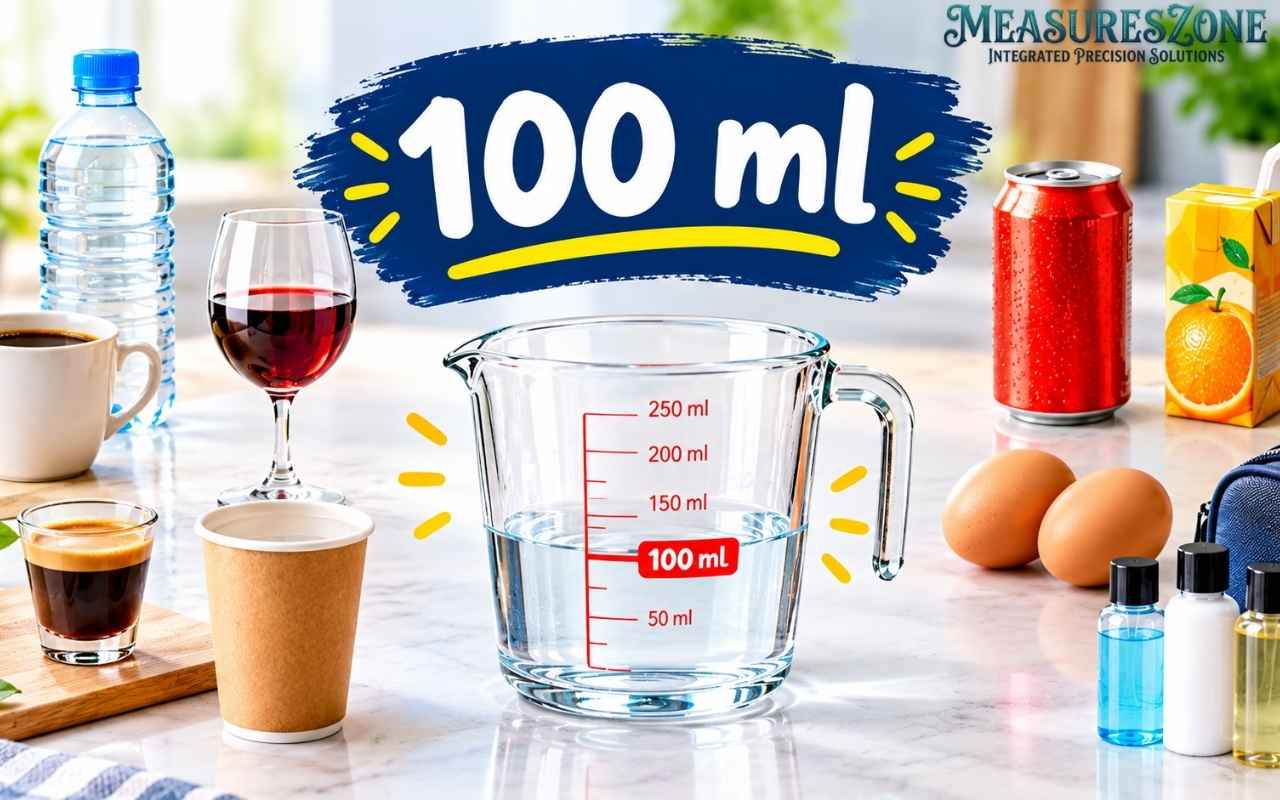
You pour shampoo into a tiny travel bottle and wonder if it fits. Or a recipe asks for 100 ml of milk while your measuring cup speaks only in ounces. Sound familiar? The 100 ml measurement shows up in kitchens, airports, and pharmacies all the time. Yet most people can not picture it.
So, what does 100 ml look like? This visual volume guide answers that with everyday comparisons you already know, from espresso shots to soda cans. You will also get exact numbers, a liquid conversion chart, and simple tricks for measuring liquid when no tools are in sight.
What Exactly Is 100 mL? A Quick Milliliter Measurement Guide
100 millilitres (mL) is a small volume equal to one-tenth of a litter. The table below shows its equivalent measurements in familiar units.
| Measurement Unit | 100 mL Equivalent |
|---|---|
| Liters | 0.1 L |
| Cubic centimeters | 100 cm³ |
| US fluid ounces | 3.38 fl oz |
| US cups | 0.42 cups |
| US tablespoons | 6.76 tablespoons |
| US teaspoons | 20.3 teaspoons |
Why does this metric volume matter so much? Because most of the world measures liquids in millilitres. Labels on medicine, cosmetics, and drinks all use them. Once you know the 100 mL equivalent in familiar terms, you can eyeball almost any liquid.
Kitchen Comparisons: How Much Is 100 mL at Home?
Your kitchen holds the best liquid size reference you own. Each tool below gives a different way to see 100 milliliters visually.
Measuring Cup Reference
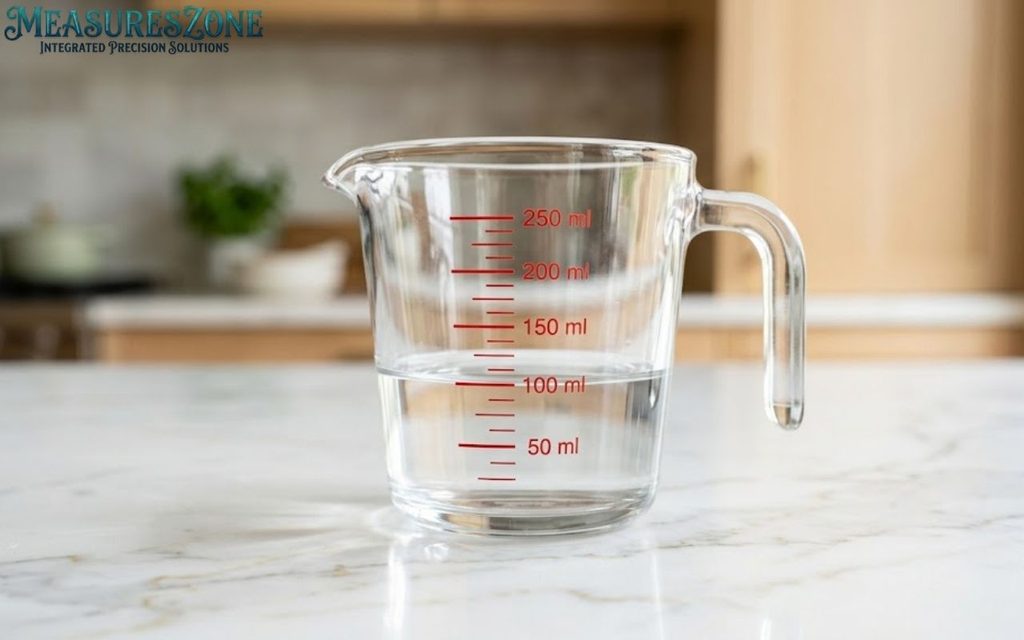
A standard US measuring cup holds 236.6 ml. That means 100 ml of water fills it to a little under the halfway line. The half-cup mark sits at about 118 ml. Your 100 ml lands roughly 15 percent below it.
Here is a handy tip for cup measurements. Look at the measuring cup markings on a glass liquid measuring cup. Many show both ounces and millilitres. Find the 100 ml line (or the 3.4 oz line) and fill to it. Always read the level at eye height on a flat counter.
Tablespoons and Teaspoons
Spoons make a quick check. Tablespoons and teaspoons vary by country though. Here is how the kitchen spoon conversion works:
| Spoon type | Size | Spoons in 100 ml |
|---|---|---|
| US tablespoons | 14.79 ml | About 6.76 |
| Metric tablespoons | 15 ml | About 6.67 |
| Australian tablespoon | 20 ml | Exactly 5 |
| US teaspoon | 4.93 ml | About 20.3 |
| Metric teaspoon | 5 ml | Exactly 20 |
In plain terms, 100 mL in tablespoons comes to a bit under seven. Use proper liquid measuring spoons for this. Teaspoon measurements from your silverware drawer can be off by a wide margin.
Shot Glasses
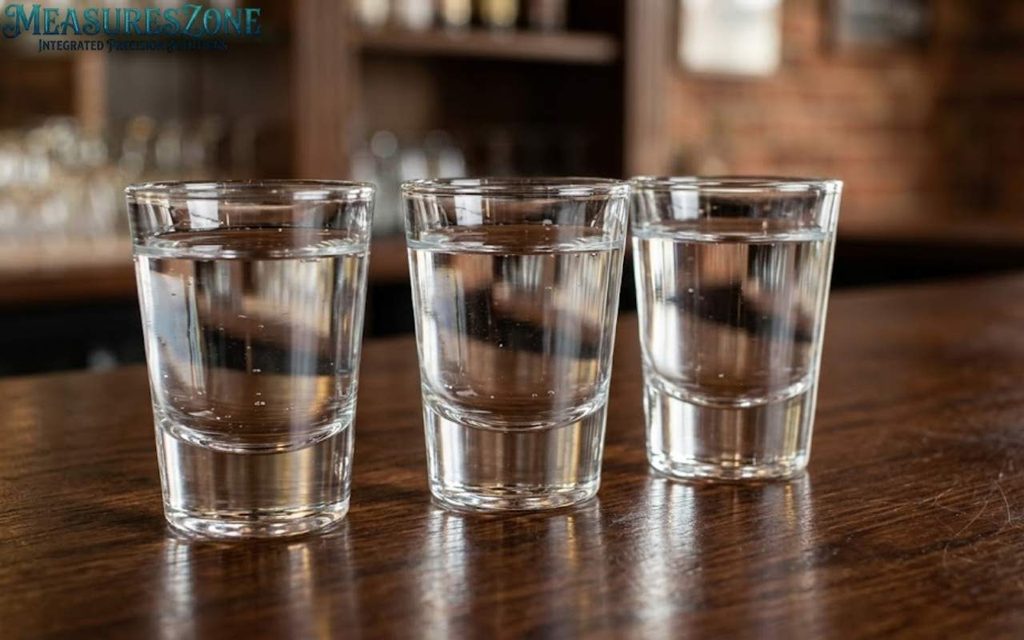
Bartenders pour a standard US shot at 1.5 fluid ounces. That is about 44 ml. So 100 ml equals roughly two and a quarter shots. Picture two full shot glasses plus a splash.
Spirits fans have another benchmark. A miniature airline-style bottle holds 50 ml. Two of them make exactly 100 ml.
Espresso Shots
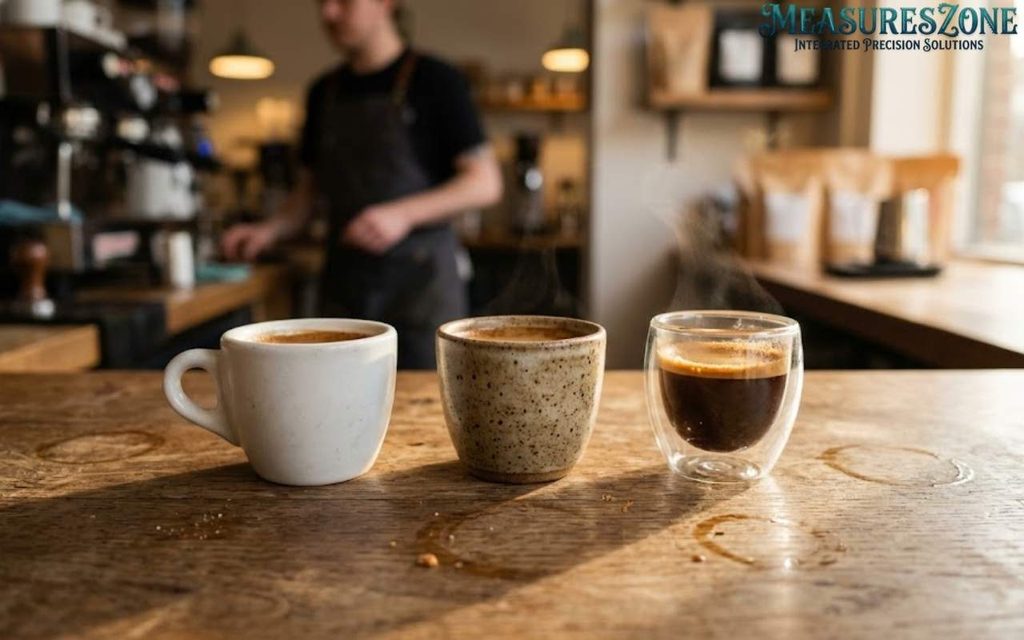
A single Italian-style espresso runs about 25 to 30 ml. Line up three single shots and you are close to 100 ml. The tiny cup looks almost empty next to that total.
A double espresso, at around 60 ml, still falls short. You would need a double plus a generous single to reach 100 ml. That is a useful reference point for anyone who drinks coffee daily.
Paper Bathroom Cups
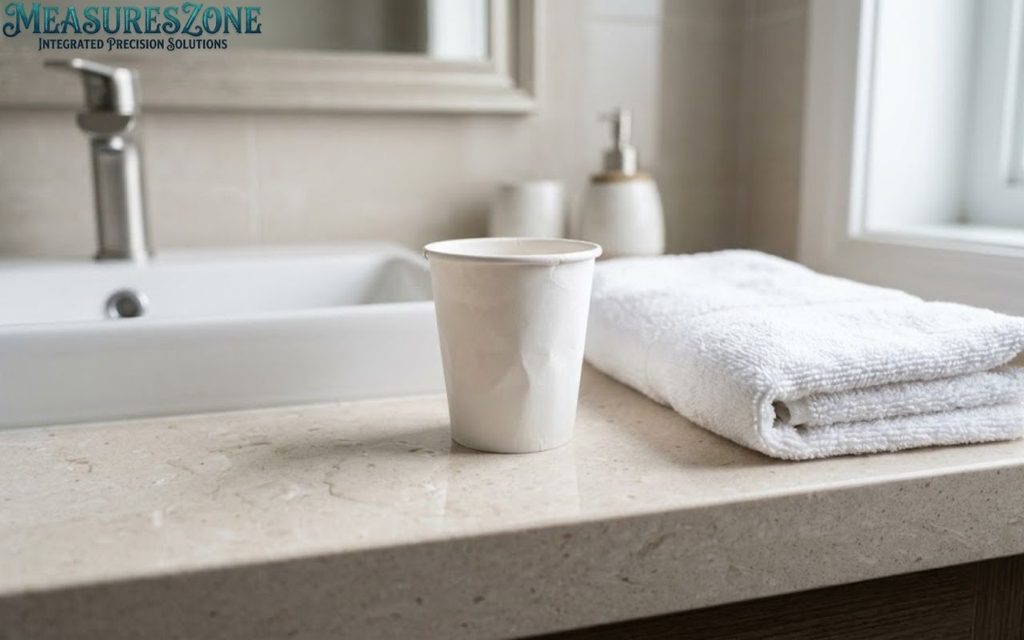
Remember the little 3 oz paper cup by the sink? It holds about 89 ml. Fill it to the brim and you are within 11 ml of the target. Almost everyone has used one. That makes it one of the best everyday objects for this comparison.
Drinkware Comparisons: 100 Milliliters Visually
Next, grab a glass. These volume examples work well because you can see them at a glance.
A Can of Soda
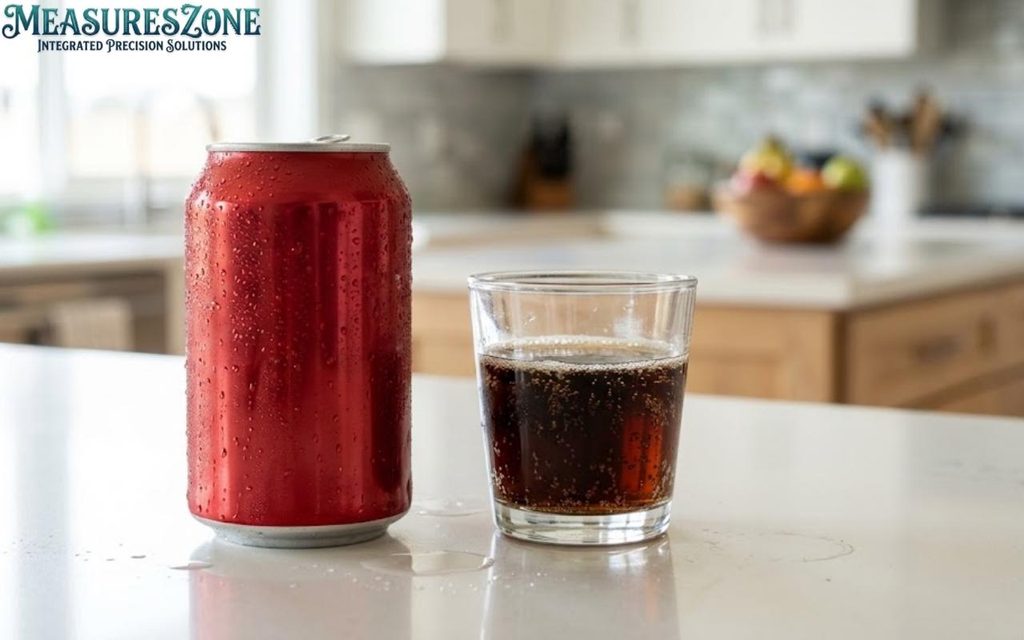
A standard US soda can holds 12 fluid ounces, or 355 ml. So 100 ml equals about 28 percent of a can. Think slightly more than a quarter. A 330 ml beer bottle tells a similar story. There, 100 ml is about 30 percent.
Explore Lake Michigan’s size, depth, and fascinating facts.
A Wine Glass
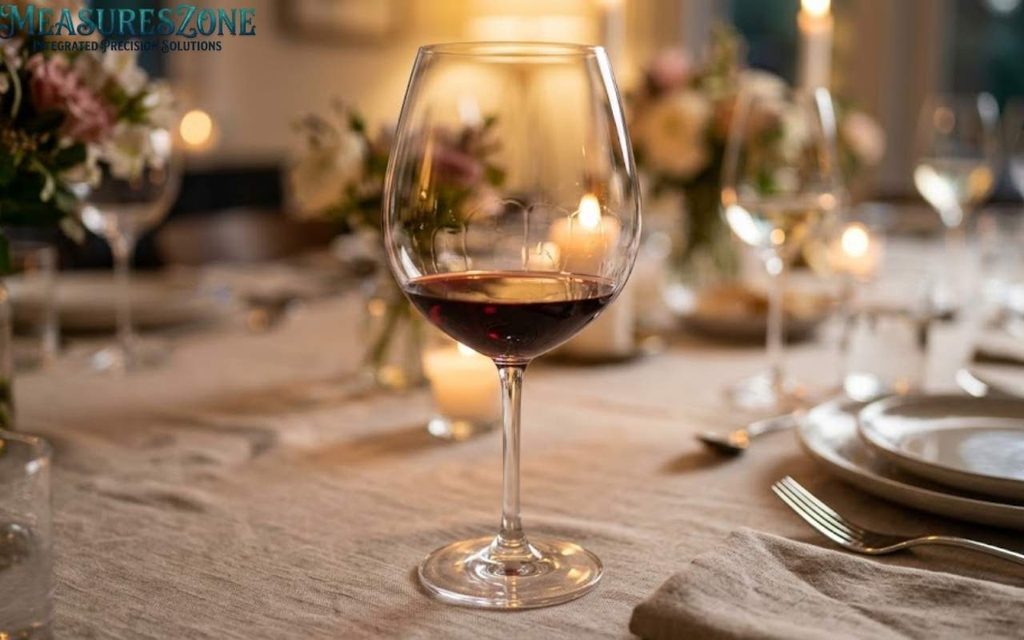
The typical US wine pour is 5 fluid ounces, or about 148 ml. That makes 100 ml about two thirds of a pour. Many UK and European venues serve a small glass at 125 ml. Against that, 100 ml falls just short.
The glass itself can hold 12 to 20 ounces. So hundred ml looks tiny inside it. That surprises many people.
Coffee Mugs
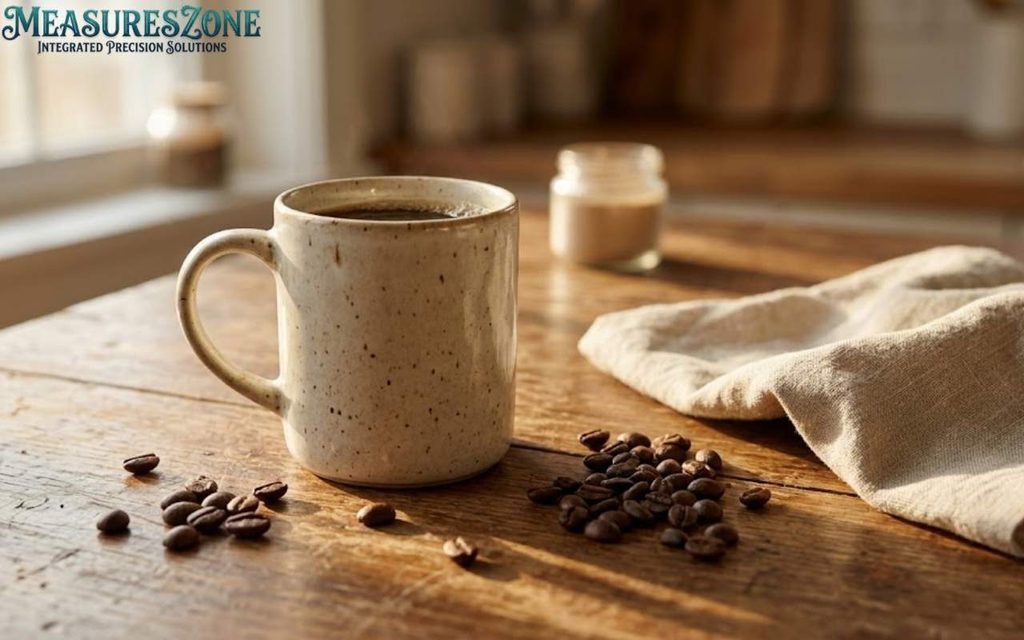
Most mugs hold between 8 and 12 ounces (240 to 355 ml). So hundred ml fills one third or less. Imagine about two fingers of coffee sitting at the bottom of your favourite mug.
An 8 oz cup holds about 237 ml. In that cup, 100 ml reaches a little past the 40 percent line. Oversized mugs make the amount look even smaller.
Water Bottles
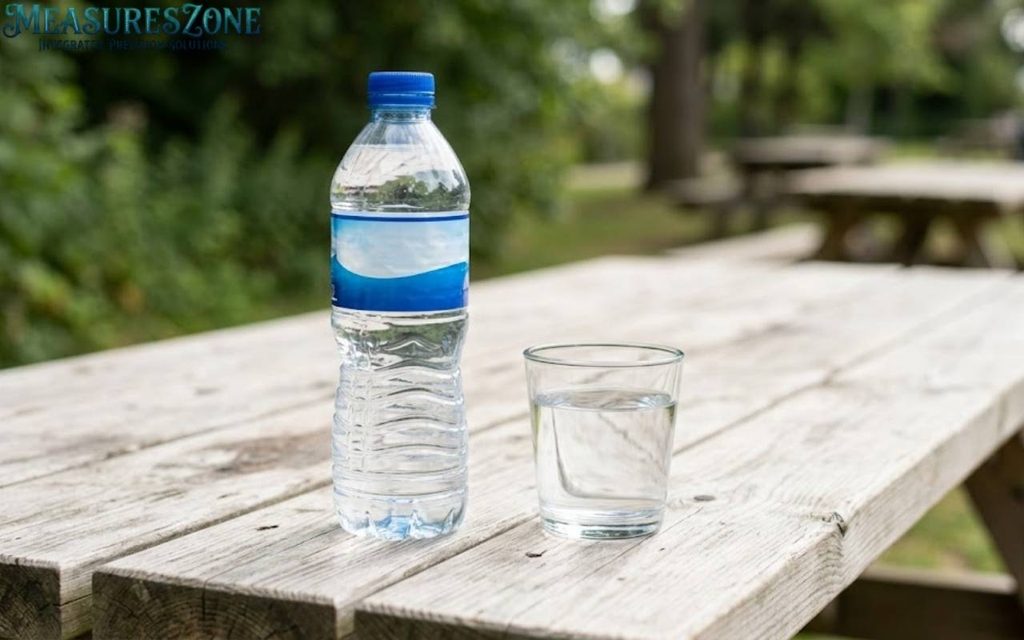
Water bottles give you the cleanest visual of all. The classic 500 mL bottle (16.9 fluid ounces) is the world’s most common bottled water capacity. Divide it by five and you get 100 ml. In other words, 100 ml of water fills exactly one fifth of the bottle.
Here is a neat trick. Use this fact for bottle measurements. Pour hundred ml in with a measuring cup. Then mark the level with a strip of tape. You now own a reusable gauge. Water volume checks become easy anywhere.
Discover how long 300 feet is in real life.
A Small Juice Box
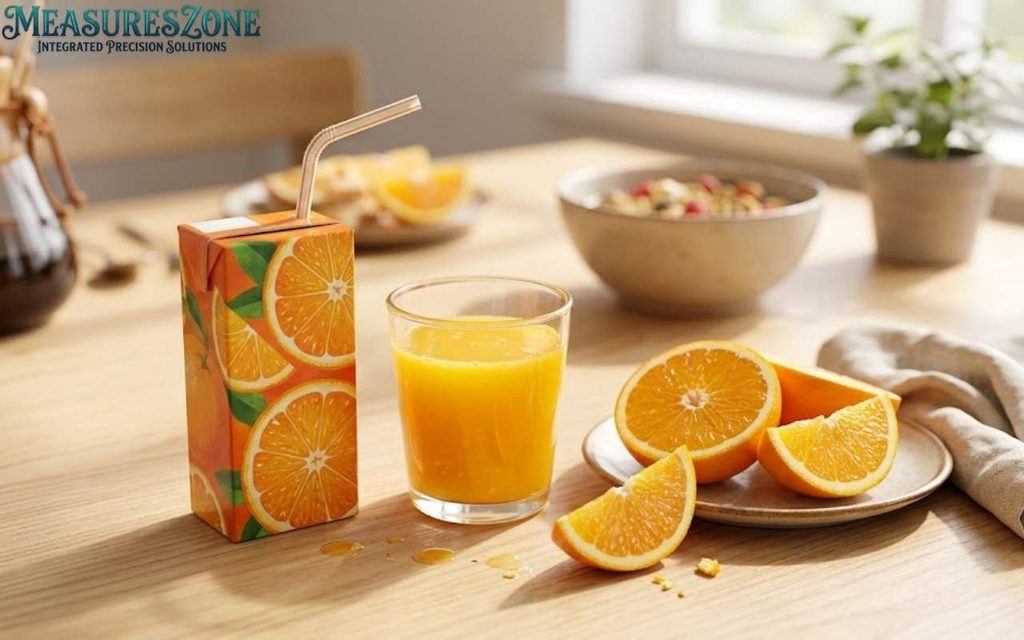
The common US juice box holds 6.75 fluid ounces, or about 200 ml. Cut it in half and you have 100 ml. The box makes a perfect lunchtime example.
Kids’ lunchboxes are full of practical size comparisons like this one. Squeeze out half and the remaining liquid matches the hundred ml mark. Few people forget a visual that simple.
Household and Travel Comparisons for 100 mL
Now for the places where this number matters most. Think of these as household measurement examples with real stakes.
Two Large Eggs
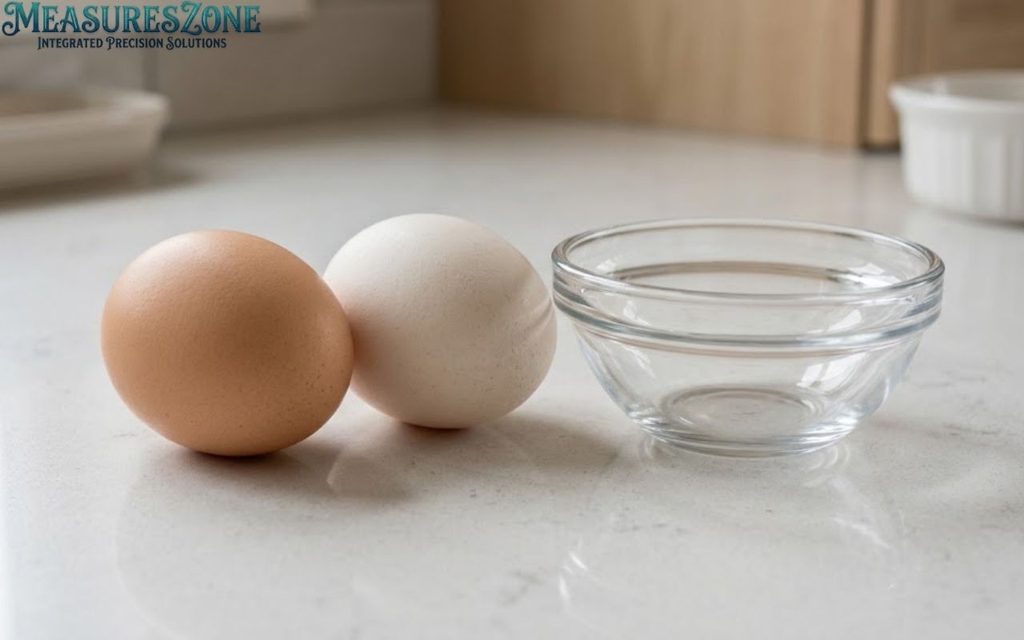
A cracked large egg yields about 45 to 50 ml of liquid. Two eggs therefore land around 90 to 100 ml. Crack them into a glass and you can see the volume.
Bakers use a related rule. One US cup holds about four to five large eggs. Egg sizes vary a little. Treat this as a close estimate rather than a lab-grade measure.
Travel Size Toiletries and the 100 mL Rule
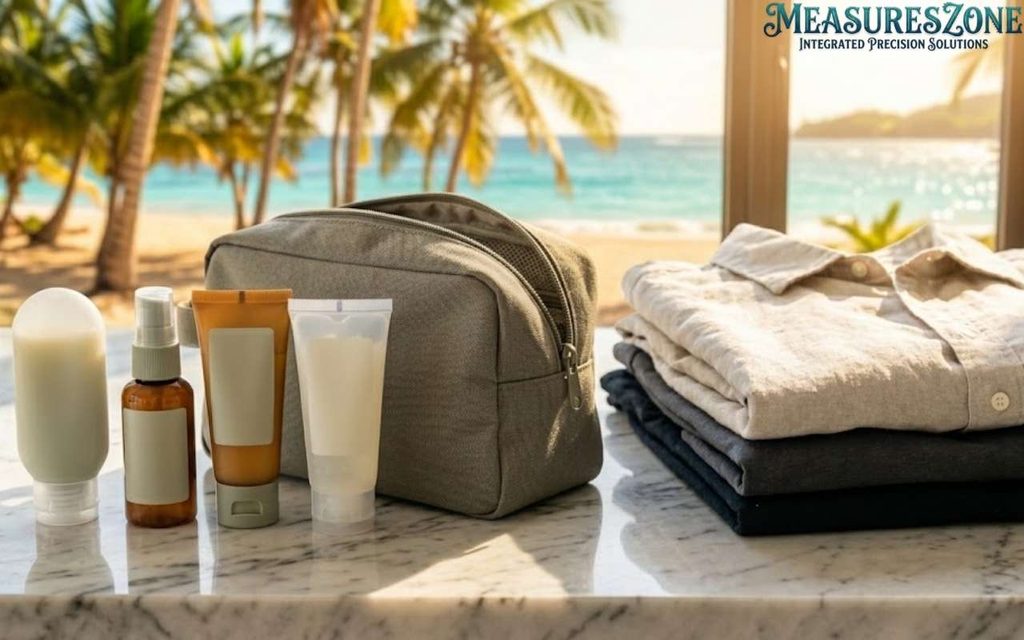
This is where the 100 mL number earns its fame. Travel size toiletries must follow airport security rules in most countries. Here is what the main systems say:
- United States: The TSA liquid limit is 3.4 ounces (about 100 ml) per container. All containers must fit in one quart-size clear bag. See the TSA liquids rule.
- United Kingdom: Carry-on liquids must sit in containers of 100 ml or less. They go in one transparent, resealable bag. Check the GOV.UK guidance on liquids.
- European Union: Rules follow the same hundred ml container idea. Some airports with newer scanners allow more. Check your airport before you fly.
The limit applies to the container size. It does not apply to how full the container is. A half-empty 200 ml bottle still fails. Travel bottles and hundred ml containers must say 100 ml (or 3.4 oz) or less on the label. Medicines, baby formula, and breast milk have special allowances. Declare them at the checkpoint.
See what 2 cm looks like with everyday objects.
Perfume Bottles
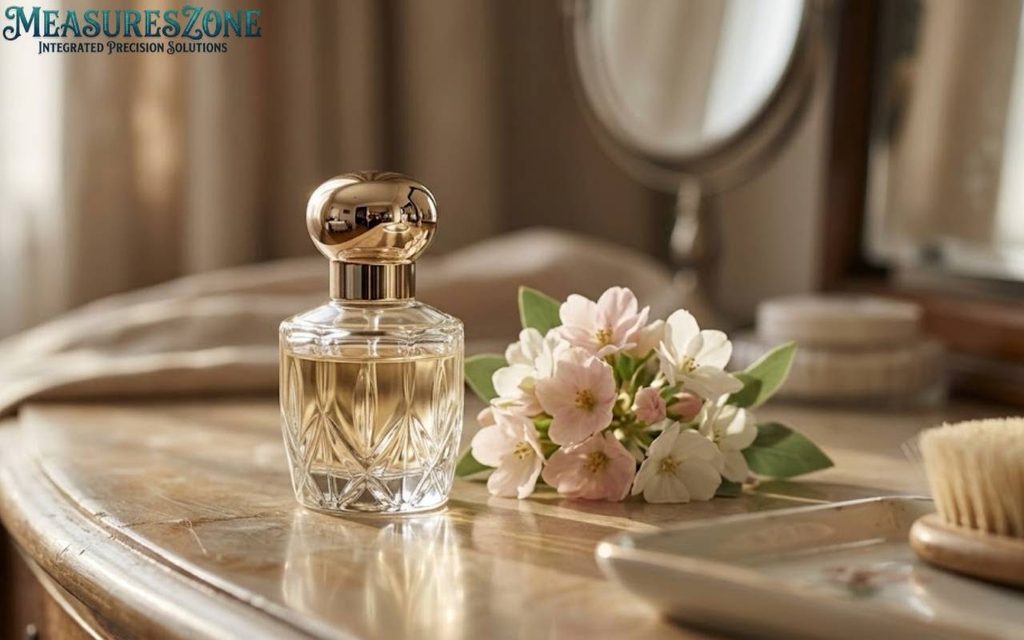
A 100 ml perfume bottle is a standard full size. That is 3.4 ounces. Smaller options come in 30 ml and 50 ml. The hundred ml bottle is the biggest size that still passes carry-on limits. Fragrance shoppers who fly often tend to buy exactly this size.
Does 100 mL Weigh 100 g? Water Weight and Liquid Density
Short answer: only for water. 100 ml of water weighs about hundred grams. At 4°C it weighs almost exactly 100 g. At room temperature (20°C) it weighs about 99.8 g. That tidy link between millilitres and grams is a gift of the metric system.
You may know the old saying: “A pint’s a pound the world around.” It is a rough rule for water in the US system. The metric version is cleaner. One millilitre of water equals one gram.
Other liquids break the rule. Liquid density decides the weight. Here are the numbers:
| Liquid | Approx. weight of 100 ml |
|---|---|
| Water | 100 g |
| Whole milk | About 103 g |
| Honey | About 142 g |
| Olive oil | About 91 g |
| Pure ethanol | About 79 g |
So milliliters to grams works one to one for water-like liquids only. Honey packs far more weight into the same space. Oil floats because it weighs less. Keep that in mind before you trust a scale for anything thicker or lighter than water.
How to Measure 100 mL Without a Measuring Cup
No cup in sight? No problem. Here is how to measure hundred ml without a measuring cup, using alternative measuring methods you can trust.
- Kitchen scale method. Place a bowl on a digital kitchen scale and zero it. Pour water until it reads 100 g. That is 100 grams of water, or hundred ml.
- Spoon measurements. Count out six and three quarters US tablespoons. Level each spoon for accuracy.
- Marked bottle method. Use the tape trick above on a 500 ml bottle. Fill to the first fifth.
- Oral syringe. Pharmacy syringes and dosing cups print millilitre lines. They are great for measuring liquids accurately in small amounts.
Measuring without measuring tools gets easier with practice. Still, spoons and cups from a drawer vary. For baking or medicine, reach for real kitchen measuring tools. A scale gives the best liquid measuring methods for water-based mixtures.
Learn about Arch Aplin III and his properties.
Why Is the 100 mL Measurement Important?
The 100 ml measurement may look small. It shapes a lot of daily life. Here is where it counts:
- Air travel. It sets the carry-on liquid limit in most countries.
- Medicine. Liquid doses are often measured in milliliters. A small error matters, especially for children.
- Science and school. The hundred ml beaker and graduated cylinder sit on nearly every lab shelf.
- Cooking. Metric recipes call for 100 ml of cream, stock, or milk constantly.
- Cosmetics. Many creams, serums, and perfumes sell in hundred ml sizes.
Case Study: Packing a Carry-On Under the 100 mL Rule
This worked example builds on the official rules linked above. It shows how the limits play out in a real packing session.
The Problem
A traveller has three items. One is a 150 ml shampoo bottle that is only one third full (about 50 ml). Another is a 100 ml sunscreen tube. The last is a hundred ml perfume.
The Fix
The shampoo bottle breaks the rule even though it holds just 50 ml. The container is larger than 100 ml. The traveller pours the shampoo into a hundred ml travel bottle. Everything then goes into one clear resealable bag.
What the Traveler Learns
The printed size on the container is what counts. The amount inside does not change the outcome. A quick label check at home saves a confiscation at the checkpoint.
The Outcome
All three items pass screening. The bag holds a full set of travel size toiletries with no surprises.
Key Takeaway
Check the number printed on every container before you leave home. If it says more than hundred ml (or 3.4 oz), decant it.
Frequently Asked Questions
Have questions about 100 mL? These quick answers cover common measurements, everyday uses, and travel rules.
Does 100 mL of liquid fill a standard ice cube tray?
No. A standard ice cube tray usually holds more than hundred mL in total, depending on the number and size of its compartments.
Can you pack bottles larger than 100 mL in checked luggage?
Yes, the hundred mL limit applies to carry-on luggage. Larger bottles are generally allowed in checked bags, subject to airline restrictions.
Is 100 mL enough to water a small houseplant?
It may be enough for a small plant, but the amount needed depends on the plant type, pot size, and soil moisture.
Conclusion: See 100 mL Anywhere
Now you know how much is 100 ml in the real world. Remember three quick pictures. It is just under half a cup. It is one fifth of a 500 ml water bottle. And it is about three espresso shots.
Add the tablespoon count, the soda can fraction, and the 3 oz paper cup. You will spot hundred ml everywhere. Keep this guide handy before your next trip or recipe. Better yet, tape a mark on a water bottle tonight and see for yourself.
Quick Quiz: How Well Do You Know 100 mL?
Answer these three quick questions to see how well you understand hundred mL measurements and everyday uses.
1. How many US fluid ounces equal 100 ml?
A) 1.5
B) 3.38
C) 5
D) 6.76
2. What fraction of a standard 500 ml water bottle does 100 ml fill?
A) One tenth
B) One fifth
C) One quarter
D) One third
3. A single espresso shot is about 30 ml. How many singles come close to 100 ml?
A) One
B) Two
C) Three
D) Five
Answers:
1. B) 3.38
2. B) One fifth
3. C) Three
See what 30 cm looks like with everyday objects.

David John is an experienced blogger and the admin of the Measurements category at Measures Zone. He shares accurate and easy to understand measurement guides for readers.