

Picture this. You are halfway through a recipe. The next line calls for 250 mL of liquid. Your measuring cup sits buried in the dishwasher. Do not panic. You already own several things that hold about 250 milliliters. A mug, a small glass, and even a mini soda can will do the job. The trick lies in knowing which ones to grab and how full to fill them.
This guide shows what 250 mL looks like in real life. You will find ten everyday containers with real capacities. You will also get conversion tables, kitchen shortcuts, and a few surprising facts about the quarter-liter volume.
What Does 250 mL Look Like at a Glance?
Think of a one-liter bottle sliced into four equal parts. One slice equals 250 mL. That is the whole idea behind this quarter-liter volume.
In US terms, 250 mL equals about 8.45 fluid ounces. That is a touch more than one US cup. Most people picture it as a small glass filled almost to the top or a coffee mug filled about three quarters full. These everyday liquid comparisons give you a fast mental image.
Here is a quick-facts table for visualizing 250 milliliters:
| Measure | Equivalent to 250 mL |
|---|---|
| Liters | 0.25 L |
| Cubic centimeters | 250 cm³ |
| US fluid ounces | About 8.45 fl oz |
| US customary cups (236.6 mL each) | About 1.06 cups |
| Metric cups (Australia, New Zealand) | Exactly 1 cup |
| UK imperial fluid ounces | About 8.8 imp fl oz |
| Metric teaspoons (5 mL) | 50 |
| Metric tablespoons (15 mL) | About 16.7 |
| Weight of water | About 250 g |
Want a 3D picture? A cube holding 250 mL measures roughly 6.3 cm per side. That is about the width of a poker playing card. That is your 250 mL appearance in solid form.
250 mL of Water: Weight, Volume, and Feel
The metric system shines when you work with water. One milliliter of water weighs about one gram. So 250 mL of water weighs about 250 grams of water.
Strictly speaking, room-temperature water runs a hair lighter at roughly 0.998 g/mL. That makes a quarter-liter of water about 249.5 grams. This neat link makes water volume measurement easy with just a scale.
Other liquids behave differently. Density changes the weight even when the volume stays put. This water weight comparison shows how far the numbers swing:
| Liquid (250 mL) | Approximate weight |
|---|---|
| Vegetable oil | 230 g |
| Water | 250 g |
| Whole milk | 258 g |
| Honey | 350 g |
How does this fit into your day? The National Academies set adequate water intake from drinks at about 3.0 liters for men and 2.2 liters for women. Food supplies the rest. Divide by 0.25 and you get roughly 12 and 9 glasses of 250 mL. The Mayo Clinic offers a plain-language breakdown of daily liquid capacity needs.
9 Everyday 250 mL Examples That Make the Volume Easy to Picture
Real objects stick in your memory better than numbers. These 250 mL examples cover tools, drinkware, and packaged products you touch every week. Think of them as practical volume references and common container comparisons.
1. A Metric Measuring Cup
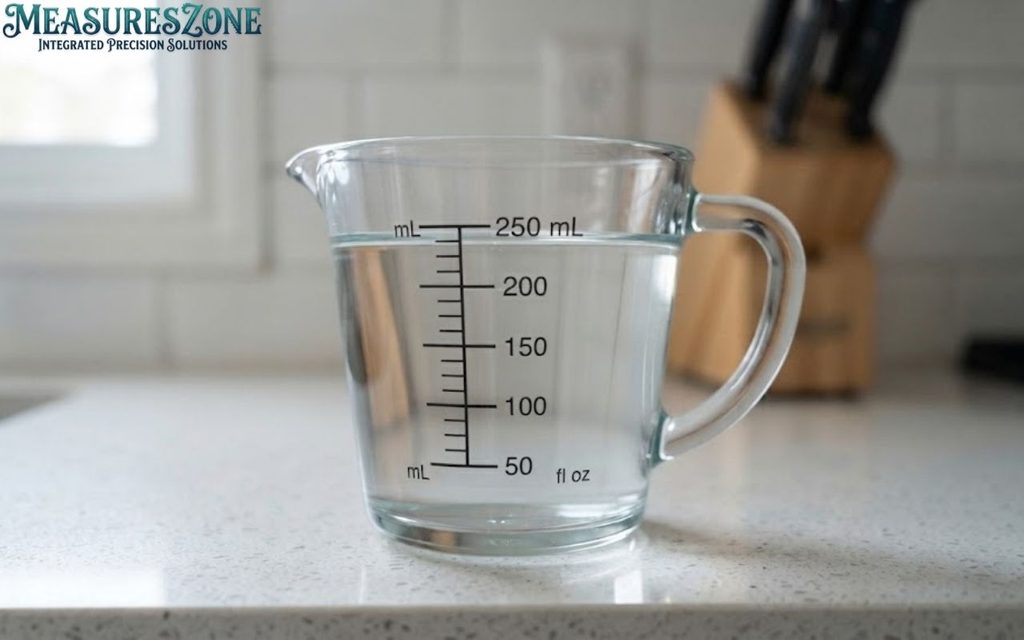
Start with the obvious one. A metric measuring cup holds exactly 250 mL. Australia and New Zealand treat this as the standard cup in recipes. Canadian metric recipes usually follow the same rule.
Check the measuring cup markings on the side. A graduated measuring cup often shows milliliters on one edge and cups on the other. A true US cup holds 236.6 mL. That gap that matters in baking.
For accurate liquid measurement, set the cup on a flat counter. Bend down until your eyes match the liquid level. Read the line at the bottom of the curve. Pros call that curve the meniscus.
2. A Small Drinking Glass
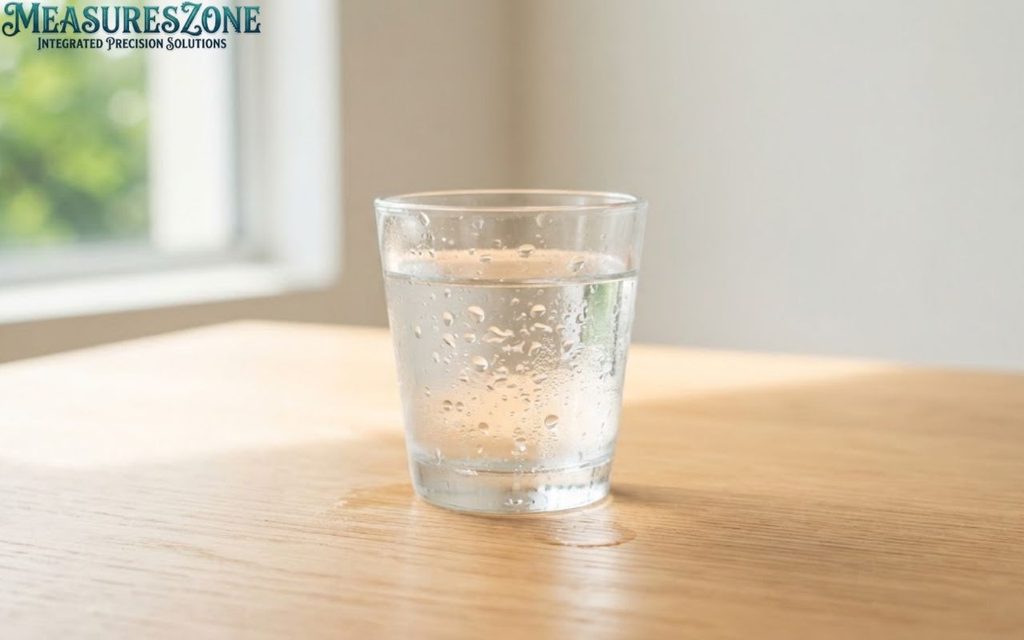
A small drinking glass often holds between 200 and 300 mL. That puts many tumblers right in the 250 mL zone. A tiny juice glass runs smaller at about 120 to 180 mL. A tall highball glass runs bigger at 300 to 350 mL.
Here is how to learn your glass capacity. Pour in a measured 250 mL once. Note where the liquid lands. A strip of tape works as a permanent liquid fill level marker. If your small water glass holds 300 mL brim-full, fill it a little over four fifths of the way. This drinking glass volume trick works for any everyday drinking container.
3. A 250 mL Water Bottle
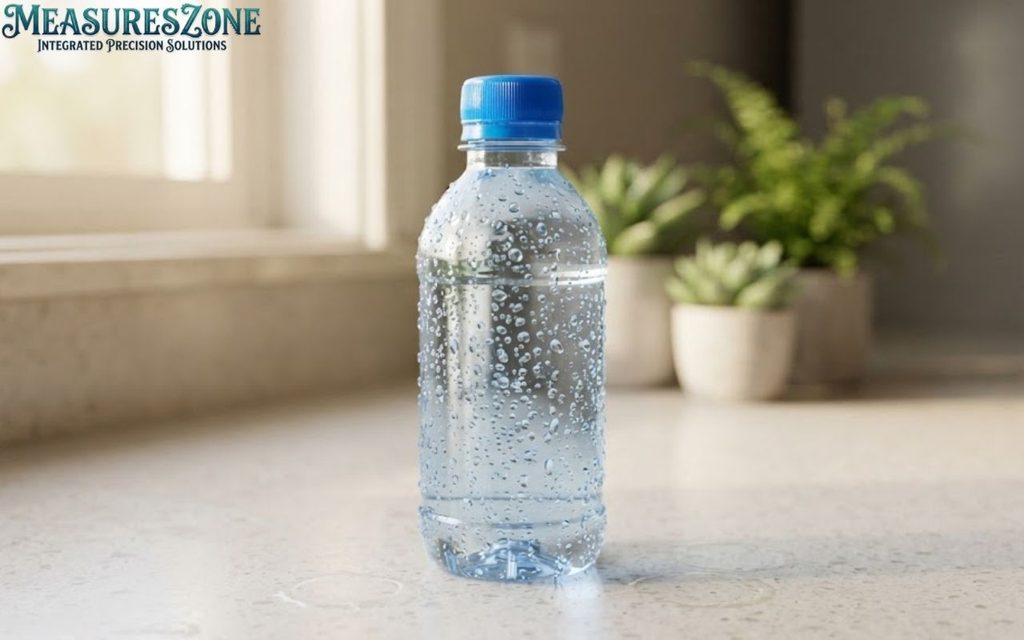
A 250 mL water bottle shows up in hotels, conference rooms, and kids’ lunch boxes. The label usually reads “two fifty mL” or “8.45 fl oz.” A labeled 250 mL bottle removes all guesswork.
Compare it with the standard bottled water capacity of 500 mL (16.9 fl oz). The small water bottle holds exactly half. Hold one in your hand and you will feel the weight of 250 grams of water.
This 250 milliliter bottle also works as a measuring stick. Fill it once and you have got a perfect pour for any recipe. Its liquid container size fits cup holders, bags, and small hands.
4. A Metric Cup of Milk
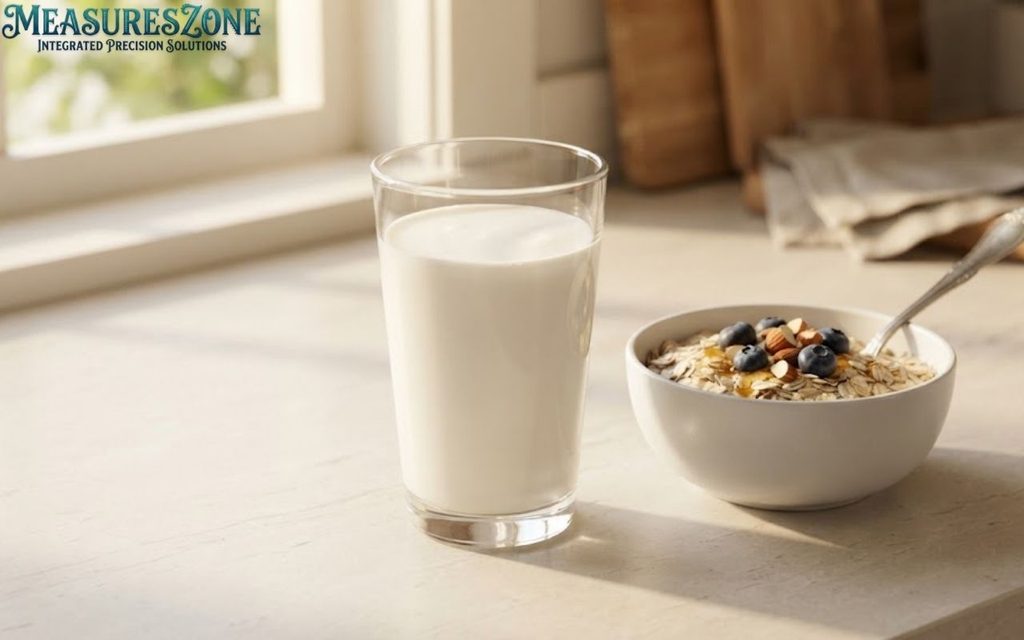
A metric cup of milk is exactly two fifty mL. Single-serve milk cartons in Canada and Australia often come in this size. US school cartons hold a half pint at about 237 mL. That is just a bit smaller.
250 mL milk weighs about 258 grams because milk is slightly denser than water. According to USDA FoodData Central, a cup of whole milk delivers roughly 150 calories and 8 grams of protein. That makes one metric cup a common milk serving size.
Recipes love this amount. Pancake batter, white sauce, and custard often call for one metric cup. When measuring milk for recipes, pour slowly and check the line at eye level. Use this milk volume measurement habit and your batter turns out right.
See what 100 ml looks like in everyday life.
5. A Glass of Juice
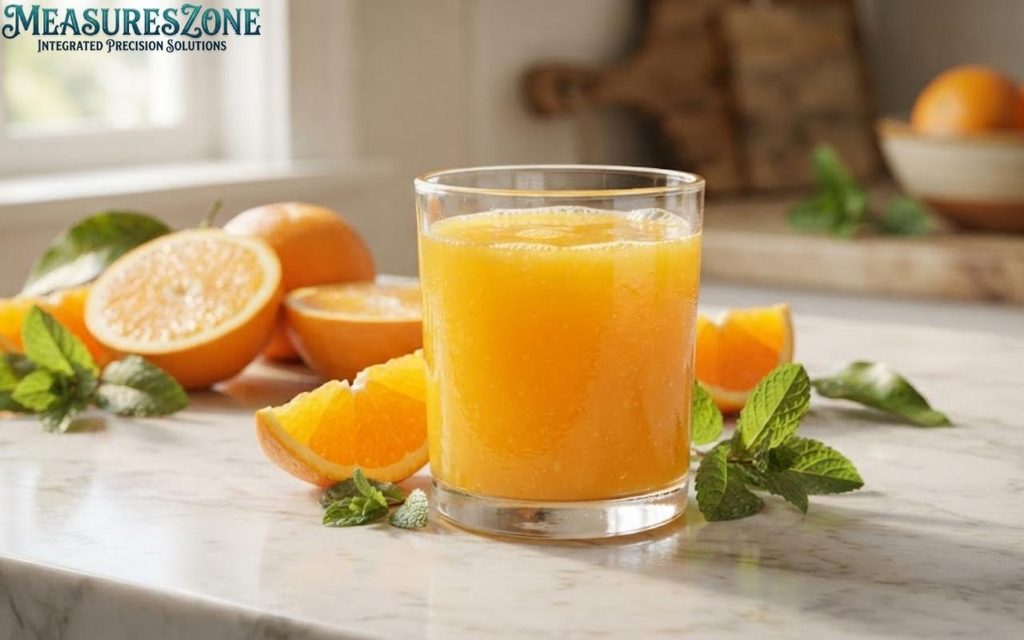
A glass of juice comes in all shapes. A nutrition label’s juice serving size is often smaller than what people pour at home. Still, a full two fifty mL glass is common at breakfast.
Here is what 250 mL juice delivers, based on USDA data for one cup:
| Juice (about 250 mL) | Calories | Sugar |
|---|---|---|
| Orange juice | About 112 | About 21 g |
| Apple juice | About 114 | About 24 g |
USDA MyPlate counts one cup of 100 percent fruit juice as one cup of fruit. Whole fruit still brings fiber that juice lacks. The American Academy of Paediatrics caps juice at 8 ounces daily for ages 7 to 18. A two fifty mL glass sits right at that line.
Whether you pour orange juice volume or an apple juice measurement, the same rule applies. Pick a smaller glass to keep beverage capacity in check.
6. A Regular Coffee Mug
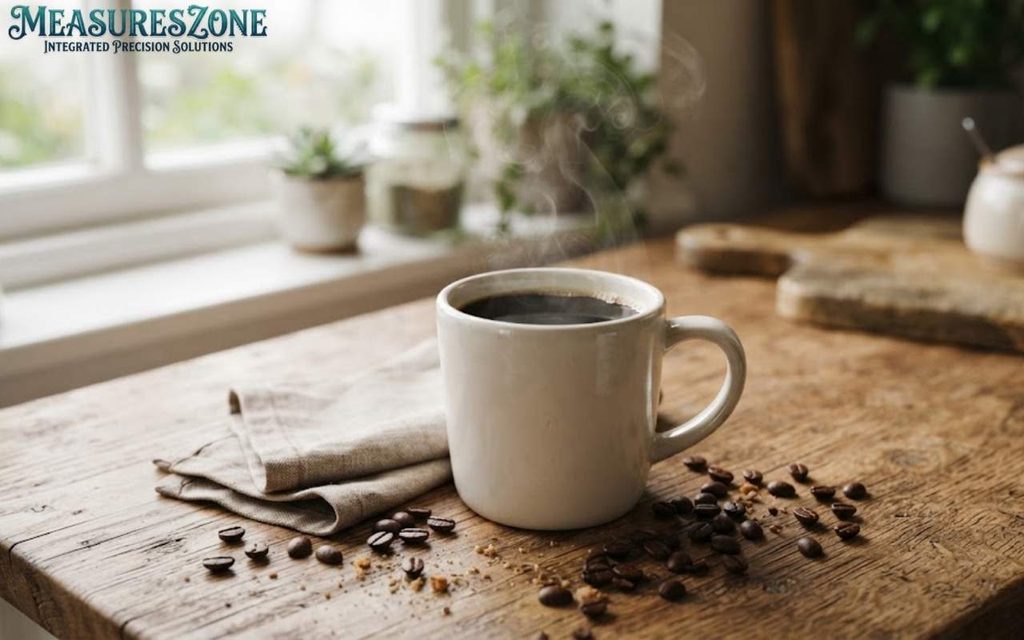
A regular coffee mug usually holds 250 to 350 mL of liquid, making it a useful reference for visualizing 250 mL. Larger mugs can hold 450 mL or more, so capacity varies by design. If your mug holds 330 mL, filling it about three-quarters full gives you roughly two fifty mL.
Keep in mind that a coffee machine’s “cup” often measures only 150 to 180 mL, rather than a full mug. This explains why one mug may require two machine cups. To estimate 250 mL accurately, check your mug’s capacity or measure it once and note the fill level.
Explore Lake Michigan’s size, depth, and fascinating facts.
7. A Mini Soda Can
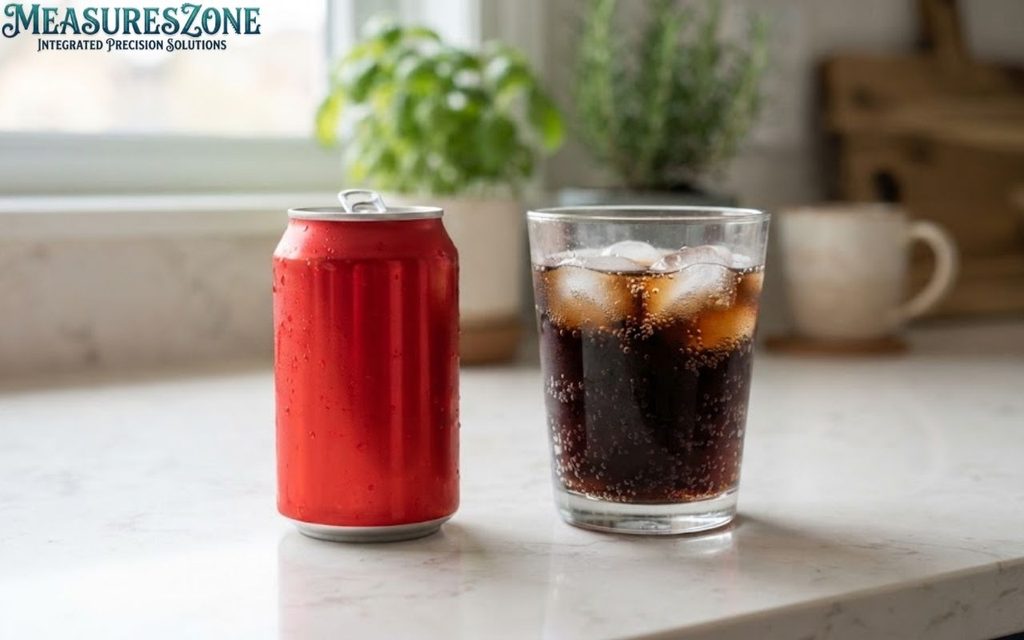
In some markets, including Australia, mini soda cans hold exactly 250 mL. In the US, a mini can holds 7.5 fl oz or about 222 mL. Check the label before you rely on it.
A standard US can holds 355 mL (12 fl oz). That means two fifty mL equals about 70 percent of a regular can. Put another way, a regular can runs about 42 percent larger.
8. A Red Bull-Style Energy Drink Can
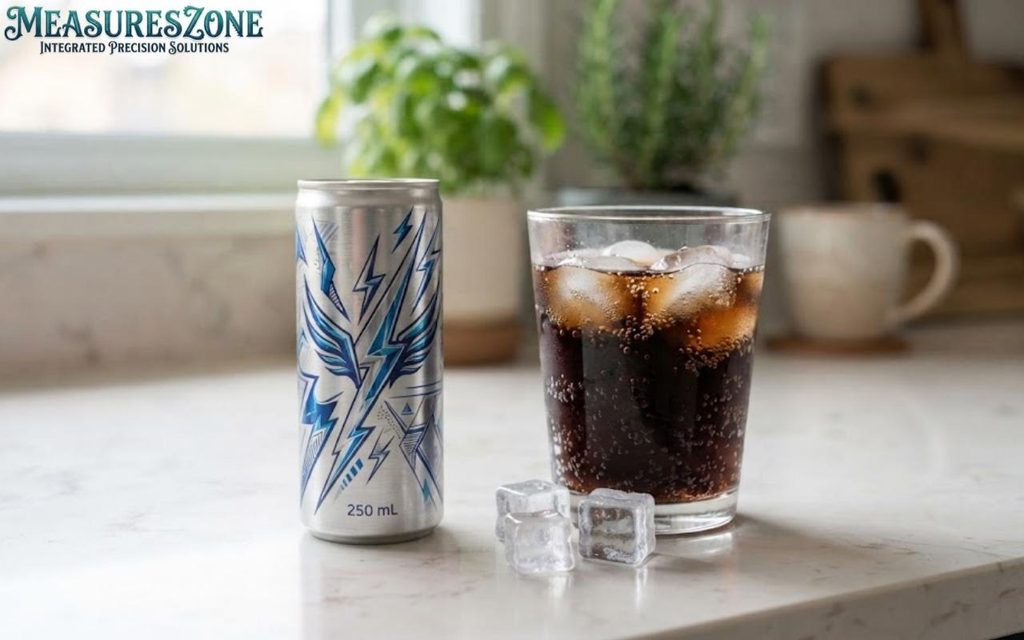
The original Red Bull can holds 250 mL (8.4 fl oz in the US). It contains about 80 mg of caffeine. The slim shape tricks the eye. It looks tall yet holds less than a regular soda can.
Many brands copy this slim format. Not all use two fifty mL. Read the label first.
9. A Baby Bottle
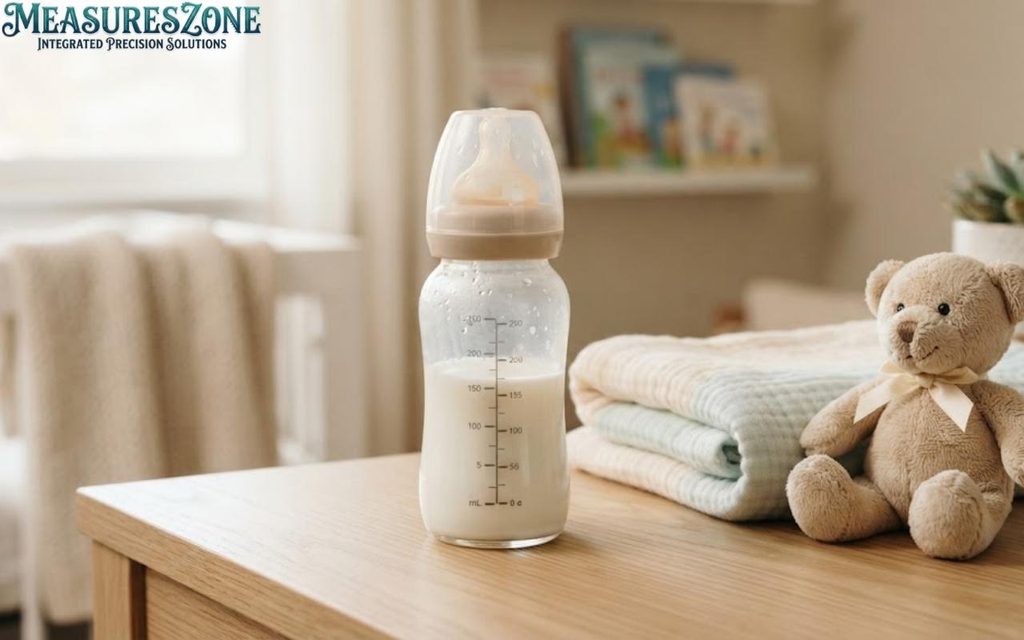
Parents see 250 mL every day. Several large bottles carry a label of two fifty mL or 260 mL (8 to 9 fl oz). Others list 8 oz, which is about 240 mL.
Pediatric guidance puts feeds around 6 to 8 ounces (180 to 240 mL) by about six months. The printed scale on the side makes a handy backup measuring tool.
Discover how long 300 feet is in real life.
How Much Is 250 mL Compared to Common Measurements?
Numbers make more sense with comparisons. Here is how two fifty mL stacks up against the common measurements in recipes, bottles, and labels. These metric conversions and liquid volume units will save you guesswork.
250 mL Compared to 1 Liter
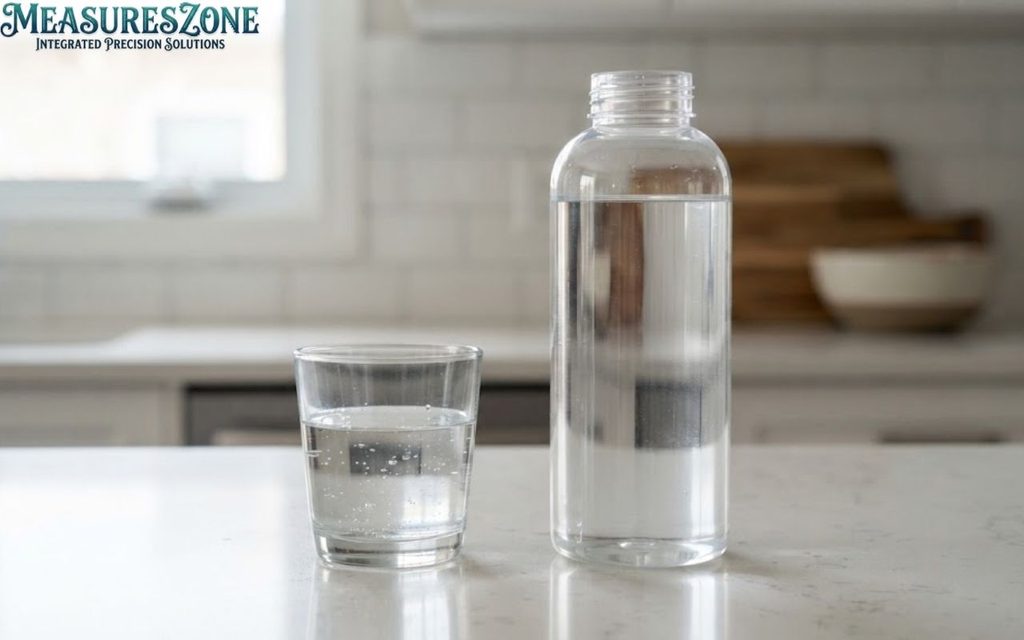
When you convert liters to milliliters, remember that 1 L equals 1,000 mL. So 250 mL equals 0.25 L. Four servings fill one liter bottle. A 2 L soda bottle holds eight.
250 mL in US Fluid Ounces
To convert milliliters to ounces, divide by 29.5735. That is the number of milliliters in one US fluid ounce. The result for two fifty mL is 8.45 fluid ounces. This fluid ounce conversion helps when you read labels from different countries.
| Milliliters | US fluid ounces |
|---|---|
| 100 mL | 3.38 fl oz |
| 125 mL | 4.23 fl oz |
| 250 mL | 8.45 fl oz |
| 500 mL | 16.91 fl oz |
| 750 mL | 25.36 fl oz |
| 1,000 mL | 33.81 fl oz |
This liquid volume conversion chart also helps with US customary units on imported recipes.
250 mL Compared to a US Cup
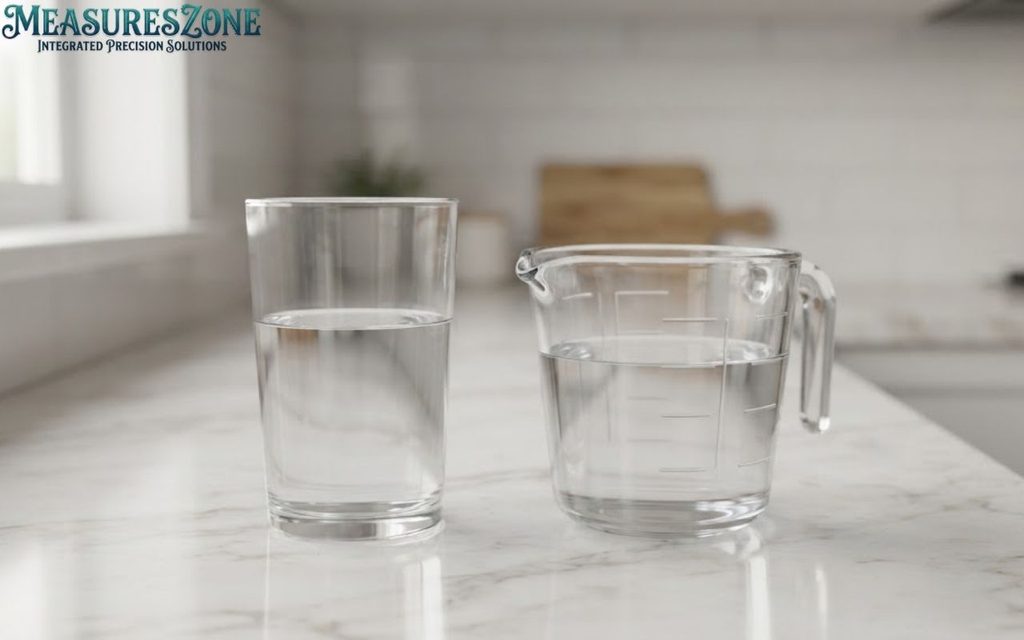
A US customary cup holds 236.6 mL. That means 250 mL runs about 13 mL over. Add roughly 2.5 teaspoons to a full US cup and you will reach two fifty mL.
The difference sounds tiny. Yet it adds up. Four US cups come up about 54 mL short of four metric cups. That is nearly a quarter of a cup.
Case study: why three different cups exist. The FDA defines a cup as 240 mL for Nutrition Facts labels. That differs from the customary cup of 236.6 mL. It also differs from the metric cup of 250 mL. The legal cup keeps labels simple. The customary cup follows older kitchen tradition. The metric cup fits a decimal system. These customary measurement units each serve a different purpose.
| Type of cup | Volume |
|---|---|
| Japanese cup | 200 mL |
| US customary cup | 236.6 mL |
| US legal cup (nutrition labels) | 240 mL |
| Metric cup | 250 mL |
| Historic UK imperial cup | About 284 mL |
The NIST Office of Weights and Measures publishes official references for US customary units.
250 mL Compared to Imperial Units and a Soda Can
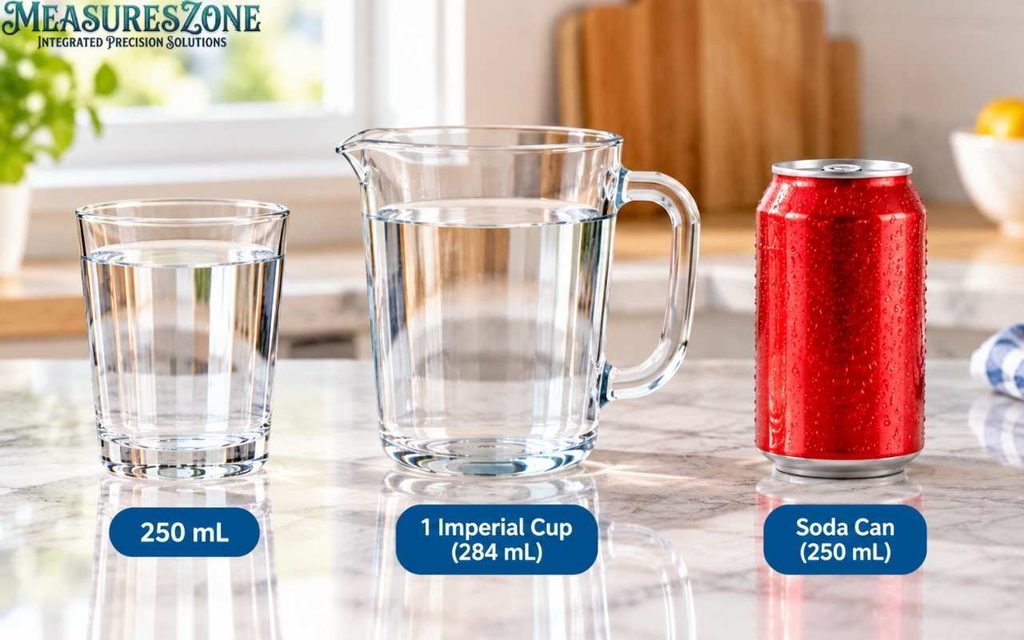
A UK imperial fluid ounce holds 28.41 mL. That makes 250 mL equal to 8.8 imperial fluid ounces. A UK pint holds about 568 mL. So two fifty mL fills about 44 percent of one. Against a standard 355 mL soda can, it fills about 70 percent.
See what 2 cm looks like with everyday objects.
How Can You Measure 250 mL Without a Measuring Cup?
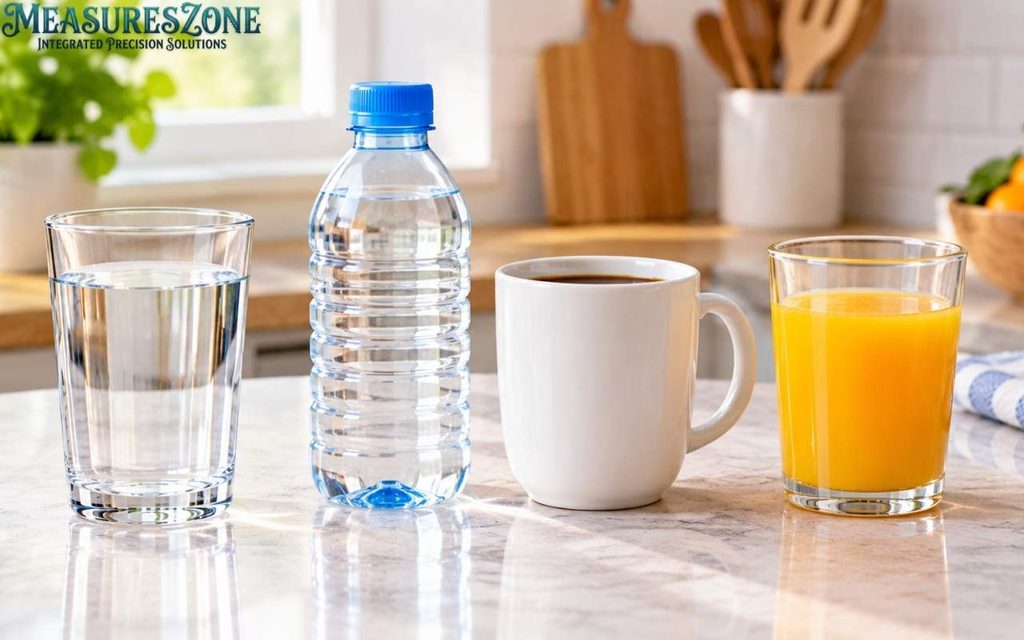
You can measure 250 mL using everyday kitchen items if you do not have a measuring cup.
- Use a kitchen scale. Place a container on the scale and press tare. Pour in water until you hit 250 grams.
- Count spoons. Fifty metric teaspoons make two fifty mL. So do about 17 metric tablespoons at 15 mL each. An Australian tablespoon holds 20 mL. Twelve and a half of them fill the amount.
- Use a marked bottle. Fill a 500 mL bottle halfway. Or fill a 1 L bottle to one quarter.
- Calibrate your favorite glass. Measure once with a proper tool. Mark the level with tape. Reuse it for every future pour.
For any method, use a flat surface and check the level at eye level. That habit gives you accurate volume measurement even with improvised tools. Check your graduated jug capacity too. Not every jug starts at two fifty mL.
Frequently Asked Questions
Wondering how two fifty mL compares to cups, ounces, and everyday glasses? Find quick answers to common questions below.
How much aquarium water is 250 mL?
A two fifty mL portion equals 0.25 liters. It is a relatively small amount for most aquariums, so it may be useful for small water adjustments or preparing certain treatments according to their instructions.
How much space does 250 mL occupy in a freezer?
It occupies about 250 cubic centimeters before freezing. Water expands as it freezes, so leave extra space in the container to prevent overflow.
Does 250 mL of liquid take up the same space in every container?
Yes. The volume stays the same regardless of the container’s shape. However, a tall, narrow glass makes the liquid look higher than a short, wide bowl.
How Many Drinks Are in 250 mL of Wine?
About 1.7 US standard drinks. A typical US wine serving is 148 mL, while two fifty mL is considered a large glass in UK pubs.
How Much Do 250 mL of Flour and Sugar Weigh?
A metric cup of flour weighs about 125–150 grams, while granulated sugar weighs around 210 grams. For accurate baking, use a kitchen scale.
Final Thoughts on What 250 mL Looks Like
So, what does 250 mL look like? Picture a small glass nearly full. A mug filled three quarters of the way works just as well. Even a slim energy drink can or a small carton of milk will do the trick. Each one gives you a fast and reliable picture.
Remember the key numbers. 250 mL equals 0.25 L. It equals about 8.45 US fluid ounces. It equals two fifty grams of water. With those three facts in your pocket, you can eyeball a quarter-liter in any kitchen. Bookmark the conversion tables above. Next time a recipe asks for two fifty mL, you will know exactly what to reach for.
Quiz: What Does 250 mL Look Like?
Test your knowledge of 250 mL with these five quick questions.
1. How many liters equal 250 mL?
A) 0.025 L
B) 0.25 L
C) 2.5 L
D) 25 L
2. How many US fluid ounces are in 250 mL?
A) 4.23 fl oz
B) 8.45 fl oz
C) 6.76 fl oz
D) 10 fl oz
3. How many milliliters are in a quarter liter?
A) 100 mL
B) 200 mL
C) 250 mL
D) 500 mL
4. Approximately how much does 250 mL of water weigh?
A) 125 g
B) 200 g
C) 250 g
D) 500 g
How many milliliters are in half of 250 mL?
A) 100 mL
B) 125 mL
C) 150 mL
D) 200 mL
Answers
- B) 0.25 L
- B) 8.45 fl oz
- C) 250 mL
- C) 250 g
- B) 125 mL
Learn about Arch Aplin III and his properties.

David John is an experienced blogger and the admin of the Measurements category at Measures Zone. He shares accurate and easy to understand measurement guides for readers.