

Picture a football player sprinting from one goal line to the other. That is your answer. 300 feet equals 100 yards, and once you can see that run in your head, the number stops being abstract.
This guide gives you the math, the real things that match the distance, and a few simple tricks for measuring it yourself. Some matches are exact. Others come close. We label each one so you always know which is which.
Why the Foot Still Matters
The United States still uses feet for building plans, property lines, and sports fields. Most of the world uses meters. Knowing both makes size comparisons much easier when you read international news or product specs.
One quick warning. 300 meters is not 300 feet. It equals about 984 feet, more than three times longer. People mix this up more often than you would think.
300 Feet Conversion Table
A table beats a paragraph when you need numbers fast. Here is what 300 feet equals across common length units.
| Unit | Value for 300 feet |
|---|---|
| Inches | 3,600 |
| Yards | 100 |
| Meters | 91.44 |
| Centimeters | 9,144 |
| Kilometers | 0.09144 |
| Miles | 0.0568 |
Use this as your unit conversion cheat sheet. It covers feet to inches, meter conversion, and every other metric conversion a reader is likely to need for 300 feet measurement questions.
What Does 300 Feet Look Like? Visualizing the Distance
Numbers do not stick in memory. Pictures do. When you try to picture 300 feet, your brain needs a visual reference from daily life.
Try this. Stand at your front door and look down the street. Roughly the length of one long suburban lot, then another, then a third. That is about three hundred feet.
Distance perception gets tricky outdoors. Open space makes things look shorter than they are. Buildings and trees make distances look longer. The examples below give you a reliable visual scale no matter where you stand.
13 Things That Are 300 Feet Long (or Very Close)
These real-life examples give you an easy way to picture 300 feet. Some are exact matches, while others come close enough to make the distance easier to visualize.
1. An American Football Field Goal Line to Goal Line

This is the gold standard. The football field measures exactly 100 yards between the two goal lines. That makes it exactly 300 feet long. Including both 10-yard end zones, the full NFL field stretches 360 feet. The official rules live at NFL Operations.
Next time you watch a game, remember that a kickoff return for a touchdown covers this distance in about 10 seconds. That is your 300 feet visualized at full speed.
2. The 100-Yard Dash
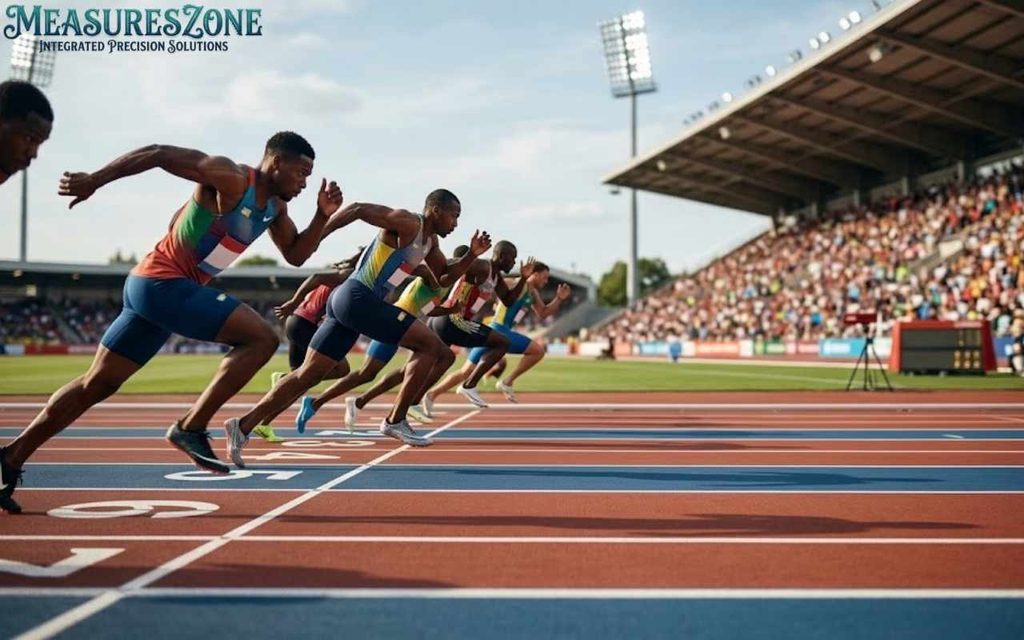
Same distance as the playing field above. Football teams and high school coaches still use it for conditioning. Olympic sprinters run 100 meters instead, which is 328 feet. Those extra 28 feet matter a lot when you are tired.
3. Five Bowling Lanes End to End
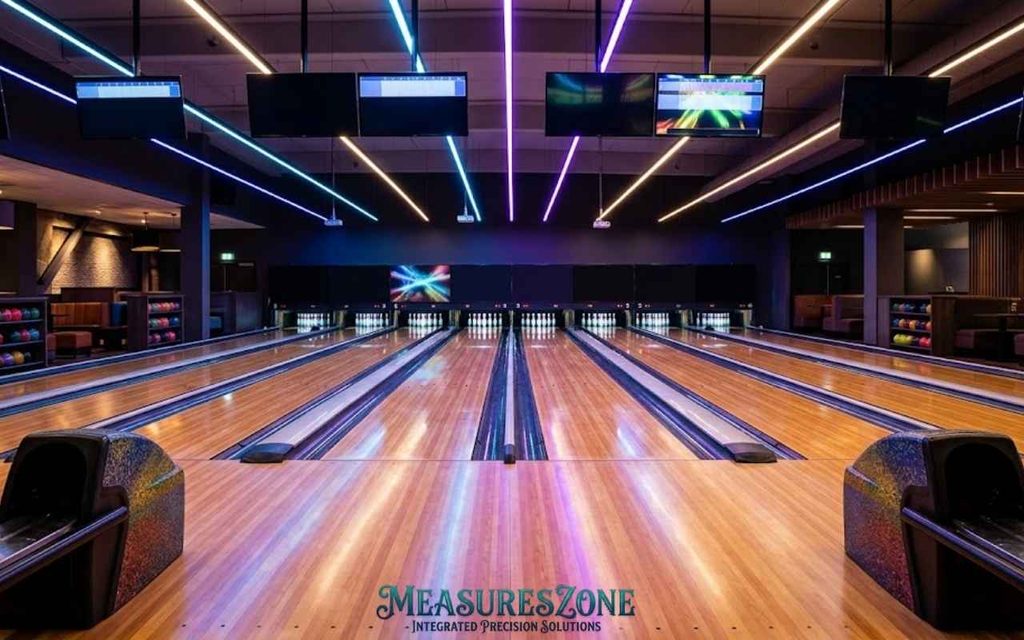
Bowling gives you a surprising match. The distance from the foul line to the head pin is 60 feet. Line up five lanes and you get exactly 300 ft. Walk past a bowling alley and count lanes if you want a quick check.
Read more, How Long Is 8 Inches? 20 Everyday Comparison That Make it easy
4. Fenway Park’s Right-Field Foul Pole
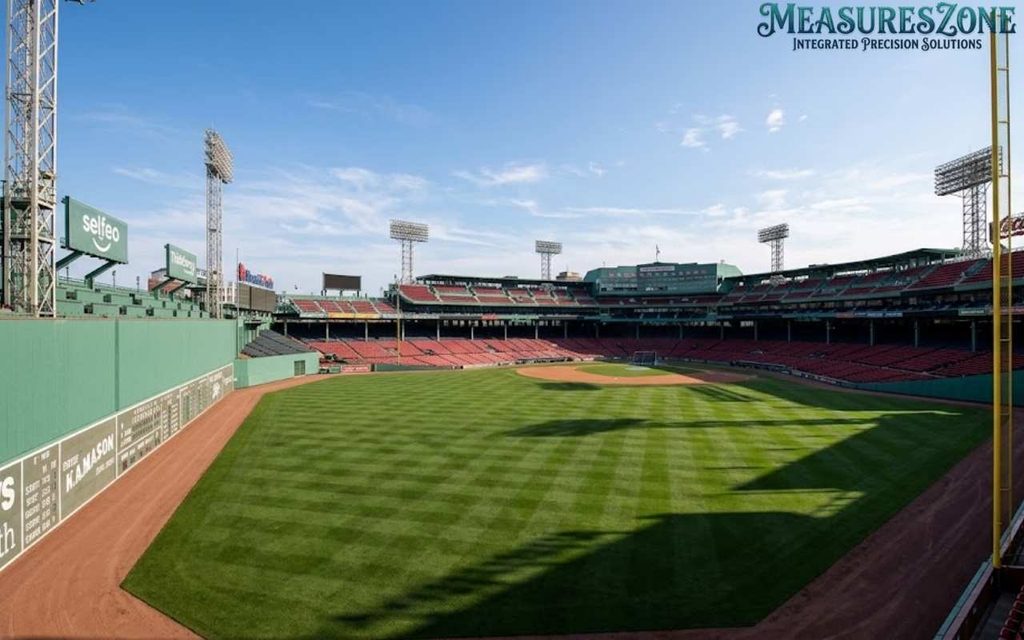
Baseball fans know this one. The right-field foul line at Fenway Park in Boston measures 302 feet from home plate. The foul pole there is nicknamed the Pesky Pole. It is a close match and a great physical reference for anyone who has sat in those bleachers.
5. Seven and a Half 40-Foot Shipping Containers

A standard 40-foot shipping container is, well, 40 feet long. Stack seven and a half of them end to end and you hit 300 feet. Port cities like Long Beach and Newark show this scale every day. Rows of containers make an easy length comparison for anyone near a harbor.
6. Six 50-Foot Fire Hose Sections
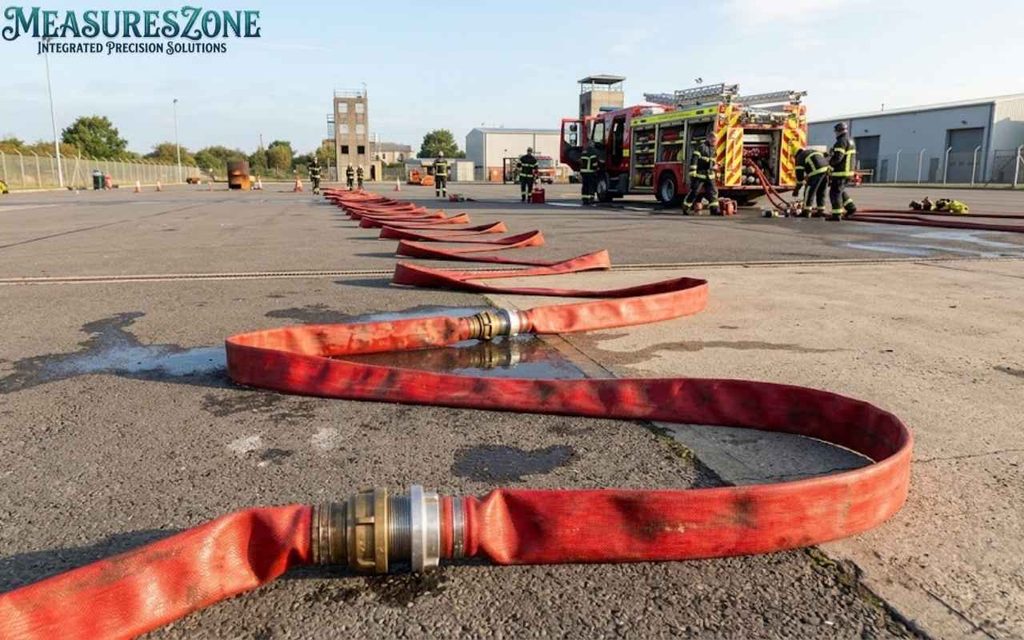
Fire departments in the United States commonly use hose in 50-foot sections. Couple six together and you reach 300 feet. It is one reason firefighters talk about “hose lays” the way builders talk about floor plans.
7. A 300-Foot Surveying Tape
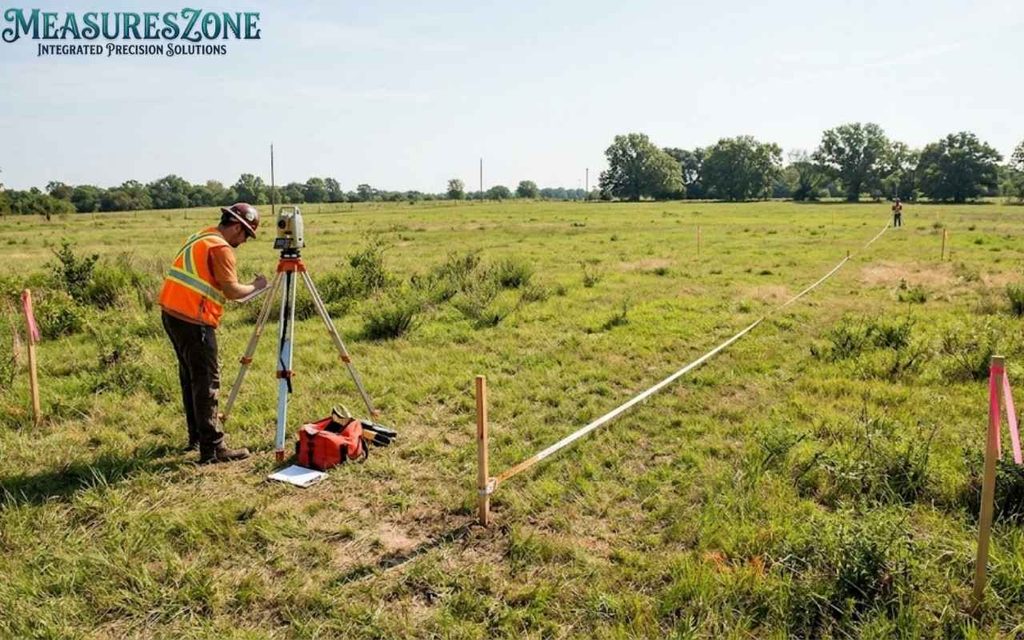
Now for the measuring tape itself. Construction crews and land surveyors use long fiberglass or steel reels, and 300-foot tape models are common. This survey tape is a classic surveying equipment staple. It turns a hard-to-guess 300-foot distance into a clean, measured distance you can trust.
Older surveyors used even odder tools. The Gunter’s chain measured 66 feet, and the engineer’s chain measured 100 feet. Three engineer’s chains make 300 ft exactly.
See what 2 cm looks like with everyday objects.
8. The Statue of Liberty From Ground to Torch

The Statue of Liberty gives you a great New York landmark for scale. From the base of the foundation to the tip of the torch, the Liberty monument reaches about 305 feet 1 inch in total height. That is a close match for 300 feet tall.
Here is how the parts add up:
- Foundation: about 65 feet
- Pedestal height: about 89 feet
- Statue from base to torch: about 151 feet
The copper statue itself is far shorter than most people assume. Heel to top of head, Lady Liberty measures only 111 feet. Details are available from the National Park Service.
9. The Hughes H-4 Hercules Wingspan
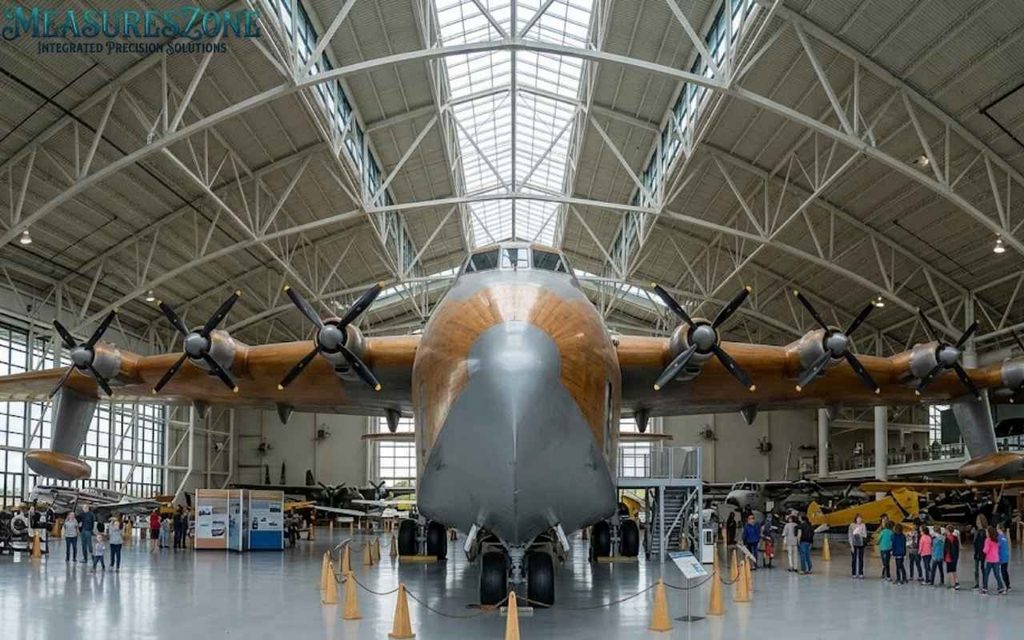
Howard Hughes built this giant flying boat in the 1940s. Its wingspan measures about 320 feet, a bit over 300 feet long from wingtip to wingtip. People call it the “Spruce Goose.”
Case study: the 1947 flight. On November 2, 1947, the H-4 lifted off the water in Long Beach Harbor. It flew roughly one mile at about 70 feet above the surface. The plane never flew again. Still, its wingspan remains a powerful visual comparison for 300 ft and beyond.
10. The U.S. Capitol Dome

The dome in Washington, D.C. stands about 288 feet tall, topped by the Statue of Freedom. It is close enough to give you a strong building height reference. See the Architect of the Capitol for official figures.
Learn about Arch Aplin III and his properties.
11. Elizabeth Tower (Big Ben) in London
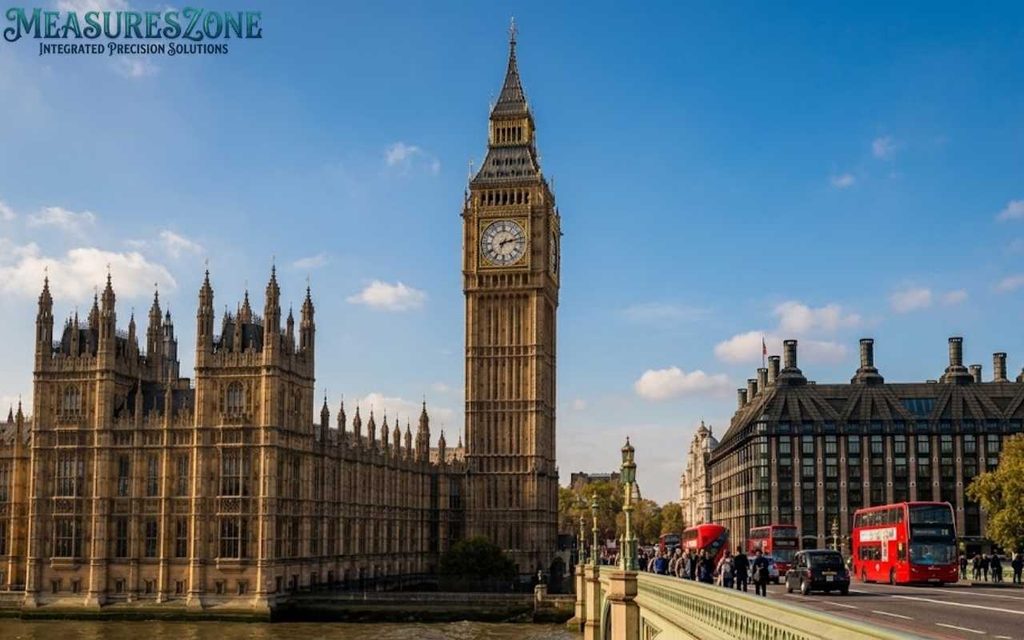
The famous clock tower at the Palace of Westminster rises about 316 feet (96 meters). That puts it only a few feet above our target, so it works as a handy 300-foot height guide. Many people call the whole tower “Big Ben” even though that name belongs to the bell inside. See the UK Parliament site for the official figures.
12. NASA’s Space Launch System Rocket

Here is a height comparison with real drama. The Space Launch System Block 1 rocket stands about 322 feet (98 meters) tall on the launch pad. That is a close match and a modern one. Lay it on its side and you get a rocket almost as long as a football field between the goal lines. NASA publishes the specs at nasa.gov.
13. One Minute of Walking
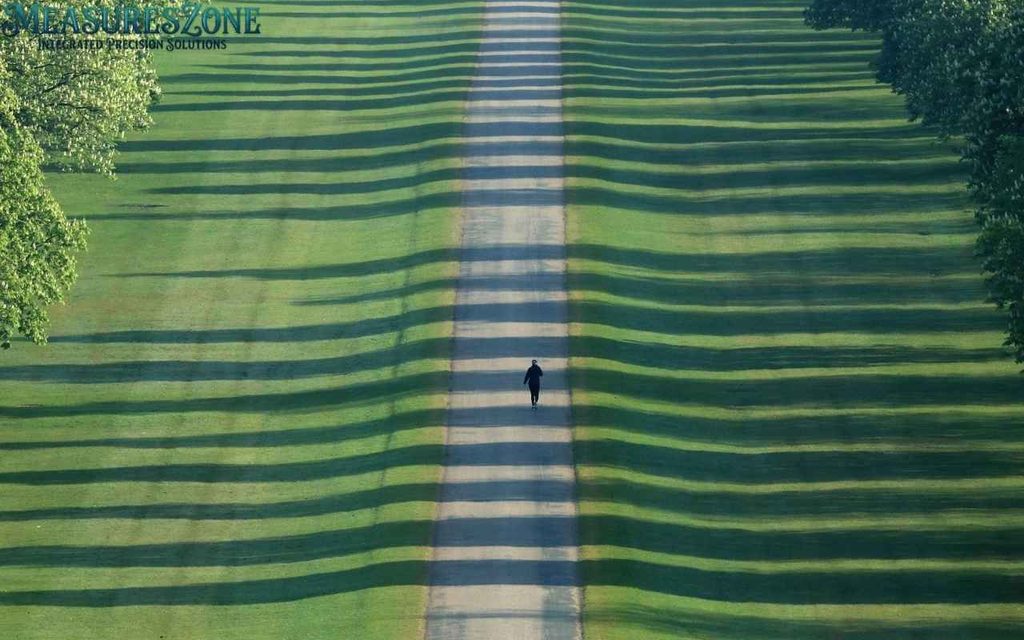
Time to talk about walking pace. At a comfortable normal pace of about 3 miles per hour, you cover 4.4 feet every second. That puts 300 feet at roughly 66 seconds. So a one-minute walk gets you almost exactly there.
How Far Is 300 Feet in Daily Life?
Let’s talk about walking distance and travel. 300 feet is short on foot but long for a casual conversation.
| Activity | Time to cover 300 feet |
|---|---|
| Slow stroll | About 80 seconds |
| Normal walk | About 66 seconds |
| Brisk walk | About 55 seconds |
| Jog | About 35 seconds |
| Car at 30 mph | About 7 seconds |
Stride length matters here. The average adult stride is around 2.5 feet. That means 300 feet takes about 120 steps. Shorter people take a few more and taller people take a few less. Count your own steps over a known distance to find your personal number.
City Blocks and Grid Cities
A city block is one of the most useful distance visualization tools you have. Block sizes vary by city, though. In a grid city like Manhattan, the side-street block length runs about 264 feet between streets. So 300 feet is a bit more than one urban block there.
Other cities differ:
- Portland, Oregon: blocks measure about 200 feet square.
- Chicago: eight blocks make a mile, so one block runs 660 feet.
- Manhattan avenue blocks: much longer, at roughly 900 feet.
So a measured block in one town may be half the size of a block in another. Always check your local city distance before you use blocks as a yardstick.
See what 30 cm looks like with everyday objects.
How Tall Is 300 Feet?
Now flip the ruler upright. A 300 feet tall object reaches high above most neighbourhoods. It matches the vertical height of a skyscraper under construction.
Quick height comparison points:
- Old rule of thumb: one story equals 10 feet, which gives 30 stories.
- Modern office towers: floors run 12 to 14 feet, so 300 ft high equals roughly 21 to 25 floors.
- Residential buildings: floors often run 9 to 10 feet, so the count climbs toward 30.
Giant Trees as a Height Guide
Nature offers a nice tree height comparison too. The General Sherman Tree in Sequoia National Park stands about 274.9 feet tall. That makes it the largest living tree by volume. It is a Giant Sequoia, one of the California sequoias that grow naturally in the Sierra Nevada.
These giant trees come close to our 300 foot target. Learn more at the National Park Service. Coast redwoods go even higher. The tallest known one, Hyperion, reaches roughly 380 feet. So a mature Sequoia tree gets you near the mark and a redwood blows past it.
A Quick Look at Ship Length
Ships give you a great length comparison for the horizontal view. A Nimitz-class carrier measures about 1,092 feet from bow to stern. That means 300 feet covers only about a quarter of the flight deck of a U.S. Navy carrier.
Imagine walking from the stern forward. You would still have almost three quarters of the carrier deck ahead of you. The U.S. Navy publishes ship length specs for each vessel.
How to Measure 300 Feet Without a Tape
You do not always carry a measuring tool though. Try these simple methods.
Using a Smartphone Map
Mapping apps include a distance measurement feature. Drop two pins and the app shows the measured distance. It works best outdoors where GPS is strong.
Using Everyday Objects
Count familiar objects as a size reference. A standard school bus runs about 40 feet. Seven and a half buses make 300 feet. A parking space runs about 18 to 20 feet deep. So 15 parking spaces in a row get you close.
Common Mistake When Measuring 300 Feet
Small errors turn into big problems over long distances.
- Mixing up survey feet and international feet. The two differ by about two parts per million. NIST retired the U.S. survey foot at the end of 2022. Over 300 feet the difference is tiny but it adds up on very long surveys.
Also keep your 300-foot tape taut and level. A sagging tape reads long.
Fun Facts About 300 Feet
Think 300 feet is a quick hop? Some speedy travelers cross it before you can blink.
- Peregrine falcon: In a hunting dive, this bird tops 200 mph. At that speed it covers 300 feet in about one second.
- Cruising jet: An airliner flying near 575 mph swallows the distance in roughly a third of a second.
- Kitty Hawk: Orville Wright’s first powered flight in 1903 lasted 12 seconds and spanned 120 feet. Two and a half of those flights would fit inside this distance.
- Blue whales: The biggest ones grow to about 98 feet. Line up three nose to tail and you land near the mark.
- Tennis serve: A 150 mph serve would cross 300 feet in about 1.4 seconds. Of course, a real ball slows down fast and a tennis court runs only 78 feet long.
So the next time you walk 300 feet, remember what zips past you in the blink of an eye. A tiny stretch of ground can hold a surprisingly big story.
See how long 20 feet is in real life.
Frequently Asked Questions About 300 Feet
Still have questions about 300 feet? These quick answers cover practical uses, measurement tools, and factors that can affect distance estimates.
Does weather affect measurements over 300 feet?
Yes. Temperature can affect some measuring equipment, while wind, heat shimmer, and poor visibility can make distant points harder to identify.
Why do construction workers use 300-foot measurements?
Long measurements help workers plan site layouts, mark property boundaries, and estimate distances across large work areas.
Why can 300 feet look shorter across an open field?
With few nearby objects for comparison, your eyes have fewer visual clues to judge distance, making open spaces harder to estimate accurately.
Final Thoughts on 300 Feet
You now have a full toolbox for visualizing 300 feet. A football field between the goal lines gives you an exact reference, while five bowling lanes and the Statue of Liberty offer other ways to picture the distance.
Next time someone asks how long is 300 feet, you have got an answer that sticks. Better yet, go measure something nearby. A 300-foot distance is easier to feel once you have walked it yourself.
Quick Quiz: Test Your 300 Feet Knowledge
Test your knowledge of 300 feet with these three quick questions.
1. How many yards equal 300 feet?
A) 50 yards
B) 100 yards
C) 150 yards
D) 300 yards
2. Which landmark reaches about 305 feet from the foundation to the torch tip?
A) The U.S. Capitol dome
B) Fenway Park’s Pesky Pole
C) The Statue of Liberty
D) The General Sherman Tree
3. About how long does it take to walk 300 feet at a normal pace?
A) 10 seconds
B) 30 seconds
C) 66 seconds
D) 5 minutes
Answers
1. B) 100 yards
2. C) The Statue of Liberty.
3. C) 66 seconds.
See how 12 inches compares to everyday objects.

David John is an experienced blogger and the admin of the Measurements category at Measures Zone. He shares accurate and easy to understand measurement guides for readers.