

Ever tried to picture a 5 inch measurement and come up blank? You are not alone. Inches are one of those units everyone technically knows, yet almost nobody can eyeball with confidence. Ask someone to hold their fingers apart to show “5 inches long,” and you will usually get anything from 3 inches to 8. That is the problem with abstract numbers: they do not mean much until you attach them to something real.
This guide fixes that. Instead of throwing a number at you and moving on, we are going to walk through how long is 5 inches using objects you have touched, held, or seen a hundred times. By the end, you will not need a ruler to picture five inches, you will just need to remember a soda can, a stick of butter, or the edge of an index card.
What Does 5 Inches Actually Look Like?
Before we get to the object list, here is a quick measurement conversion table so you have the numbers in one place. This covers 5 inches conversion to the units you are most likely to need.
| Unit | Value |
|---|---|
| Inches | 5 in |
| Centimeters | 12.7 cm |
| Millimeters | 127 mm |
| Feet | 0.417 ft (5/12) |
| Yards | 0.139 yd |
| Meters | 0.127 m |
Worth noting: 12.7 cm is one of those conversion figures that comes up so often in shipping, crafts, and product specs that it is genuinely worth memorizing. If you only remember one number from this whole article, make it that one.
12 Everyday Objects That Are About 5 Inches
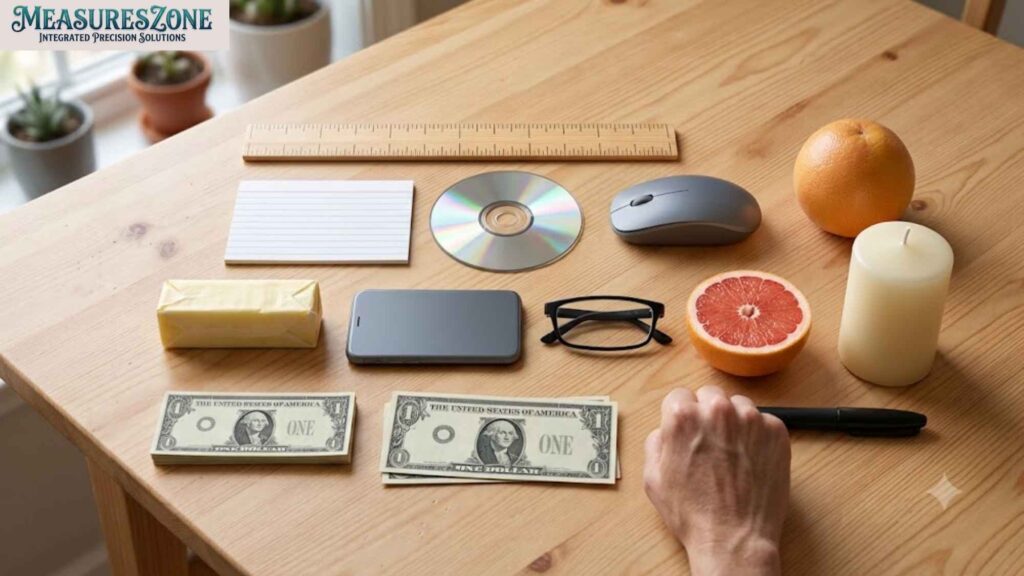
This is the heart of the guide. Below are twelve everyday objects that measure at or near five inches along at least one dimension. Each one comes with its actual, verifiable size, not a rounded-off guess, so you are building your mental ruler on solid ground.
1. A Standard Index Card
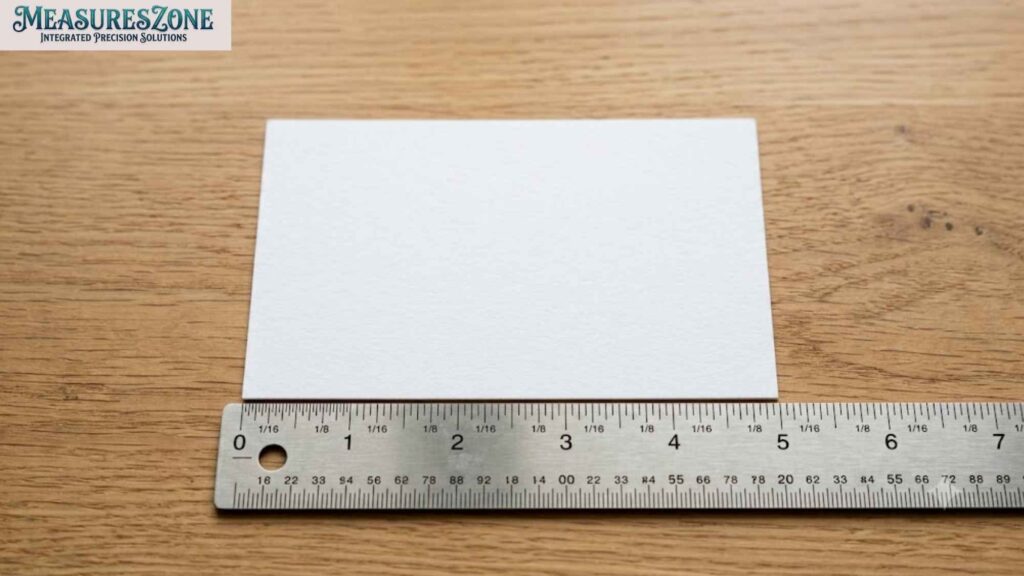
The classic 3×5 index card is exactly 5 inches along its longer edge. This is about as precise as real-world references get, since it is a manufactured product built to a fixed spec rather than something that varies by brand or batch. If you keep index cards around for notes or recipes, you already own a ruler, you just have not been using it as one.
2. A Compact Disc
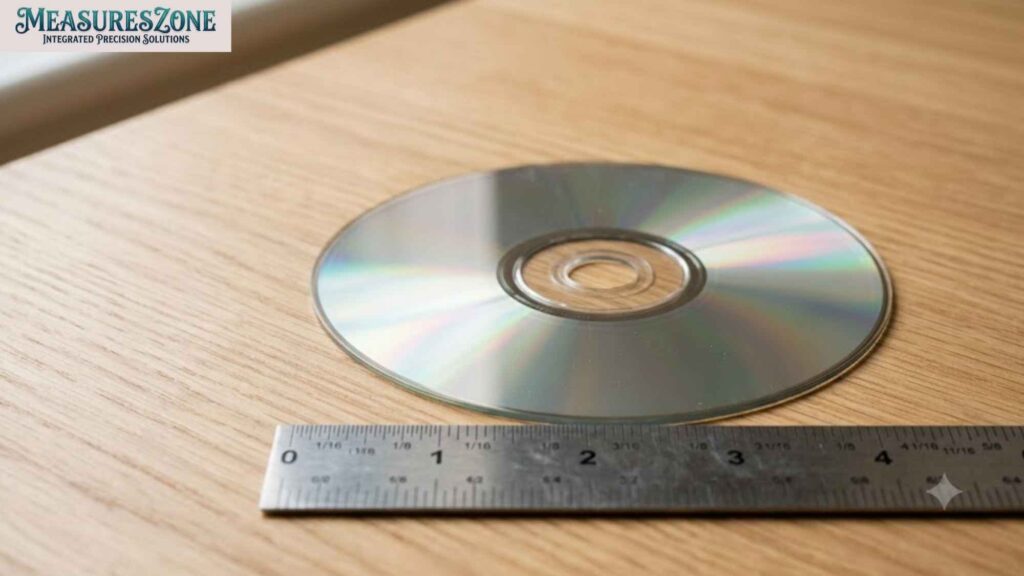
A CD measures 4.7 inches in diameter. It is not a perfect five, but it is close enough that holding one up gives you an honest sense of the length. CDs have mostly disappeared from daily use, but plenty of people still have a stack in a drawer somewhere, which makes this a handy leftover reference.
3. A 12-Ounce Soda Can
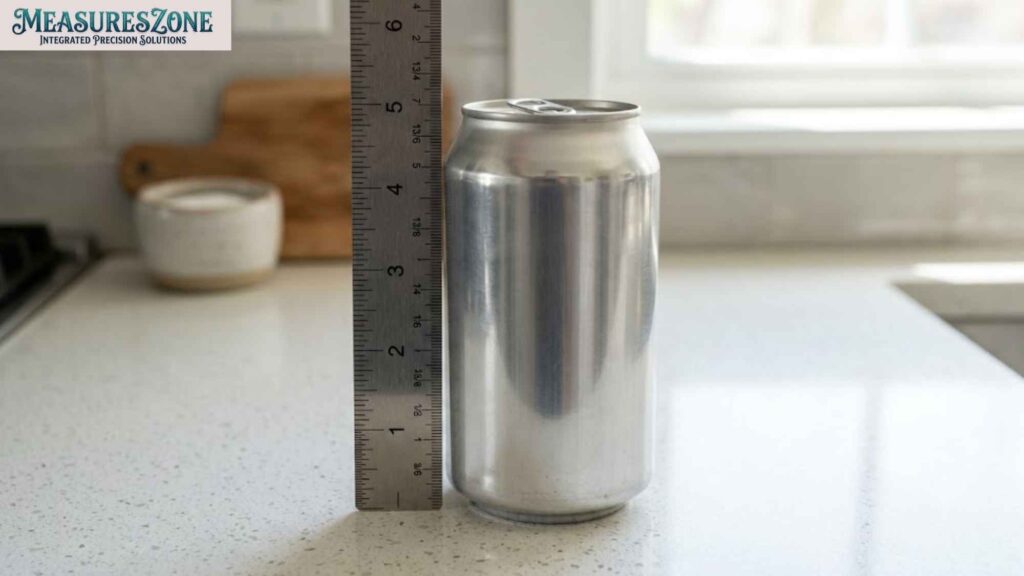
A standard soda can stands about 4.83 inches tall. This is one of the most useful entries on the list because cans are everywhere, vending machines, fridges, recycling bins, so you are rarely more than a few feet from one. Next time you are holding a can, notice that it is just a hair under five inches, and you will never fully forget the size again.
4. A Stick of Butter
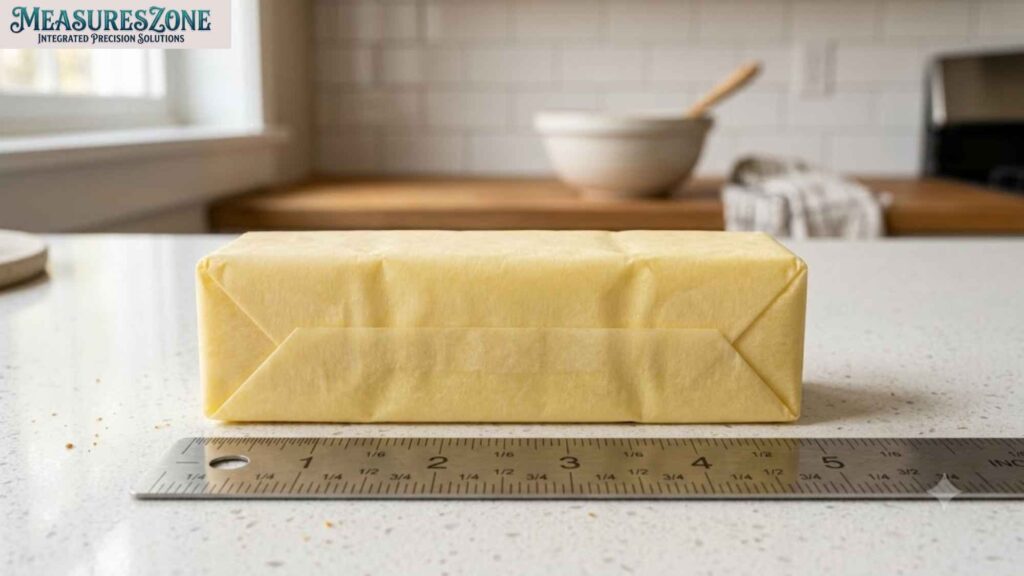
In the US, a standard stick of butter measures 4.75 inches long. Kitchens are full of built-in size references like this, and butter happens to be one of the most consistent, since the wrapper markings are standardized across most major brands.
5. A Compact or Mini Smartphone
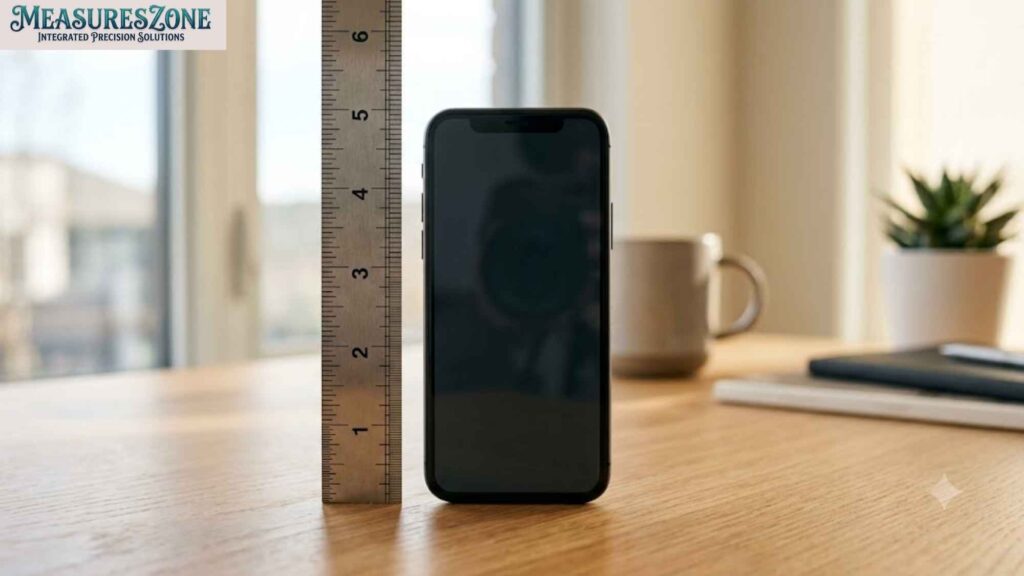
Smaller phone models land right around this mark. The iPhone 13 mini, for example, measures 5.18 inches tall. If you have ever held one of the compact phone models, you have held something very close to a 5 inch measurement without realizing it. Full-size phones, by contrast, usually run 6 inches or more, which is part of why “mini” phone lines feel noticeably smaller in the hand.
6. Eyeglasses Temple Arm
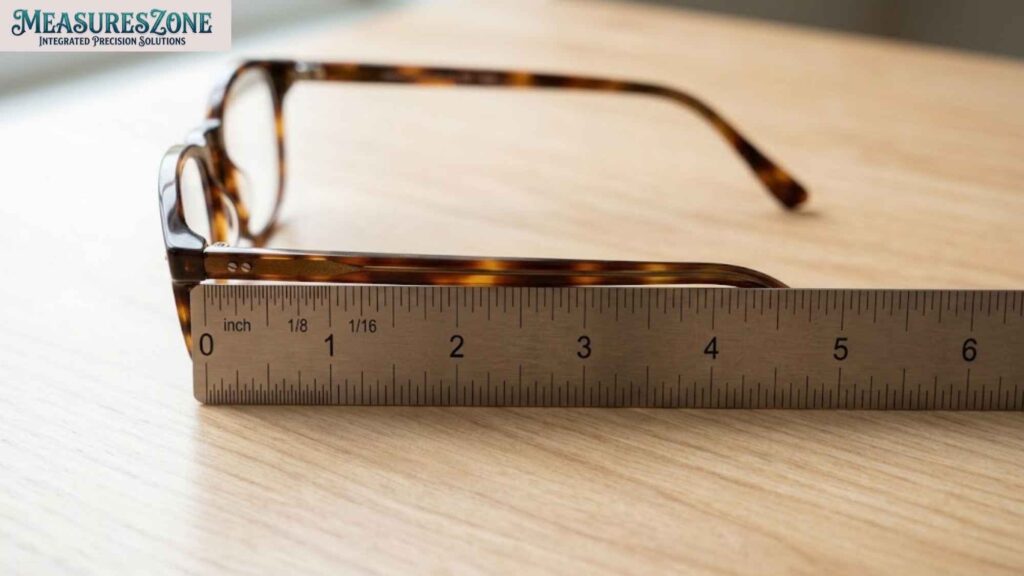
The temple arm, the part that runs from the hinge back to your ear, typically measures 5 to 5.5 inches on adult frames. If you wear glasses, take them off and look at the arm length. It is a size reference you are carrying around on your face for most of the day.
Learn about Red Bull can sizes, heights, and dimensions.
7. A Grapefruit
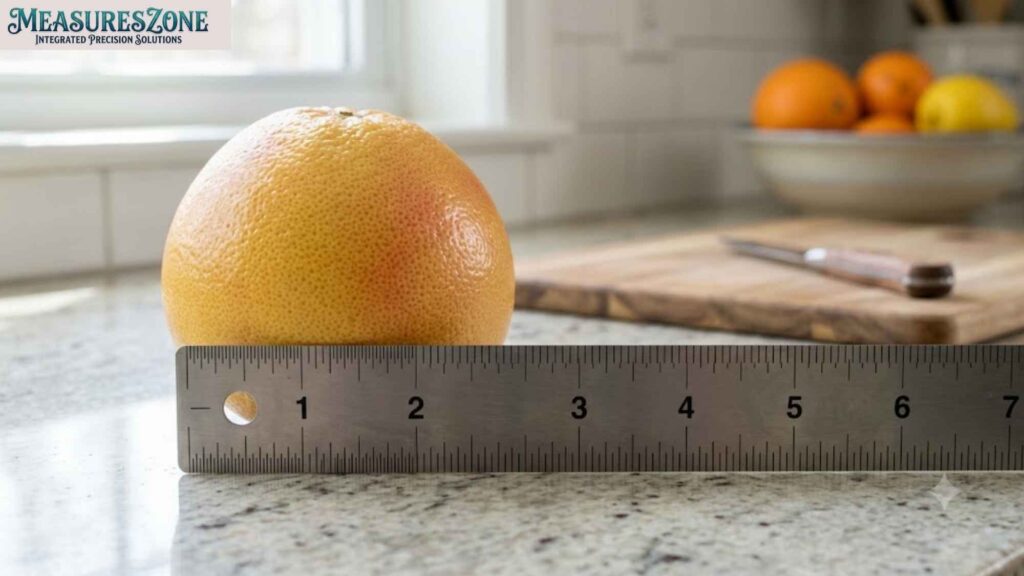
An average grapefruit runs 4 to 5 inches in diameter, depending on the variety. Produce is not manufactured to a spec the way index cards or soda cans are, so there is more natural variation here but a mid-size grapefruit still gets you close enough to be a legitimately useful visual.
8. A Standard Taper or Pillar Candle
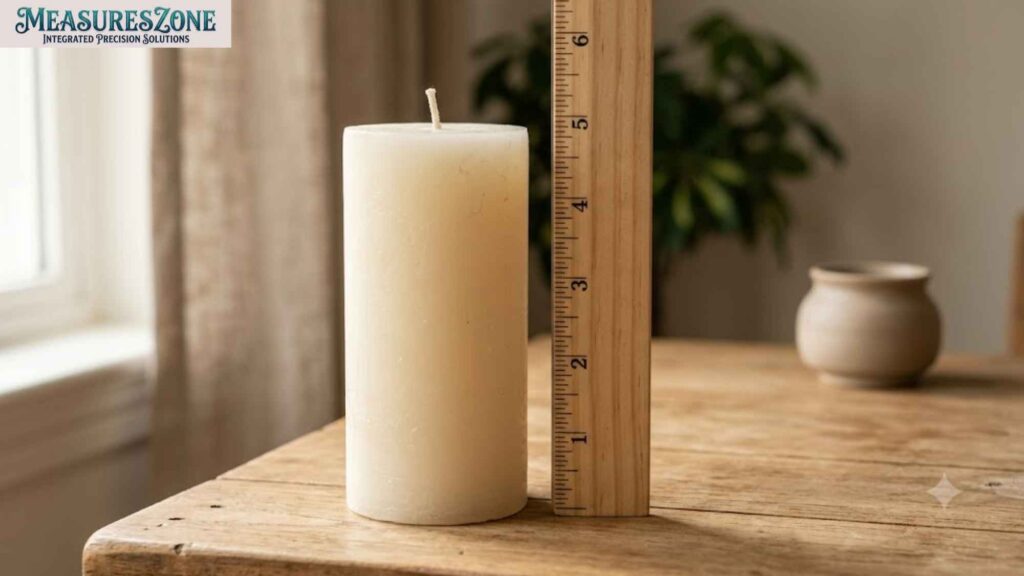
Many candles, especially taper and pillar styles sold at craft and home stores, are manufactured in a common 5 inch size. Not every candle on the shelf will match this exactly, since candle length is a popular variable for manufacturers, but it is common enough that if you have candles in the house, there is a decent chance one of them is right at five inches.
9. A Dollar Bill, Width-Wise, Doubled
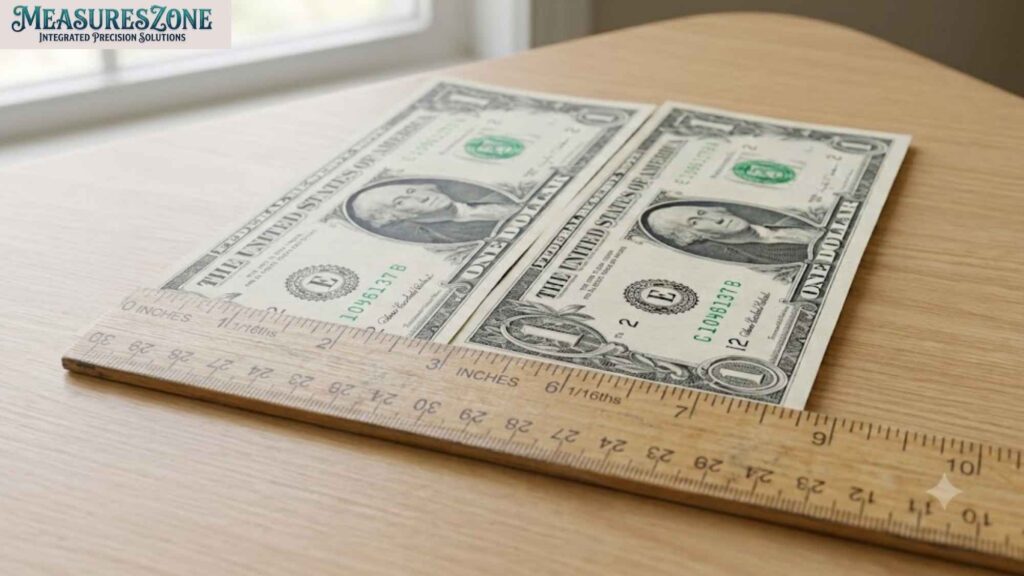
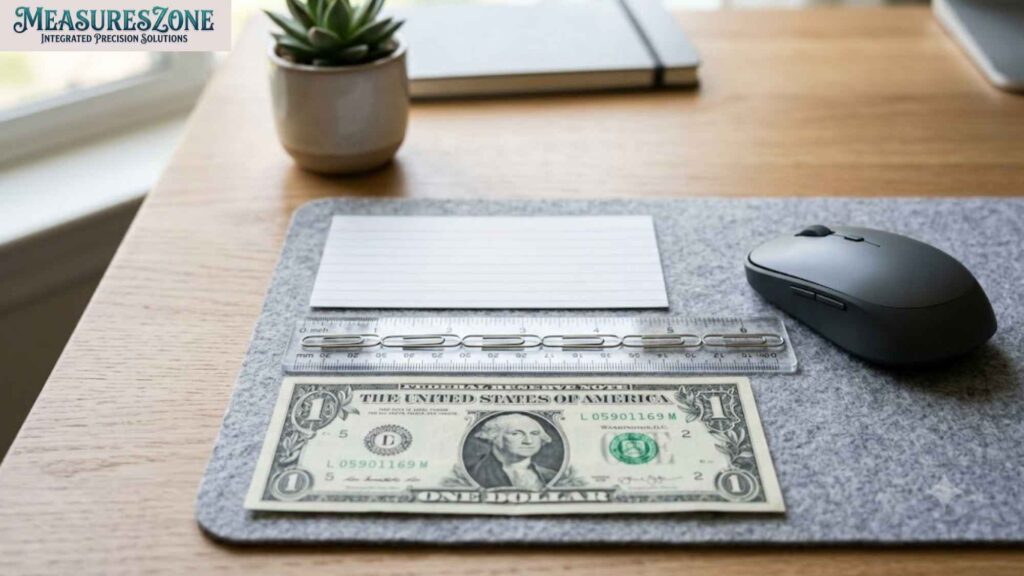
Here is a neat trick rather than a direct object: a US dollar bill measures 2.61 inches across its width. Line up two bills side by side along that shorter edge, and you get roughly 5.2 inches, close enough for a fast mental estimate when you do not have anything else on hand.
Learn the standard Pokémon card size and dimensions.
10. A Closed Adult Fist, Front to Back
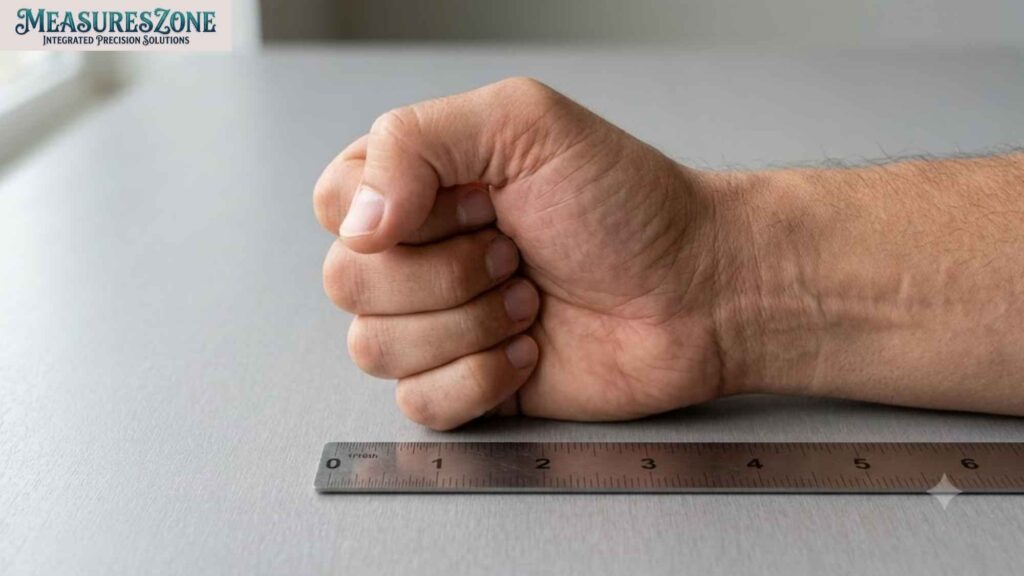
A closed fist, measured from the front of the knuckles to the back of the hand, commonly falls in the 4 to 5 inch range. This one comes with an obvious caveat: hand size varies a lot from person to person, so treat it as a rough personal reference rather than a universal one. Still, it is genuinely convenient, since your fist is a size reference you always have with you.
11. A Sharpie Marker
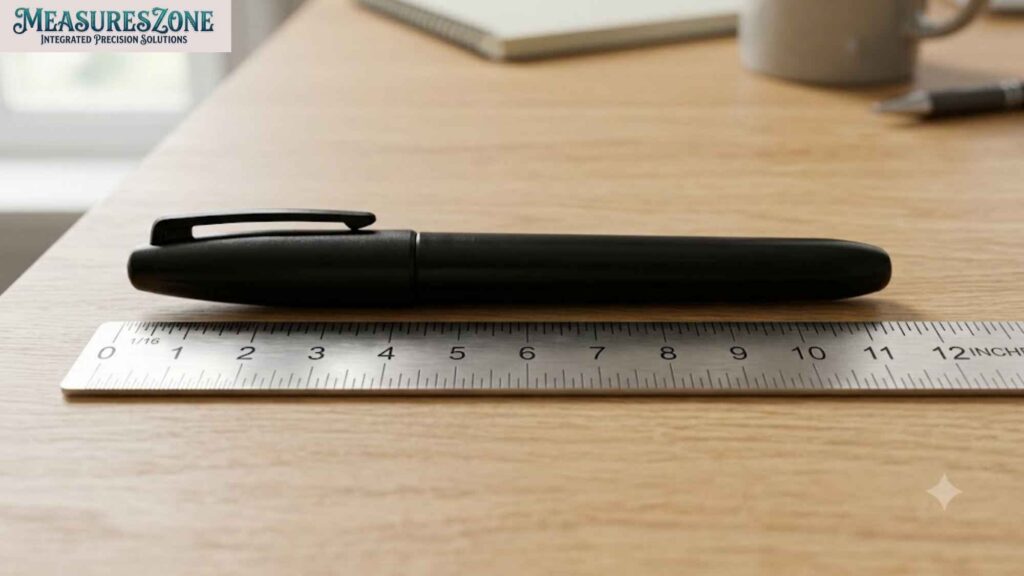
A standard Sharpie marker measures 5.5 inches. It slightly overshoots five inches, but it is close enough, and Sharpies are common enough on desks and junk drawers, that it is still a solid everyday reference to keep in mind.
12. Half of a Standard Ruler
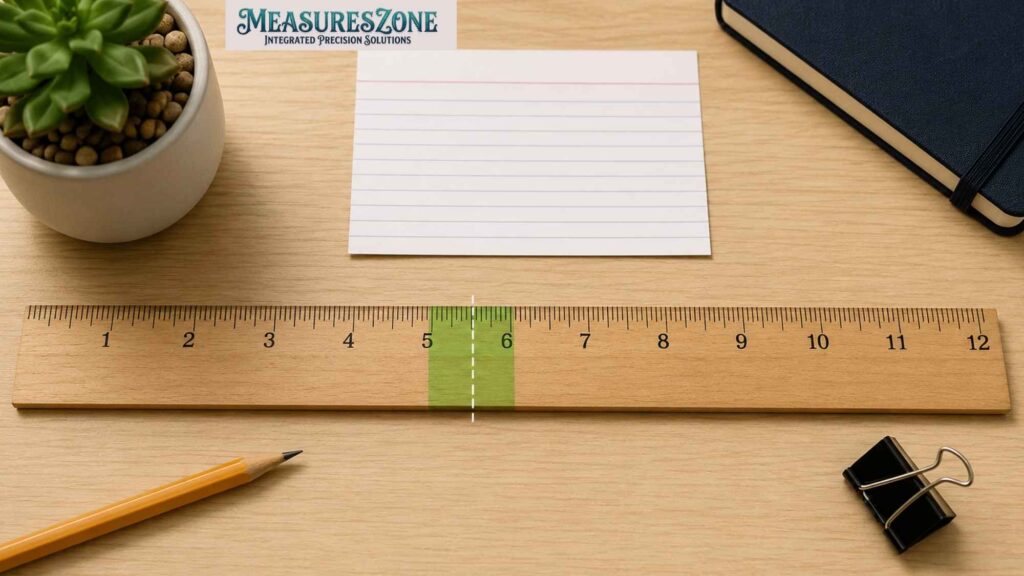
This one’s almost too obvious to mention, but it works: a standard 12 inch ruler cut in half or just eyeballed at its midpoint gives you 5 to 6 inches, depending on exactly where you split it. If a ruler happens to be nearby, this remains the fastest and most accurate way to confirm a 5 inch length without any guesswork at all.
Find easy ways to visualise 2 inches.
How to Estimate 5 Inches Without a Ruler
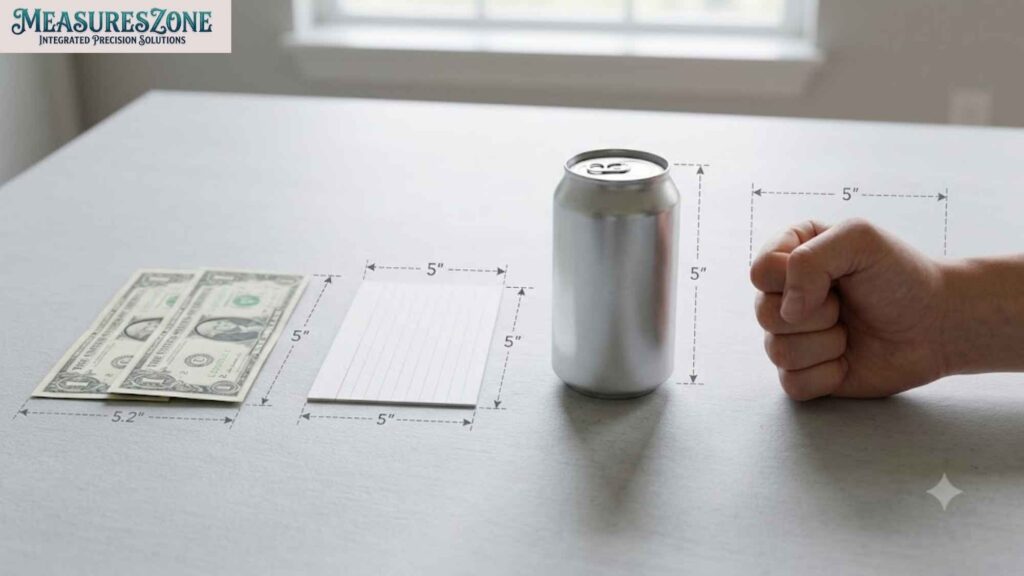
Sometimes you need a quick measuring trick and there is no tape measure in sight. Here are a few reliable methods to estimate 5 inches using nothing but what is already around you.
- The palm-width method. Measure your own palm once with a ruler, note the width, and you have got a portable reference for life. Most adult palms run somewhere between 3.5 and 4.5 inches, so this gets you close, with a small correction needed for the final inch.
- The doubled-dollar-bill trick. As mentioned above, two bills laid width-to-width get you to roughly 5.2 inches. Nearly everyone has a dollar bill within reach.
- The index card check. If you are near an office, a kitchen, or a recipe box, there is a decent chance an index card is nearby and that is an exact five inches, no estimating required.
- The soda can shortcut. Grab a can from the fridge. You are now holding a visual reference for 4.83 inches, which is close enough for almost any casual purpose.
One honest caveat worth repeating: none of these body-based or object-based tricks replace an actual ruler when precision matters, cutting wood, framing a photo, or filling out a form that asks for exact measurements. They are excellent for size estimation in daily life, not for construction blueprints.
When This Measurement Actually Matters
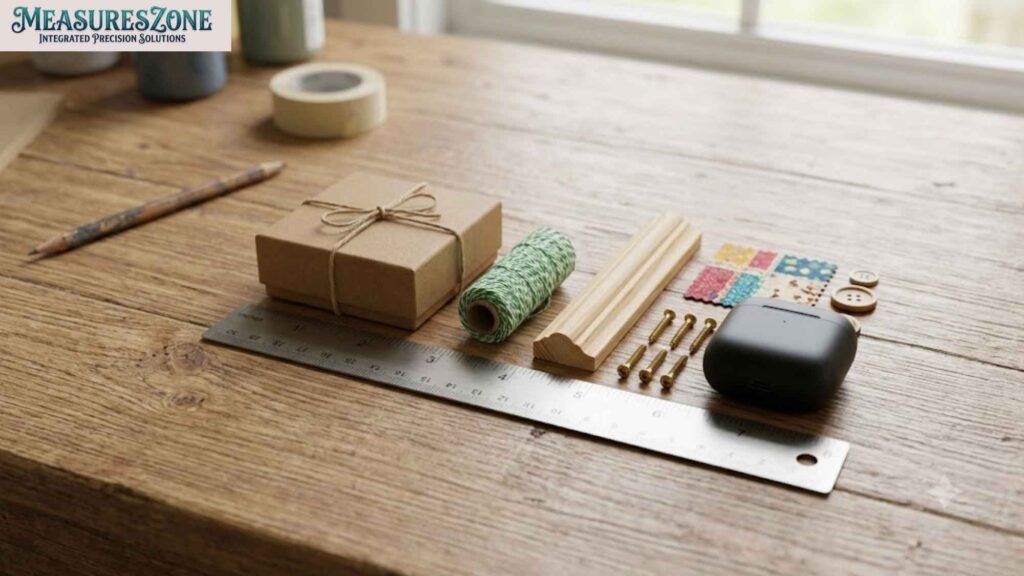
It is fair to ask why any of this matters beyond idle curiosity. Here is where knowing this measurement genuinely comes in handy:
Package and mailing dimensions. Many shipping carriers set size thresholds for flat-rate or letter-rate pricing, and five inches often sits right at a relevant cutoff point. Knowing your package’s dimensions without needing to hunt down a ruler saves a trip to the post office counter.
Furniture and clearance gaps. Pet doors, drawer depths, gaps behind furniture, and cabinet openings frequently land in the 4 to 6 inch range. Being able to eyeball this size helps you judge, at a glance, whether something will actually fit.
Craft and DIY projects. Scrapbooking, woodworking, and sewing projects constantly call for pieces cut to specific lengths, and five inches shows up often enough that it is worth having a felt sense of the size before you even pick up a tool.
Comparing device and screen sizes. Compact phones, tablets, and small electronics are frequently described using dimensions in this range. If a product listing says “5.1 inches,” you now have a mental image instead of just a number on a spec sheet.
Case Study: Framing a Photo Without a Ruler
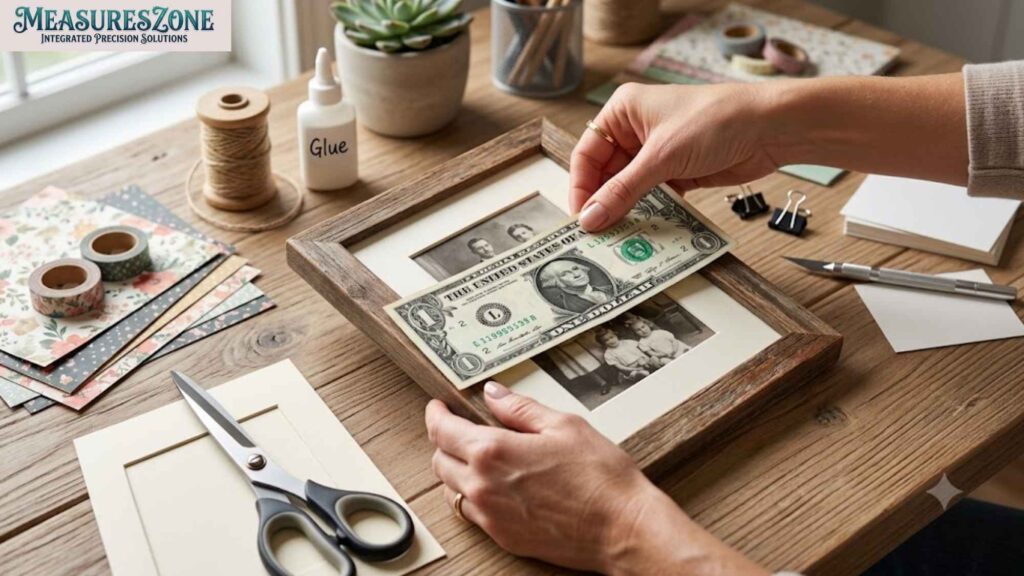
Here is a quick, real-world example of this in action. Someone wants to frame a small photo but does not own a tape measure.
The situation: A 5×7 photo needs a mat board cut down to fit a smaller frame, and the frame’s exact interior width is unknown.
The method: Using the doubled-dollar-bill trick, the interior of the frame lines up almost exactly with two bills laid side by side. A strong signal that the opening measures close to 5 inches across.
The outcome: With that estimate in hand, the mat board gets a rough cut, checked against the frame before any final trimming, and the photo fits with minimal fuss. No ruler was needed to get in the right ballpark, just a couple of reliable size references and a bit of common sense.
This is really the point of the whole exercise: once you have built a mental library of everyday objects at known sizes, you stop needing tools for rough estimates. You just need your eyes and a bit of practiced judgment.
See how long 6 inches is using everyday objects.
5 Inches Compared to Other Common Measurements
Numbers make more sense side by side. Seeing how a 5 inch length stacks up against other everyday measurements helps cement the size even further, since you are not just memorizing one figure in isolation, you are placing it on a mental scale.
| Comparison Item | Length | How It Compares to 5 Inches |
|---|---|---|
| AA battery | 1.97 in | Less than half |
| Credit card (long edge) | 3.37 in | About two-thirds |
| Dollar bill (long edge) | 6.14 in | About 1.2 inches longer |
| Standard smartphone (full-size) | 6.1 in | Roughly an inch longer |
| Sheet of paper (short edge) | 8.5 in | Over 3 inches longer |
| Standard ruler | 12 in | Just under half |
Fun Facts About the 5 Inch Measurement
A few odd, genuinely interesting details about this length that do not fit neatly anywhere else in the guide:
- A standard computer mouse is nearly a perfect match. Most full-size wired and wireless mice measure close to 4.5 to 5 inches long, which is part of why they feel so natural in an average adult hand, ergonomic designers actually engineer around this exact range.
- Five paper clips lined up end to end land almost exactly at five inches. A standard paper clip measures about 1 inch, so five of them in a row give you a surprisingly accurate DIY ruler if you happen to have a box of them on your desk and nothing else.
- The number 5 shows up constantly in US paper currency and card design, which is why doubling a dollar bill’s width gets you so close to 5 inches exactly, it is not a coincidence so much as a by product of how consistently standardized US currency dimensions are.
- The metric world does not really have a “5 inch equivalent.” Most countries built their everyday object sizes, phone cases, index cards, packaging, around round centimetre figures like 10 cm or 15 cm, not the 12.7 cm that five inches converts to. That is one reason this exact measurement feels distinctly American in a lot of contexts.
- Human perception of length is notoriously unreliable without a fixed anchor. Studies on visual estimation consistently show that people misjudge lengths under six inches more than any other range, which is exactly why building a mental list of everyday objects, rather than trying to “just picture” what 5 inches looks like from scratch works so much better in practice.
Quiz: How Well Do You Know 5 Inches?
1. How many centimetres is 5 inches equal to?
A) 10.2 cm
B) 12.7 cm
C) 15.5 cm
D) 11.4 cm
2. Which of these is the most precise real-world example of exactly 5 inches?
A) A compact disc
B) A standard index card (long edge)
C) A grapefruit
D) A Sharpie marker
3. Approximately how tall is a standard 12-ounce soda can?
A) 3.5 inches
B) 4.83 inches
C) 6.1 inches
D) 5.5 inches
4. Using the “doubled dollar bill” trick, about how long is the result?
A) 3.4 inches
B) 4.0 inches
C) 5.2 inches
D) 6.1 inches
5. Roughly how many 5 inch objects, laid end to end, would it take to equal one foot (12 inches)?
A) 1.5
B) 2.0
C) 2.4
D) 3.0
Answers:
- B) 12.7 cm
- B) A standard index card (long edge)
- B) 4.83 inches
- C) 5.2 inches
- C) 2.4
conclusion
Five inches is not an abstract number once you have got a handful of solid, real-world anchors to hang it on. A soda can, an index card, a stick of butter, these are things you have handled dozens of times without ever thinking about their dimensions. Now that you have got the numbers attached to the objects, you should be able to size things up at a glance with a lot more confidence, ruler or no ruler.
Frequently Asked Questions
1. Is 5 inches bigger than a credit card?
Yes. A standard credit card measures 3.37 inches long, so a 5 inch measurement is noticeably longer, by about an inch and two-thirds.
2. How many 5 inch objects would it take to make a foot?
Just under 2.5. Since a foot equals 12 inches, dividing that by five gives you 2.4, so two five-inch objects laid end to end fall a bit short of a full foot.
3. Is 5 inches closer to a hand’s width or its full length?
It is closer to width. An adult palm’s width runs close to this figure, while the full hand span, from thumb tip to pinky tip, is usually longer, often 7 to 8 inches.
4. What common household item is exactly 5 inches?
The standard index card is the most reliable exact match, since it is manufactured to that precise spec rather than varying by brand.
5. Is 5 inches a big or small measurement?
It is a mid-range length, bigger than small items like a credit card or a AA battery, but smaller than a standard sheet of paper’s long edge (11 inches) or a dollar bill’s length (6.14 inches).
Find the exact sizes and dimensions of Monster cans.

David John is an experienced blogger and the admin of the Measurements category at Measures Zone. He shares accurate and easy to understand measurement guides for readers.